
How Wealth Management Firms and Mutual Fund Distributors Can Use Loyalty to Increase AUM and Reduce Churn

Sign up for our newsletter for trending top content!
Introduction
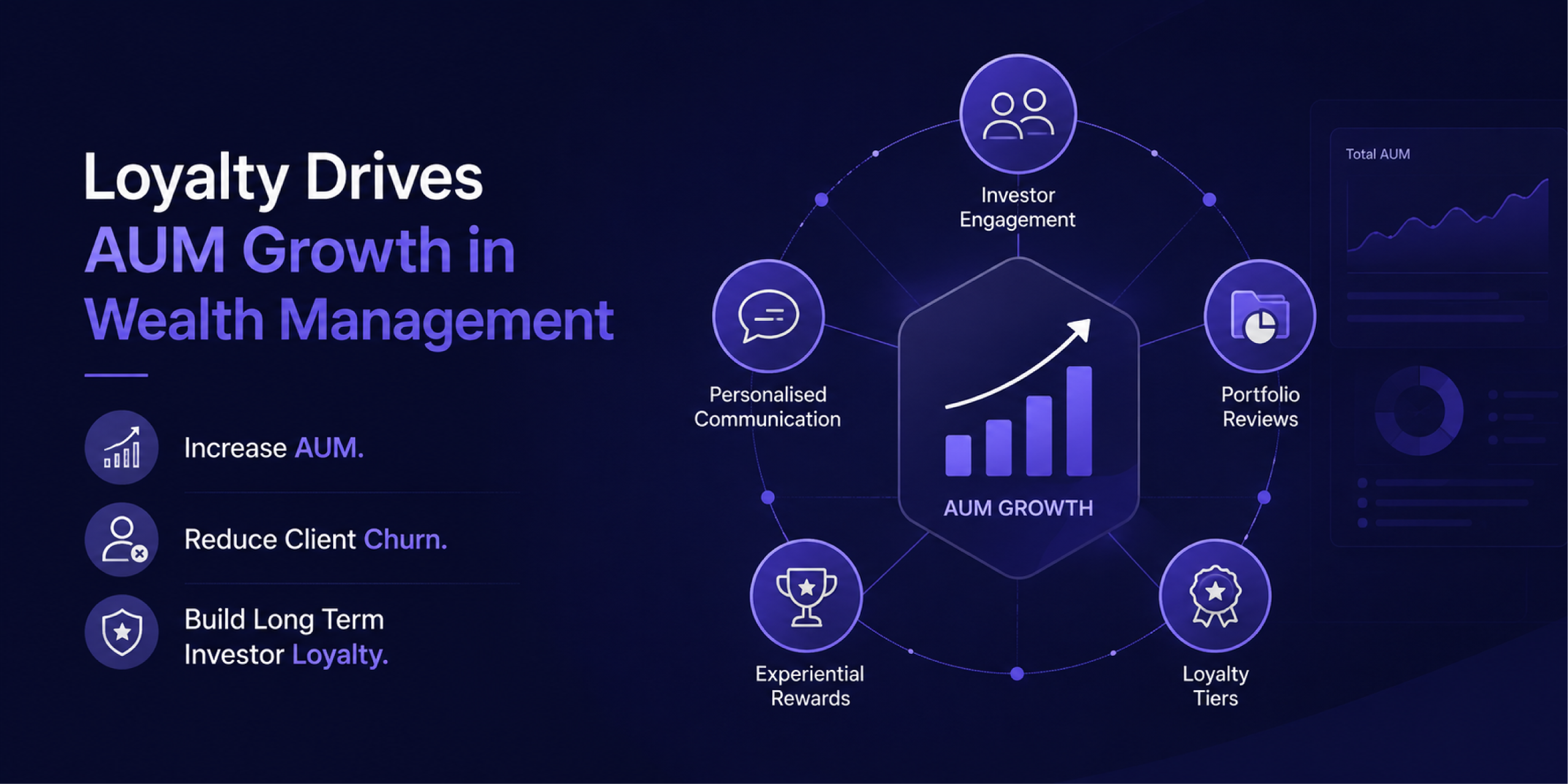
Retaining an existing client can cost significantly less than acquiring a new one. Bain & Company reports that increasing customer retention by just 5 percent can increase profits by 25 percent to 95 percent, depending on the industry. In wealth management and mutual fund distribution, client attrition also reduces Assets Under Management (AUM), weakens referral pipelines, and increases acquisition costs. At the same time, investors expect ongoing value that extends beyond periodic portfolio reviews.
This shift creates an opportunity for wealth management firms, mutual fund distributors, insurers, and fintech organisations to rethink customer loyalty. Rather than relying solely on advisor relationships, firms can encourage consistent engagement through personalised experiences, milestone recognition, educational journeys, and exclusive benefits that strengthen long term trust.
This article explains how loyalty programmes can help increase AUM, reduce churn, improve investor engagement, and generate measurable business outcomes while remaining aligned with Indian regulatory expectations.
Why Wealth Management Clients Leave: The Relationship Gap That Loyalty Programmes Can Close
Wealth management firms often assume investment performance alone determines client retention. Research suggests otherwise. According to Gallup, customers who feel emotionally connected to a financial institution deliver significantly higher lifetime value than those who remain merely satisfied. Similarly, McKinsey & Company has found that personalised engagement has become one of the strongest drivers of customer loyalty across financial services.
For many investors, dissatisfaction develops gradually rather than through a single event. Long periods without communication, generic portfolio updates, limited educational content, or infrequent advisor interaction create uncertainty. Competitors offering stronger digital engagement or more personalised service can then persuade investors to move their assets elsewhere.
Investors Expect Continuous Value
Modern investors expect regular interaction throughout their investment journey. This includes:
- Educational market insights.
- Invitations to webinars and investment events.
- Portfolio milestone recognition.
- Personalised financial wellness content.
- Relevant recommendations based on investment behaviour.
These interactions reinforce trust without focusing solely on transactional rewards.
Research from Deloitte shows that organisations delivering personalised customer experiences consistently outperform competitors in customer satisfaction and loyalty metrics. For wealth management firms, every meaningful interaction strengthens confidence before clients begin evaluating alternative providers.
Loyalty Builds Relationships Beyond Transactions
Effective loyalty programmes encourage behaviours that benefit both investors and organisations. Rather than rewarding investment volume alone, firms can recognise actions such as:
- Completing annual portfolio reviews.
- Updating financial goals.
- Referring qualified prospects.
- Participating in investor education sessions.
- Maintaining long term investment discipline.
This approach shifts loyalty from simple incentives towards relationship building.
Platforms such as Rekyndl, The Reward Store's consumer loyalty solution, enable financial institutions to automate these engagement journeys. Instead of relying on manual follow ups, organisations can deliver personalised communications, milestone recognition, and relevant rewards through a single loyalty ecosystem that supports long term client retention.
Ultimately, clients rarely leave because they receive one poor experience. They leave after many missed opportunities to reinforce trust. Loyalty programmes help close that relationship gap before AUM begins to decline.
Designing Loyalty Mechanics Around AUM Milestones and Portfolio Review Engagement
Successful wealth management loyalty strategies reward meaningful financial behaviours rather than simply offering generic incentives. According to Forrester, customers are more likely to remain loyal when organisations recognise valuable behaviours that align with long term objectives instead of rewarding one off transactions.
For wealth management firms, the objective is clear. Encourage actions that strengthen investor relationships while supporting sustainable AUM growth.
Align Loyalty With High Value Behaviours
Instead of rewarding investment returns, which firms cannot guarantee, loyalty mechanics should encourage engagement activities such as:
- Annual portfolio reviews.
- Completion of financial health assessments.
- SIP continuation milestones.
- Goal based investing updates.
- Educational webinar participation.
- Referrals that convert into qualified investors.
Each interaction creates another opportunity for advisors to understand investor needs while demonstrating ongoing value.
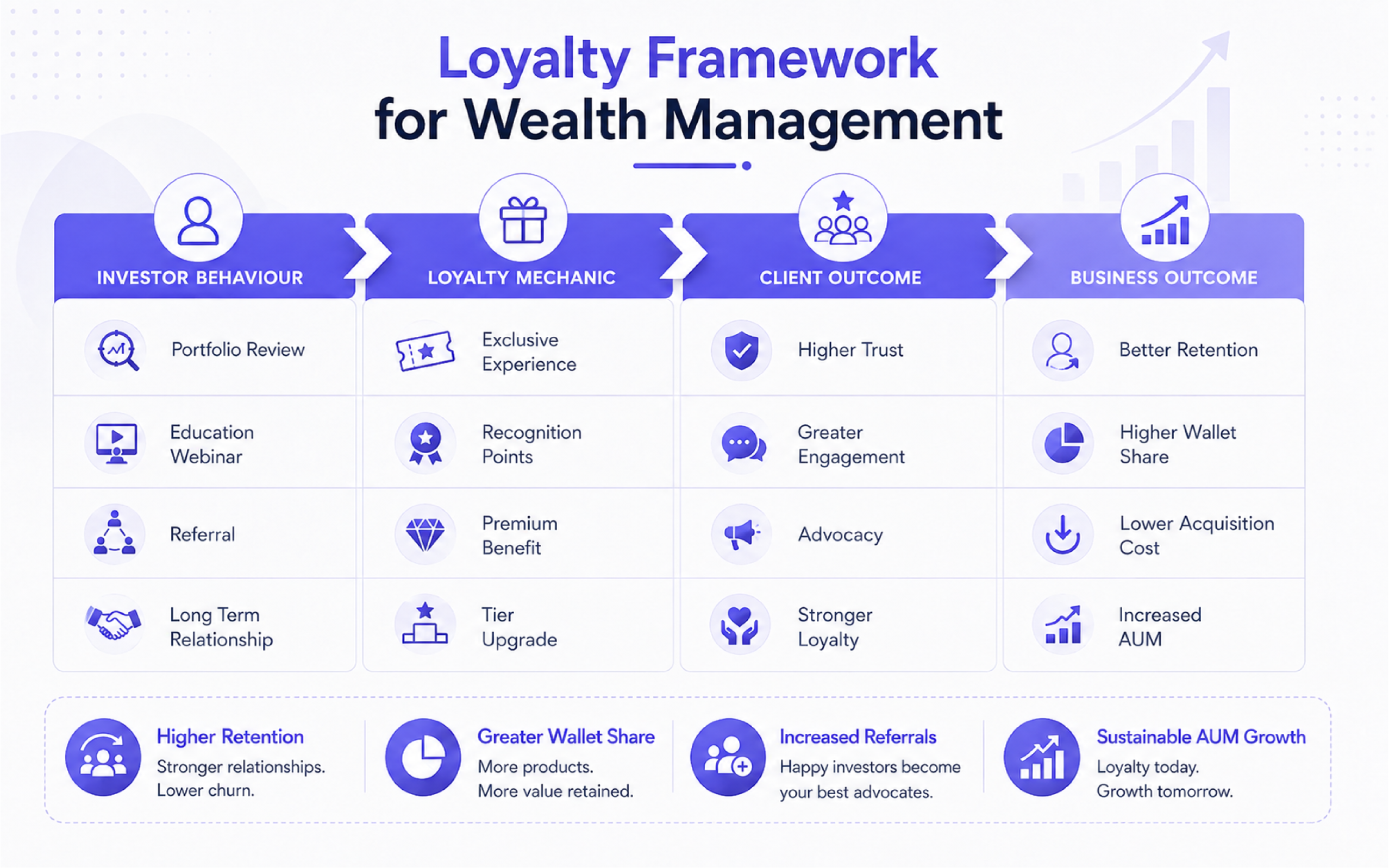
Example Loyalty Framework
This framework encourages behaviours that contribute directly to stronger relationships instead of focusing solely on transactional incentives.
Personalisation Drives Better Outcomes
According to McKinsey & Company, organisations that personalise customer engagement generate higher revenue growth because customers respond more positively to communications that reflect individual needs and preferences.
Rekyndl supports this approach through customer segmentation, automated journeys, and configurable loyalty rules. Firms can create different engagement paths for first time investors, high net worth individuals, retirement planners, or long term SIP customers. Instead of sending identical campaigns to every investor, communications remain relevant throughout the customer lifecycle.
The result is a loyalty programme that strengthens investor confidence while encouraging behaviours that contribute directly to higher AUM and lower churn.
Exclusive Access as a Loyalty Benefit: How Experiential Rewards Build Stickiness in High Net Worth Segments
High net worth investors rarely remain loyal because of monetary incentives alone. They expect privileged access, personalised service, and experiences that reflect the quality of their financial relationship. Research from Bain & Company highlights that emotional loyalty and differentiated customer experiences create stronger retention than price based benefits across premium customer segments.
This principle applies directly to wealth management. Clients managing substantial portfolios often value recognition more than discounts. A loyalty strategy that delivers exclusive access can strengthen relationships while reinforcing the firm's positioning as a trusted long term adviser.
Experiences Create Emotional Value
Instead of focusing exclusively on tangible rewards, firms can recognise client milestones through carefully curated benefits such as:
- Invitations to exclusive investment forums.
- Private market outlook sessions with senior economists.
- Access to leadership networking events.
- Premium travel and lifestyle experiences.
- Concierge services for selected customer tiers.
- Hotel bookings, flight bookings, dining experiences, and curated experiential rewards through a global catalogue.
These benefits acknowledge loyalty without influencing investment decisions, helping firms remain focused on relationship enhancement rather than product promotion.
According to PwC, affluent consumers increasingly choose brands that deliver memorable experiences alongside personalised service. In wealth management, these experiences reinforce trust and encourage clients to consolidate a greater share of their investments with a single adviser.
Tiered Recognition Encourages Long Term Relationships
A structured loyalty framework can recognise investors based on relationship depth rather than short term activity. Progression through membership tiers can depend on criteria such as:
- Relationship tenure.
- Engagement with portfolio reviews.
- Participation in educational events.
- Referral activity.
- Overall relationship value.
This creates a sense of progression while maintaining fairness across different investor profiles.
When supported by a platform such as Rekyndl, wealth management firms can automate tier management, personalised communications, and reward fulfilment across global markets. The result is a loyalty ecosystem that delivers premium client experiences at scale without increasing operational complexity.
For firms seeking sustainable AUM growth, exclusive experiences often create stronger emotional commitment than financial incentives alone. That commitment makes investors less likely to consider alternative providers when markets become volatile.
Digital Engagement Between Reviews: How Automated Journeys Keep Clients Connected Between Advisor Touchpoints
Many wealth management firms communicate with investors only during portfolio reviews or when markets experience significant volatility. This creates long periods of inactivity that weaken relationships and reduce opportunities to reinforce trust. According to McKinsey & Company, customers increasingly expect personalised, relevant interactions across every stage of their journey, regardless of industry.
Build Continuous Engagement
An effective loyalty strategy creates value throughout the investor lifecycle rather than concentrating interactions around investment transactions. Automated journeys help firms maintain meaningful engagement without increasing the workload for relationship managers.
Examples include:
- Welcome journeys for new investors.
- Educational content based on investment goals.
- Birthday and anniversary recognition.
- Quarterly market outlook updates.
- Invitations to webinars and exclusive events.
- Portfolio review reminders.
- Win back campaigns for inactive investors.
These touchpoints reinforce the adviser relationship while encouraging clients to remain actively engaged with the organisation.
Automation Improves Scale and Consistency
Research by Forrester shows that organisations using journey orchestration deliver more consistent customer experiences and achieve stronger customer retention than those relying on isolated campaigns.
Rekyndl enables financial institutions to automate these interactions through configurable customer journeys, behavioural segmentation, and omnichannel communication across email, SMS, push notifications, in app messaging, and in store engagement where applicable. Instead of sending identical messages to every investor, firms can deliver relevant communications based on customer behaviour, relationship stage, and engagement history.
For example, an investor who completes an annual review could automatically receive educational resources tailored to their financial goals, while an inactive client might receive a personalised invitation to schedule a portfolio discussion. These journeys strengthen engagement between adviser meetings and reduce the likelihood that investors will disengage over time.
For wealth management firms operating across multiple branches or regions, automation also ensures a consistent client experience while allowing advisers to focus on higher value conversations.
How to Navigate SEBI and AMFI Compliance Requirements When Designing Investor Loyalty Benefits
Loyalty initiatives in wealth management must strengthen client relationships without compromising regulatory obligations. Firms operating in India should design programmes that align with the principles established by the Securities and Exchange Board of India (SEBI) and the Association of Mutual Funds in India (AMFI), particularly regarding investor protection, transparency, and fair market practices.
Principles for a Compliant Loyalty Strategy
A successful programme should encourage engagement rather than influence investment decisions. Loyalty benefits should recognise activities that improve investor education, strengthen relationships, or enhance service quality.
Appropriate engagement activities include:
- Completing Know Your Customer updates.
- Participating in financial education sessions.
- Attending portfolio review meetings.
- Maintaining long term engagement with the adviser.
- Referring prospective clients in accordance with applicable regulations.
Organisations should avoid designing rewards that could appear to encourage the purchase of specific investment products or influence financial advice.
A Practical Decision Framework
According to Deloitte, organisations that embed governance into customer experience initiatives reduce operational risk while improving customer confidence. Compliance should therefore become a design principle rather than a final approval step.
Technology platforms also play an important role. Rekyndl enables configurable loyalty rules, approval workflows, audit trails, and customer segmentation that help organisations implement consistent loyalty experiences while maintaining governance across large customer bases.
Measuring AUM Loyalty ROI: Retention Rate, Wallet Share, and Referral Rate From Existing Clients
Loyalty initiatives should deliver measurable commercial outcomes rather than simply increasing customer engagement. Senior executives need evidence that investment in loyalty contributes to business growth. According to Bain & Company, customer retention remains one of the strongest drivers of long term profitability because retained customers typically purchase more services, refer others, and cost less to serve.
The Metrics That Matter
While participation rates provide useful operational insights, leadership teams should prioritise metrics that directly influence Assets Under Management and customer lifetime value.
Connect Loyalty to Business Outcomes
Gallup consistently reports that emotionally engaged customers demonstrate higher loyalty, greater advocacy, and stronger lifetime value. For wealth management firms, these behaviours often translate into increased investments, additional financial products, and referrals from satisfied clients.
Executive dashboards should therefore connect loyalty activities with commercial outcomes. Examples include measuring whether investors who attend educational events maintain higher retention, whether clients completing annual reviews increase wallet share, or whether premium loyalty tiers generate stronger referral rates.
By linking loyalty data with customer relationship management systems and marketing automation, organisations can continuously refine engagement strategies based on measurable performance rather than assumptions. This creates a continuous improvement cycle that supports sustainable AUM growth and stronger client relationships.
Frequently Asked Questions
What is a loyalty programme for wealth management firms?
A loyalty programme encourages ongoing engagement between investors and financial institutions through personalised experiences, educational content, exclusive benefits, and milestone recognition. Rather than rewarding investment performance, effective programmes recognise behaviours that strengthen long term relationships. This approach helps improve client retention while supporting sustainable AUM growth.
How can loyalty programmes increase Assets Under Management?
Loyalty initiatives encourage investors to remain engaged with their adviser, participate in regular portfolio reviews, and consolidate a greater share of their investments with one institution. Higher engagement builds trust, making clients less likely to transfer assets elsewhere. Over time, this supports stronger wallet share and higher AUM.
How does Rekyndl support customer loyalty for financial services organisations?
Rekyndl enables wealth management firms, mutual fund distributors, insurers, and fintech organisations to create personalised loyalty programmes using customer segmentation, automated journeys, gamification, integrated redemption, and omnichannel communication. The platform helps organisations deliver relevant engagement at scale while maintaining operational efficiency.
Can investor loyalty programmes remain compliant with SEBI and AMFI expectations?
Yes. Firms should design loyalty initiatives that encourage education, engagement, and relationship building rather than rewarding investment decisions or promoting specific financial products. Strong governance, transparent programme rules, and appropriate approval processes help ensure compliance.
Why are experiential rewards more effective for high net worth investors?
Research from Bain & Company and PwC suggests that affluent customers value exclusive experiences and personalised recognition more than transactional incentives. Carefully curated lifestyle experiences, premium events, concierge services, and travel related benefits strengthen emotional loyalty while reinforcing the advisory relationship.
Conclusion
Investment performance remains essential, but long term growth increasingly depends on the strength of client relationships. Wealth management firms that create continuous engagement, recognise meaningful investor behaviours, and measure loyalty against commercial outcomes place themselves in a stronger position to retain AUM and reduce churn.
As digital engagement continues to reshape financial services, loyalty will become a strategic capability rather than a marketing initiative. Organisations that invest in intelligent, data driven customer engagement today will be better positioned to strengthen investor trust and accelerate sustainable growth tomorrow.
See How Rekyndl Helps Wealth Management Firms Retain AUM Through Loyalty
Discover how Rekyndl helps wealth management firms, mutual fund distributors, insurers, and fintech organisations build compliant, personalised loyalty programmes that improve client retention and increase long term Assets Under Management.
Sign up for our newsletter for trending top content!


