
How to Retain Software Engineers Without Offering More Equity: Recognition Strategies That Work

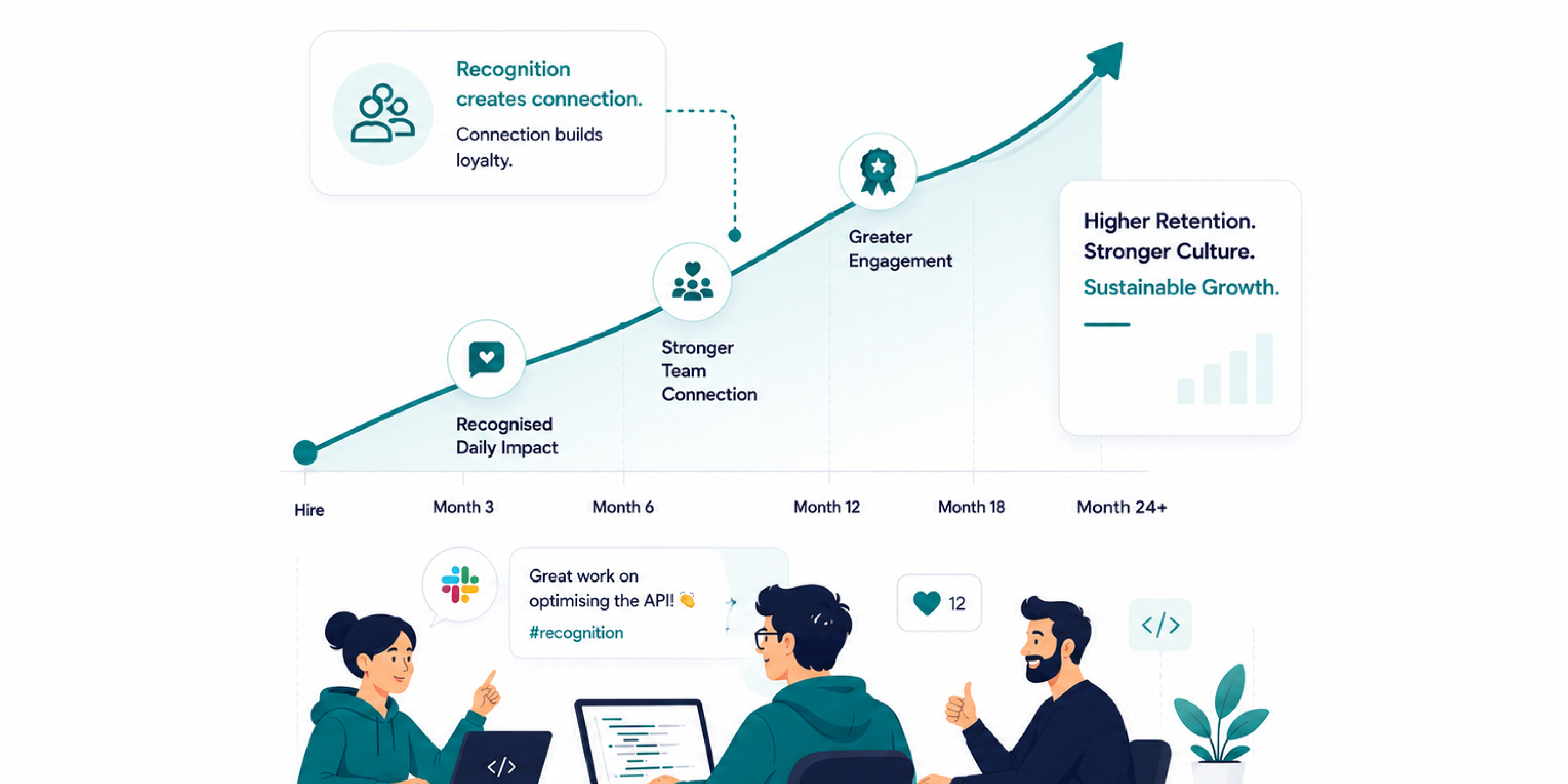
Sign up for our newsletter for trending top content!
Introduction
Replacing a software engineer can cost between 50% and 200% of their annual salary once recruitment fees, onboarding delays, lost productivity, and project disruption are included, according to SHRM and Gallup research. At the same time, Mercer reports that technology companies continue to face some of the highest voluntary attrition rates globally, particularly among mid-level engineers and engineering managers.
For HR Leaders in IT and SaaS organisations, this creates a difficult challenge. Compensation budgets cannot expand endlessly, and equity alone no longer guarantees loyalty. Engineers increasingly expect meaningful recognition, flexible career progression, and visible appreciation for technical impact.
This article explores how recognition strategies can improve engineering retention without relying on larger equity grants. It covers why engineers leave, where recognition programmes fail, how Slack-native recognition increases participation, and which metrics HR and engineering leaders should track together to reduce attrition.
Why Engineers Leave: The Real Reasons Beyond Stock Options and Salary
Many HR teams assume software engineers leave primarily for better pay or larger equity packages. Research tells a more complex story.
According to McKinsey’s global employee experience research, the top drivers of resignation include lack of career development, feeling undervalued by managers, unsustainable workloads, and absence of meaningful recognition. Compensation matters, but it rarely acts alone. Gallup found that employees who do not feel adequately recognised are twice as likely to quit within a year.
Engineering teams face additional pressures that traditional engagement initiatives often miss. Developers work in sprint cycles, operate under release deadlines, and spend large portions of the day inside technical collaboration tools rather than HR systems. When recognition feels disconnected from their actual work patterns, participation drops sharply.
What Engineers Value Most
Research from Deloitte and Gartner consistently shows that engineers respond strongly to recognition tied to:
- Technical problem solving.
- Peer acknowledgement.
- Visible impact on product outcomes.
- Learning milestones.
- Innovation contributions.
- Team collaboration during high-pressure releases.
Many organisations still rely on annual awards or manager-only nominations. These approaches fail because they ignore the fast feedback loops that software engineers expect in agile environments.
A recognition strategy designed for engineering teams must reward contribution frequency, collaboration quality, and delivery consistency. That shift matters more than increasing stock allocations for many mid-career engineers who prioritise growth, flexibility, and meaningful work over speculative future value.
For HR Leaders, the implication is clear. Retention improves when recognition aligns with engineering culture rather than corporate ceremony.
The Recognition Gap in Engineering Teams: What Managers Get Wrong
Engineering managers often recognise output only when a major release ships or a crisis gets resolved. That creates a recognition gap between day-to-day contribution and formal acknowledgement.
O.C. Tanner research found that 79% of employees who leave cite lack of appreciation as a major factor in their decision. In engineering teams, this problem intensifies because many technical contributions remain invisible to non-technical stakeholders. Infrastructure stabilisation, bug prevention, documentation improvements, code reviews, and mentoring frequently go unnoticed despite their operational importance.
Common Recognition Mistakes in SaaS Organisations
Aberdeen Group research shows that organisations with strong recognition cultures achieve 31% lower voluntary turnover rates than organisations without structured recognition systems.
The issue is not simply frequency. Specificity matters. Engineers respond more positively when recognition references measurable technical impact, collaboration quality, or customer outcomes.
This is where platforms such as ApplaudIQ become relevant for scaling engineering recognition. Slack-native peer recognition, milestone automation, and engineering-friendly workflows reduce dependency on manual manager interventions. Instead of waiting for quarterly reviews, teams can recognise contributions during active sprint cycles.
HR Leaders should also train engineering managers to recognise behaviours beyond delivery speed alone. Burnout increases when organisations reward only heroic overtime and crisis management. Sustainable recognition cultures reward consistency, collaboration, and knowledge sharing alongside execution.
How Slack-Native Recognition Changes Engineer Participation Rates
Most engineers spend more time inside Slack, Teams, Jira, Git repositories, and deployment tools than they do inside HR portals. That behavioural reality significantly affects recognition participation.
Forrester research on employee experience platforms found that embedded workflows consistently outperform standalone HR systems in engagement rates because they reduce friction and increase visibility. Engineering teams especially resist additional systems that interrupt workflow continuity.
When recognition happens directly inside collaboration tools, participation rises because the experience feels immediate and contextual.
Why Embedded Recognition Works Better
Slack-native recognition improves participation because it enables:
- Real-time appreciation during sprint execution.
- Public visibility across engineering squads.
- Peer-driven acknowledgement rather than top-down approval.
- Recognition tied directly to technical milestones.
- Lower administrative effort for managers.
Engineering cultures value authenticity. Delayed recognition delivered through formal HR channels often feels disconnected from the actual work engineers completed weeks earlier.
ApplaudIQ addresses this challenge through native Slack and Microsoft Teams integrations that allow recognition to happen where engineering collaboration already occurs. Teams can celebrate release milestones, code quality improvements, mentoring contributions, and cross-functional support without switching platforms.
NASSCOM research on Indian technology workplaces highlights another important factor. Younger engineers increasingly prioritise workplace culture and career experience over purely financial incentives. Recognition systems embedded into daily collaboration contribute directly to perceived culture quality.
Participation Comparison Framework
The strongest engineering recognition cultures remove friction completely. Recognition should feel as natural as commenting on a pull request or acknowledging deployment support.
Sprint Milestone Rewards: Tying Recognition to the Engineering Calendar
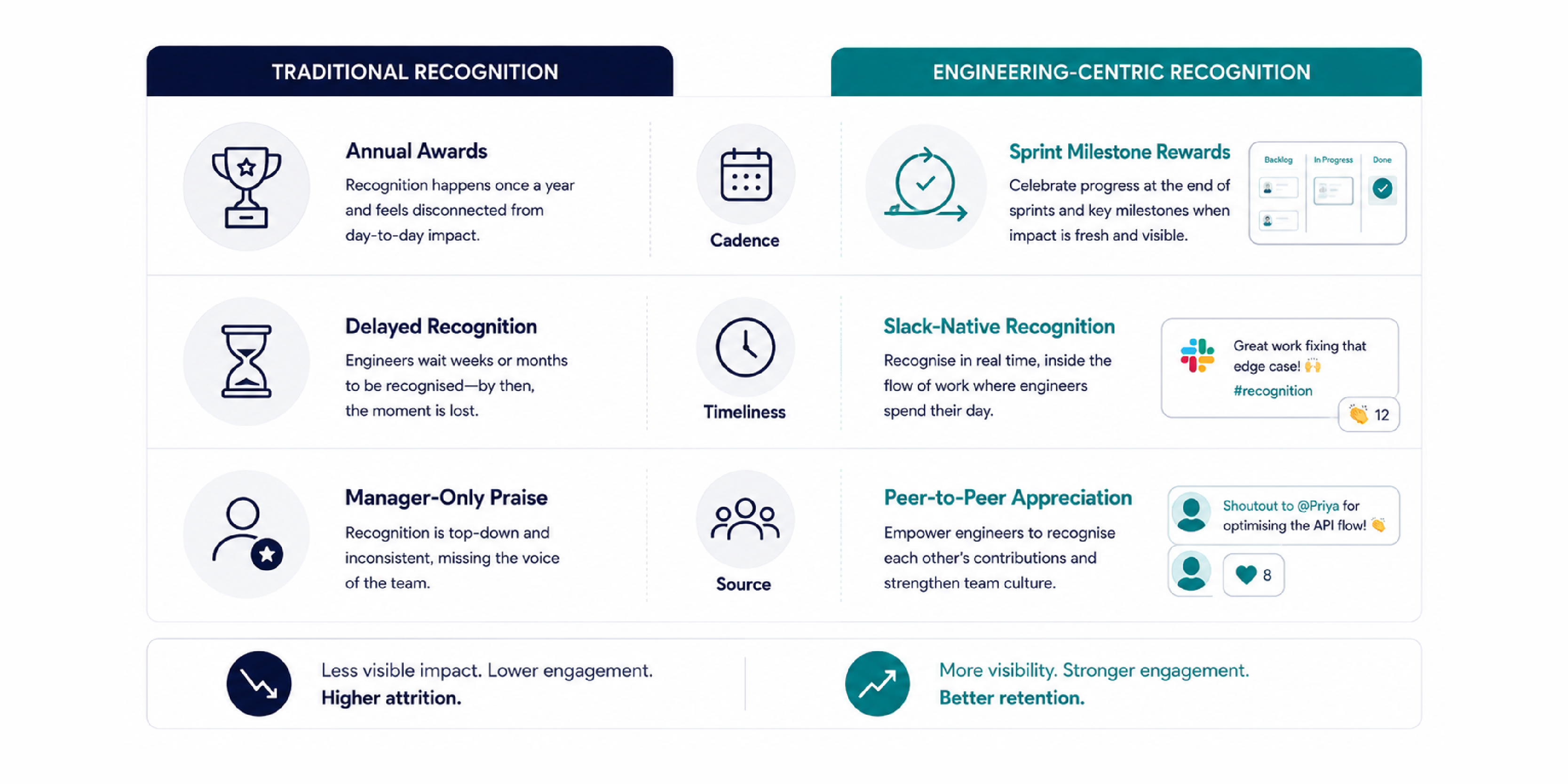
Traditional employee recognition calendars rarely align with how engineering organisations actually operate.
Most HR initiatives revolve around quarterly events, annual awards, or generic employee appreciation campaigns. Engineering teams work differently. Their performance rhythm follows sprint cycles, release milestones, incident response windows, and deployment timelines.
Gartner research shows that recognition delivered within seven days of a meaningful achievement has significantly stronger behavioural reinforcement than delayed recognition. Agile engineering environments require even shorter recognition cycles.
Recognition Moments That Matter in Engineering Teams
Effective engineering recognition often aligns with:
- Sprint completion.
- Zero-defect releases.
- Infrastructure migration milestones.
- Cross-functional collaboration during launches.
- Incident recovery response.
- Mentorship contributions.
- Innovation or automation improvements.
Recognition becomes more powerful when tied directly to operational cadence rather than disconnected corporate schedules.
ApplaudIQ enables automated milestone rewards that align recognition with sprint-based workflows. HR teams can configure milestone triggers for project completions, peer appreciation, anniversaries, certification achievements, and collaborative behaviours without adding manual administration.
This matters particularly during rapid scaling phases. Deloitte research found that high-growth SaaS companies frequently struggle to maintain cultural consistency once headcount expands beyond 200 employees. Structured milestone recognition helps preserve visibility and morale during that transition.
Building Sprint-Aligned Recognition
A strong sprint recognition framework should include:
- Peer-to-peer recognition inside collaboration tools.
- Automated milestone triggers for releases and achievements.
- Public visibility through leaderboards or appreciation walls.
- Reward flexibility across global engineering teams.
- Consistent manager participation.
Recognition tied to engineering delivery cycles reinforces the behaviours organisations want repeated. It also helps engineers feel seen for ongoing contribution rather than only exceptional crisis performance.
For organisations exploring broader employee engagement strategies, The Reward Store’s IT and SaaS recognition solutions provide additional guidance here: https://www.therewardstore.com/applaudiq/solutions/it-saas
How to Build a Recognition Culture That Survives Rapid Headcount Growth
Recognition systems often break during rapid growth phases because managers lose visibility into individual contributions.
Bain & Company research shows that organisational complexity rises sharply as companies scale, especially across distributed engineering teams. Informal appreciation that worked at 50 employees becomes inconsistent and uneven at 500.
HR Leaders need recognition systems that scale operationally without losing authenticity.
The Four Pillars of Scalable Engineering Recognition
1. Peer Visibility
Peer recognition surfaces contributions managers may never directly observe. This becomes critical in distributed engineering organisations where collaboration happens asynchronously.
2. Automation Without Losing Personalisation
Automated milestone recognition reduces administrative burden while still allowing contextual recognition messages.
3. Leadership Participation
Gallup research consistently shows that leadership visibility strongly influences recognition programme adoption. Engineering directors and senior technical leaders should actively participate in recognition activity.
4. Recognition Governance
Rapid growth creates inconsistency unless organisations define recognition behaviours clearly. HR and engineering leaders should jointly define what behaviours deserve recognition.
For example:
- Mentoring junior engineers.
- Improving deployment reliability.
- Reducing technical debt.
- Supporting incident recovery.
- Cross-functional collaboration.
Without clear behavioural alignment, recognition programmes drift toward popularity contests rather than reinforcing organisational values.
Organisations can also strengthen long-term engagement by connecting recognition to broader employee experience initiatives. This article on employee rewards strategy provides additional context.
The goal is not simply to reward employees more frequently. The goal is to build a recognition ecosystem that remains visible, fair, and operationally sustainable during rapid expansion.
Measuring Retention Impact: The Metrics Engineering Leaders and People Teams Should Track Together
Many recognition initiatives fail because organisations never connect recognition activity to retention outcomes.
According to Mercer, HR and engineering leaders increasingly need shared workforce metrics to understand attrition drivers in technical teams. Recognition data becomes far more valuable when connected to retention analytics, engagement trends, and productivity indicators.
Key Metrics to Track
O.C. Tanner research found that employees who receive frequent meaningful recognition are significantly more likely to remain with their organisation for the next two years.
Shared Accountability Between HR and Engineering
Retention improves when engineering leaders and People teams jointly review:
- Sprint workload trends.
- Recognition activity patterns.
- Promotion velocity.
- Team-level attrition hotspots.
- Manager participation rates.
ApplaudIQ helps centralise these insights through recognition analytics, participation tracking, and engagement visibility across distributed teams.
Engineering retention should not rely solely on compensation escalation. HR Leaders need measurable behavioural systems that reinforce belonging, visibility, and contribution quality at scale.
Frequently Asked Questions
What is the best way to retain software engineers without increasing equity?
The most effective approach combines meaningful recognition, career development, flexible work structures, and manager support. Gallup research shows employees who feel recognised regularly are significantly less likely to leave. Recognition works best when tied directly to engineering contributions and delivered consistently within existing collaboration workflows.
Why do software engineers leave even when compensation is competitive?
Compensation alone rarely solves retention challenges. McKinsey research found employees often leave because they feel undervalued, disconnected from leadership, or uncertain about growth opportunities. Engineers also leave when organisations reward only output speed while ignoring collaboration, mentoring, and technical excellence.
How often should engineering teams receive recognition?
Recognition should align with engineering delivery cycles rather than annual HR calendars. Sprint completions, release milestones, mentoring support, and innovation contributions all create opportunities for timely recognition. Gartner research suggests recognition delivered close to achievement creates stronger behavioural reinforcement.
Can peer-to-peer recognition improve engineering retention?
Yes. Peer recognition increases visibility for technical contributions managers may not directly observe. It also strengthens collaboration culture across distributed teams. Organisations with strong recognition cultures consistently report lower voluntary turnover rates, according to Aberdeen Group and O.C. Tanner research.
How does ApplaudIQ help IT and SaaS companies improve retention?
ApplaudIQ supports engineering-friendly recognition through Slack and Teams integrations, peer-to-peer appreciation, milestone automation, leaderboards, and global rewards access. HR and engineering leaders can track participation, recognition trends, and engagement signals while embedding recognition directly into daily workflows.
Conclusion
Software engineers rarely stay because of equity alone. They stay when organisations consistently recognise technical contribution, create visible career value, and reinforce collaboration through everyday work experiences.
As IT and SaaS organisations continue scaling globally, recognition systems will increasingly move closer to engineering workflows, sprint cycles, and peer collaboration tools. HR Leaders who build structured recognition cultures now will gain a measurable retention advantage over organisations relying solely on compensation escalation.
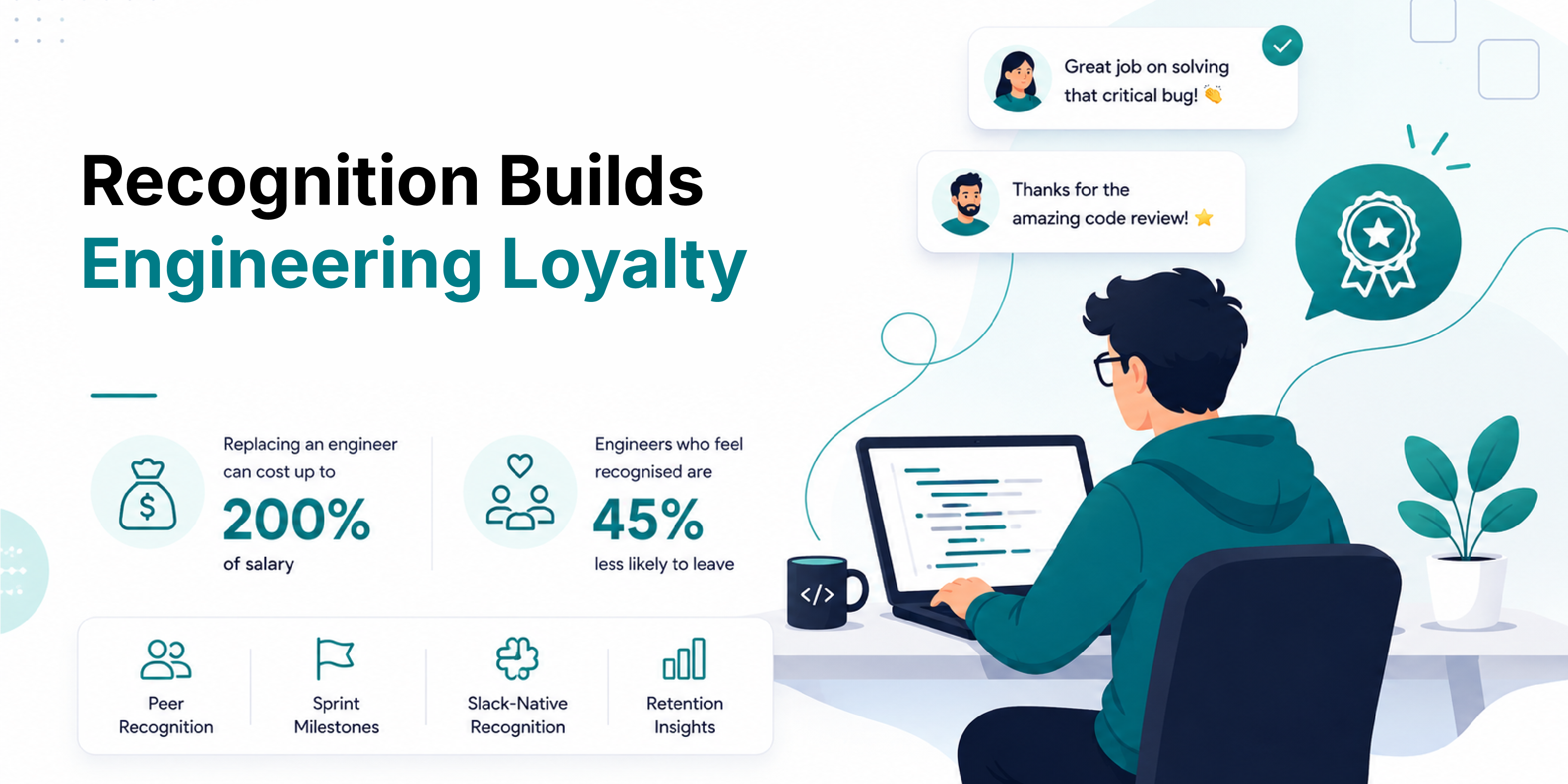
See how ApplaudIQ helps IT and SaaS companies retain engineering talent through recognition-first engagement strategies.
Sign up for our newsletter for trending top content!


