
How to Design Sales Contests for Retail Channel Partners That Drive Performance Without Creating Resentment

Sign up for our newsletter for trending top content!
Introduction
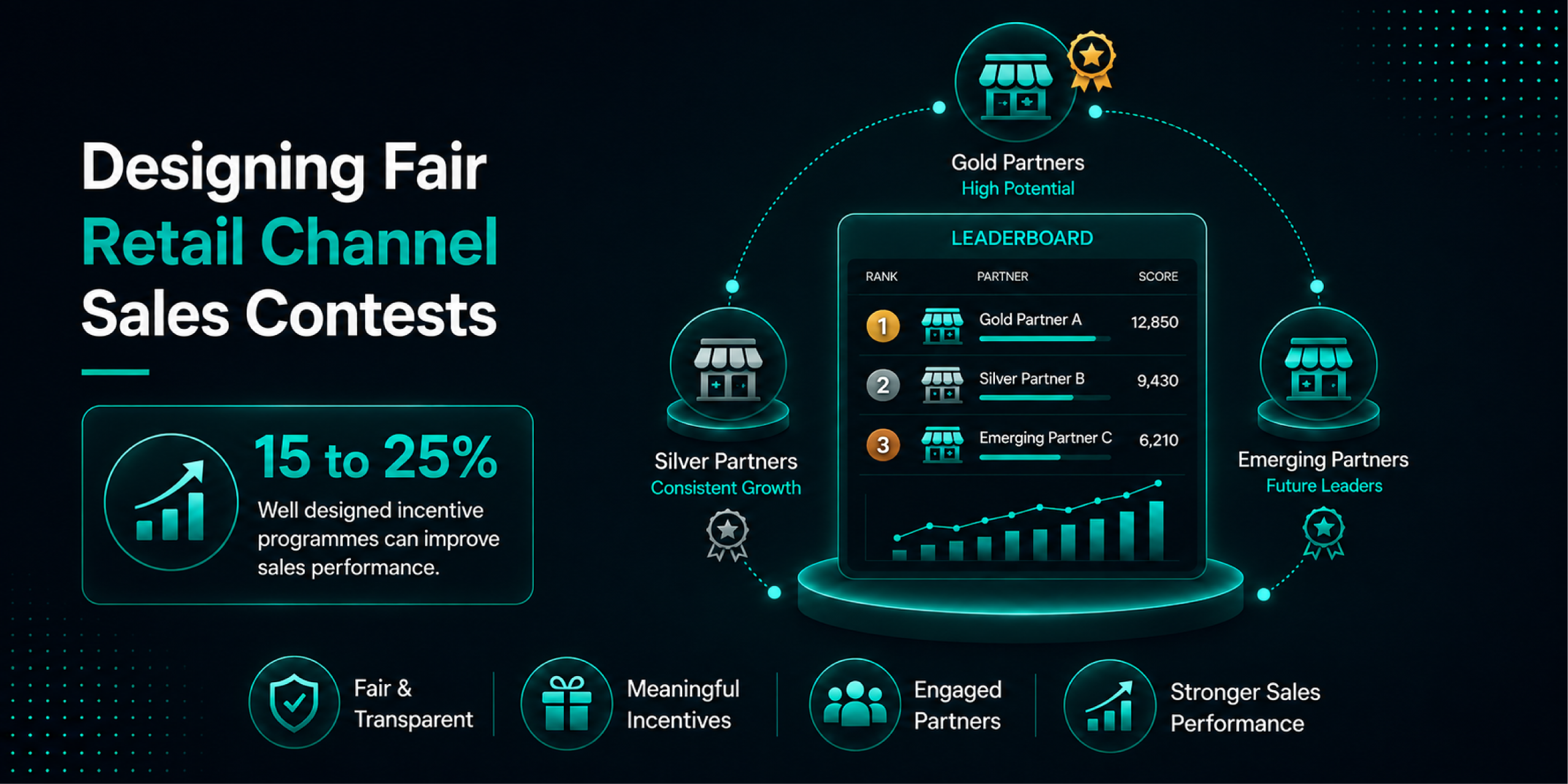
Research from the Incentive Research Foundation (IRF) consistently shows that well designed incentive programmes can improve sales performance by 15 to 25 percent, while Gallup has found that employees and sales teams perform better when they receive meaningful recognition tied to clear goals. Yet many retail channel sales contests still reward only a handful of top performers while leaving the majority disengaged before the competition reaches its halfway point.
For Sales Leaders managing large distributor, dealer and retail partner networks, contest design matters as much as the reward itself. Poorly designed contests reduce participation, create perceptions of unfairness and weaken long term partner relationships. This guide explains how to build retail channel partner sales contest design mechanics that encourage broad participation, sustain motivation across different partner sizes and deliver measurable sales growth without creating resentment.
Why Channel Sales Contests Often Demotivate the Middle 60% While Only Rewarding the Top 10%
Many retail channel contests unintentionally reward existing high performers rather than encouraging incremental growth across the wider partner ecosystem. A simple leaderboard based solely on total sales almost always favours larger partners with greater territory coverage, larger teams and stronger customer demand. Smaller but high potential partners quickly recognise that they have little chance of winning and disengage.
The Incentive Research Foundation reports that incentive design has a greater impact on participation than reward value alone. Similarly, Gartner has highlighted that perceived fairness directly influences sustained engagement in performance initiatives. When participants believe outcomes are predetermined, effort declines regardless of prize size.
Why traditional contests fail
Common design mistakes include:
- One winner takes all structures.
- Measuring only revenue instead of growth.
- Identical targets regardless of market potential.
- Limited visibility into contest progress.
- Delayed communication throughout the campaign.
Instead, Sales Leaders should reward improvement rather than absolute dominance. Categories such as highest percentage growth, fastest new product adoption, customer acquisition or consistency over multiple weeks broaden the number of potential winners.
Recognition should also extend beyond the final leaderboard. Milestone achievements, weekly recognition and category specific awards maintain motivation throughout the contest rather than concentrating excitement on a single closing date.
Platforms such as Paytives help automate multiple contest categories, milestone tracking and rule management across large partner ecosystems, making it practical to recognise different types of achievement without increasing administrative complexity.
Individual vs Team Contests: Which Format Drives Better Channel Results and in What Situations
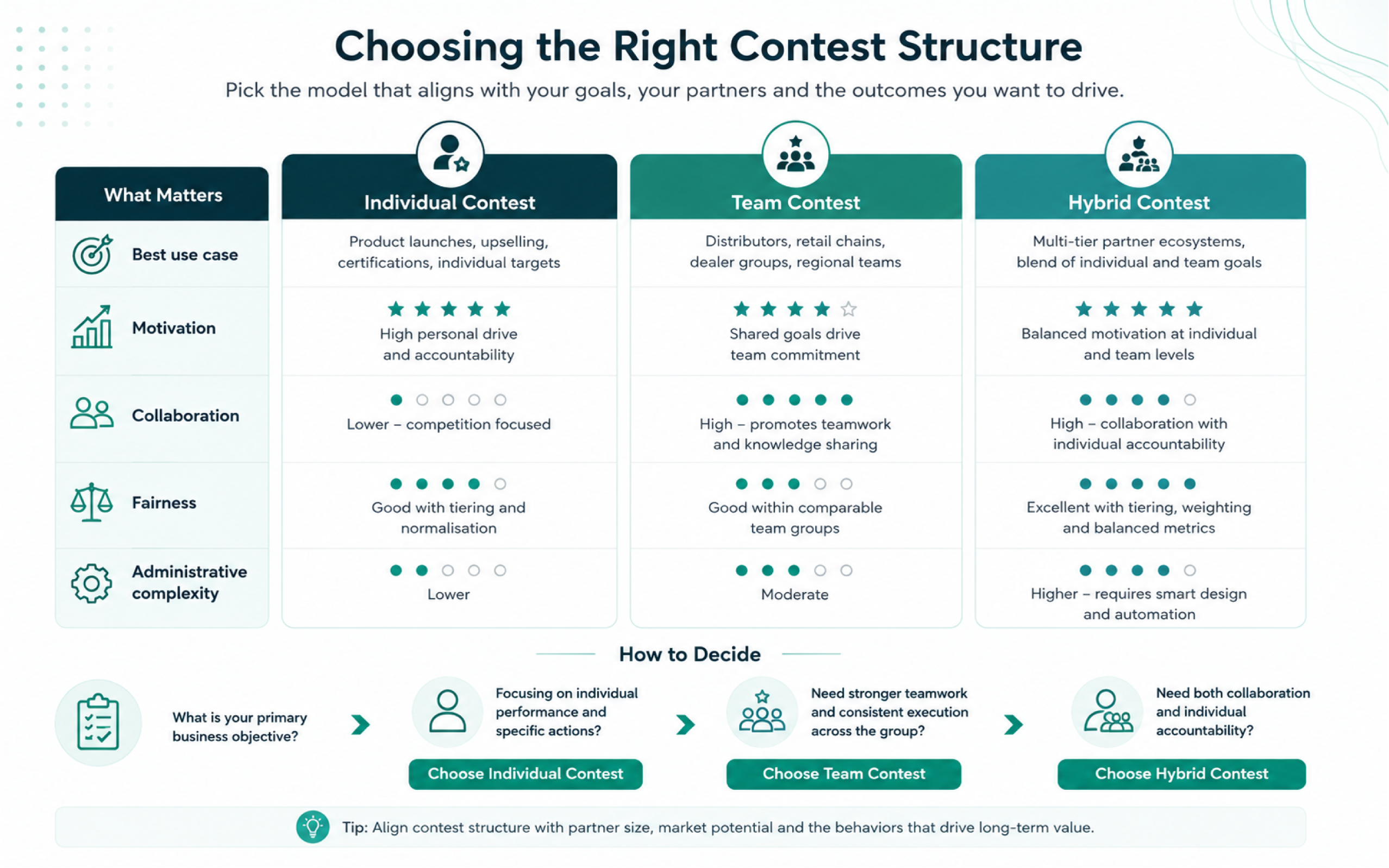
Choosing between individual and team contests depends on business objectives rather than preference. McKinsey has found that organisations combining individual accountability with collaborative goals generally outperform those relying exclusively on either approach. Deloitte similarly notes that collaborative performance frameworks improve knowledge sharing and long term organisational outcomes.
Comparison framework
A hybrid model often delivers the strongest results for retail channel programmes. Individual representatives compete within their organisations while partner organisations simultaneously compete against comparable businesses. This structure encourages internal collaboration without removing individual accountability.
Sales Leaders should also align contest mechanics with business priorities.
If the objective focuses on increasing product knowledge, reward learning completion and certification.
If the objective targets market expansion, reward new customer acquisition.
If the objective centres on sustainable growth, combine revenue growth, customer retention and product mix.
Research from Bain and Company shows that organisations focusing on balanced performance metrics create more sustainable growth than those rewarding a single financial outcome alone.
Handicapping and Normalisation: How to Make Contests Fair Across Partners of Different Sizes
One of the biggest reasons retail channel contests fail is the assumption that every partner begins from the same position. They do not.
Large distributors naturally generate higher sales volumes than smaller regional retailers. Running identical contests across both groups almost guarantees predictable winners.
McKinsey recommends normalised performance measurement when comparing business units with different market conditions. Gartner similarly advises organisations to benchmark improvement rather than absolute output where significant structural differences exist.
Several approaches improve fairness.
Percentage growth
Measure improvement against historical performance rather than total revenue.
Territory weighting
Adjust targets according to market size, product availability and regional demand.
Tier based competitions
Create separate competitions for partners of similar size and capability.
Points based scoring
Award points across multiple behaviours including:
- New customer acquisition.
- Product mix improvement.
- Training completion.
- Promotional execution.
- Sales growth.
Rather than rewarding only final revenue, Sales Leaders recognise the behaviours that produce sustainable commercial outcomes.
This is where Paytives provides practical value. Sales Leaders can configure separate contest rules, partner tiers, scorecards and weighted performance calculations without manually maintaining complex spreadsheets. Automated rule management also improves transparency because every participant understands exactly how scores are calculated.
According to Mercer, transparent performance frameworks improve trust, while the Incentive Research Foundation reports that fairness remains one of the strongest predictors of sustained contest participation.
Duration and Frequency: How Long a Contest Should Run and How Often You Should Run Them
Many organisations assume longer contests create greater motivation. Evidence suggests the opposite.
The Incentive Research Foundation has found that shorter campaigns with regular communication typically maintain stronger engagement than lengthy competitions where progress feels too distant. Gallup also notes that frequent recognition strengthens motivation more effectively than infrequent annual events.
The ideal duration depends on contest objectives.
- Two to four weeks for product launches.
- One to three months for seasonal campaigns.
- Quarterly contests for strategic growth initiatives.
- Annual recognition for cumulative achievement rather than operational sales.
Sales Leaders should avoid running identical contests continuously. Constant competition creates fatigue and gradually reduces perceived value.
Instead, rotate objectives throughout the year.
Quarter one may reward new customer acquisition.
Quarter two may focus on premium product sales.
Quarter three may encourage cross selling.
Quarter four may recognise overall partner excellence.
Regular communication also matters. Weekly performance updates, milestone recognition and leaderboard refreshes maintain momentum without overwhelming participants.
Research from O.C. Tanner demonstrates that continuous recognition contributes to stronger engagement than isolated recognition events. Consistent communication reminds partners that progress remains achievable throughout the contest rather than only during the opening weeks.
Real Time Leaderboards: What Happens When Partners Can See Exactly Where They Stand
Visibility changes behaviour.
According to Gartner, timely performance feedback enables faster behavioural adjustment than delayed reporting. Aberdeen Group has similarly reported that organisations using real time performance management achieve stronger sales execution than those relying on periodic reporting.
Real time leaderboards create several advantages.
Increased motivation
Participants know whether additional effort could improve their ranking.
Faster behavioural change
Partners can redirect activity before the contest ends.
Better transparency
Clear scoring reduces disputes and questions about fairness.
Greater accountability
Managers identify underperforming regions earlier.
However, leaderboards require thoughtful design.
Displaying every participant in one national ranking often discourages smaller partners. Instead, show rankings within comparable partner tiers, territories or categories.
Sales Leaders should also highlight positive movement rather than only absolute position. A partner moving from twentieth to tenth deserves recognition even if they do not finish first.
Paytives supports configurable real time leaderboards across multiple partner structures, allowing organisations to display rankings based on territory, distributor tier, product category or growth percentage. This gives every participant a realistic opportunity to compete while maintaining transparency across the network.
Forrester research also shows that actionable performance data enables faster decision making, particularly when integrated into everyday partner workflows.
How to Close Out a Contest Without Alienating the 80% Who Did Not Win
The final week of a contest shapes partner perception long after prizes have been distributed.
Many organisations announce winners, distribute rewards and immediately move on. Unfortunately, this approach reinforces disappointment among the majority who did not finish at the top.
O.C. Tanner research consistently demonstrates that recognition should celebrate contribution as well as exceptional achievement. Gallup similarly reports that employees and partners remain more engaged when organisations acknowledge progress instead of focusing exclusively on elite performers.
Sales Leaders should conclude contests using multiple recognition categories.
Examples include:
- Highest growth.
- Strongest improvement.
- Best first time participant.
- Most consistent monthly performer.
- Product knowledge champion.
- Customer acquisition leader.
Sharing success stories also creates learning opportunities across the wider partner network.
Leaders should publish practical examples explaining how successful partners achieved their results. This transforms winners into role models rather than distant competitors.
Finally, request structured partner feedback immediately after every contest.
Questions should explore:
- Contest fairness.
- Rule clarity.
- Reward attractiveness.
- Communication quality.
- Improvement suggestions.
Continuous refinement creates stronger participation with every future campaign while reinforcing that partner feedback genuinely shapes future initiatives.
Frequently Asked Questions
What are the best retail channel partner sales contest design mechanics?
The most effective mechanics reward improvement rather than only total sales. Use tier based competitions, percentage growth targets, milestone rewards, multiple winner categories and transparent scoring. Research from the Incentive Research Foundation consistently highlights fairness and clear objectives as key drivers of participation.
How long should a retail channel sales contest last?
Most tactical contests perform best between two and eight weeks, depending on the objective. Product launches often benefit from shorter campaigns, while strategic sales initiatives may require quarterly competitions. Frequent communication keeps motivation high throughout the contest.
Why do many channel partner contests fail?
Many contests favour large partners because they reward absolute sales rather than relative improvement. This discourages the majority of participants early in the competition. Gartner and McKinsey both recommend designing performance frameworks that account for structural differences across partner networks.
Can technology improve retail channel sales contests?
Yes. Platforms such as Paytives automate contest configuration, partner segmentation, real time leaderboards, incentive calculation and global reward fulfilment. Automation also improves transparency, reduces manual administration and enables Sales Leaders to manage complex multi country partner ecosystems with consistent rules.
Conclusion
Successful retail channel sales contests do far more than reward the highest sales figures. They encourage participation across every partner tier, recognise meaningful improvement and create confidence that every participant has a realistic opportunity to succeed. As channel ecosystems become increasingly data driven, contest design will continue shifting towards personalised, real time performance management supported by automation.
If you want to build fair, scalable channel sales contests that motivate every partner, the right technology becomes an essential part of the strategy.
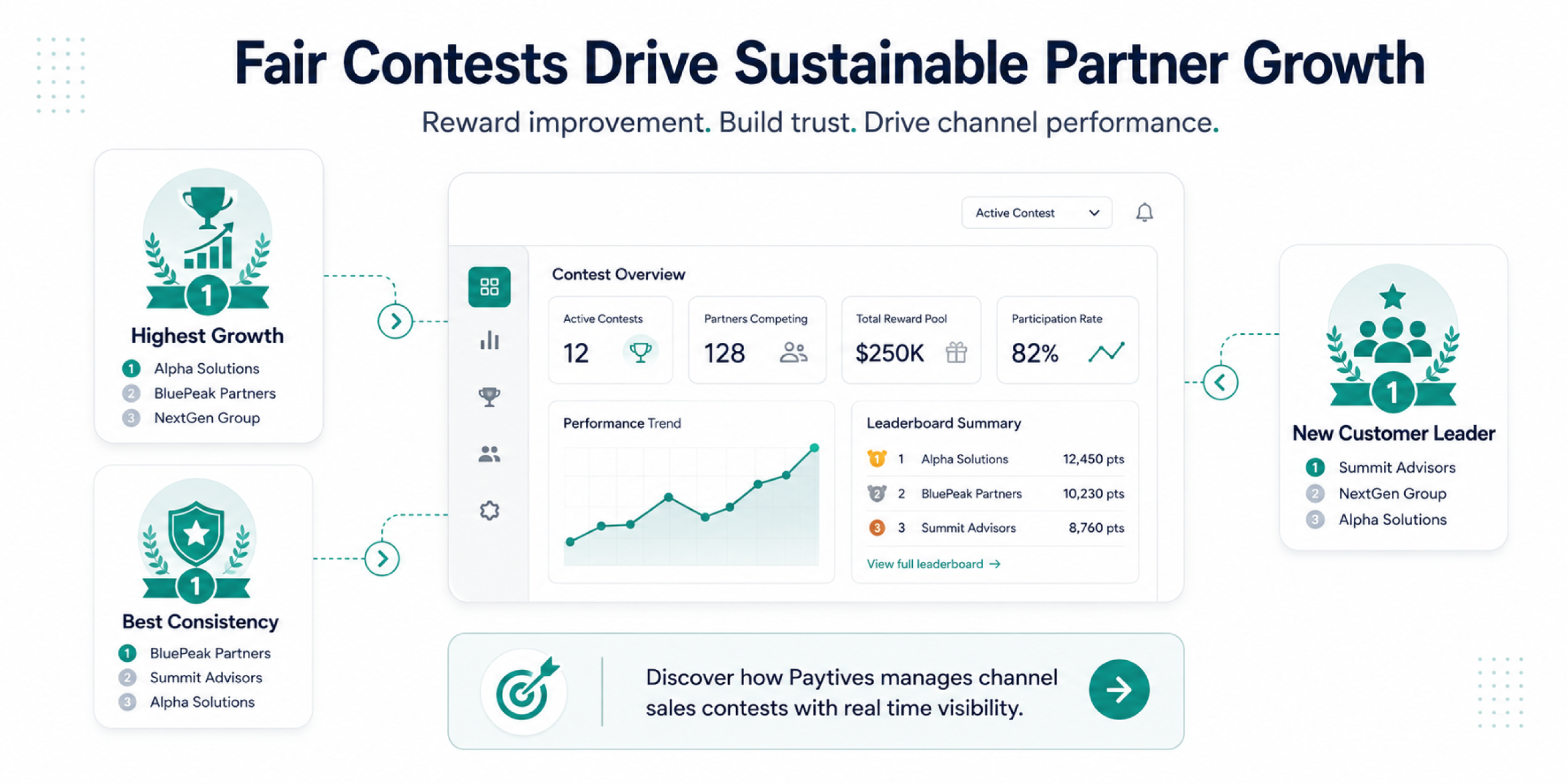
See how Paytives helps Sales Leaders design fair retail channel sales contests with real time leaderboards, automated incentive calculations and transparent partner performance tracking. Explore the features at https://www.therewardstore.com/paytives/features
Sign up for our newsletter for trending top content!


