
How Do Recognition Platforms Enable Cross Functional Visibility Without Manual Reporting?

Sign up for our newsletter for trending top content!
Introduction
HR Leaders increasingly rely on workforce data to guide decisions about engagement, performance, retention, and organisational culture. Yet many recognition programmes still depend on spreadsheets, fragmented reports, and manual data collection. According to Deloitte, organisations that use people analytics to support decision making are more likely to improve workforce performance and employee experience. Recognition platforms address this challenge by providing continuous visibility into recognition activity, participation, and behavioural trends across the organisation.
This guide explains how recognition platforms eliminate manual reporting, the types of cross functional insights they provide, how HR Leaders can use recognition analytics to strengthen organisational culture, and why integrated reporting has become essential for modern workforce management.
Why Do HR Teams Need Cross Functional Visibility?
Employee recognition influences far more than engagement. It affects collaboration, leadership development, organisational culture, retention, and employee experience across every department. Without a central reporting platform, HR teams often struggle to understand how recognition activities differ between business units or whether programmes support organisational objectives.
According to Gallup, employees who receive meaningful recognition are more engaged and more likely to remain with their employer. Measuring recognition consistently helps HR teams identify which departments foster strong recognition cultures and which require additional support.
Limited visibility often creates several challenges:
- Recognition data remains isolated within departments.
-
- Reporting requires manual spreadsheet consolidation.
- Leadership receives delayed workforce insights.
- Participation trends become difficult to identify.
- Recognition bias may remain unnoticed.
- Programme optimisation becomes reactive rather than proactive.
Cross functional visibility allows HR Leaders to understand recognition activity across the organisation, enabling more informed decisions about leadership development, engagement strategies, and organisational culture.
How Do Recognition Platforms Replace Manual Reporting?
Traditional recognition reporting often involves collecting information from multiple systems before manually preparing leadership reports. This process consumes valuable HR resources while limiting the availability of real time insights.
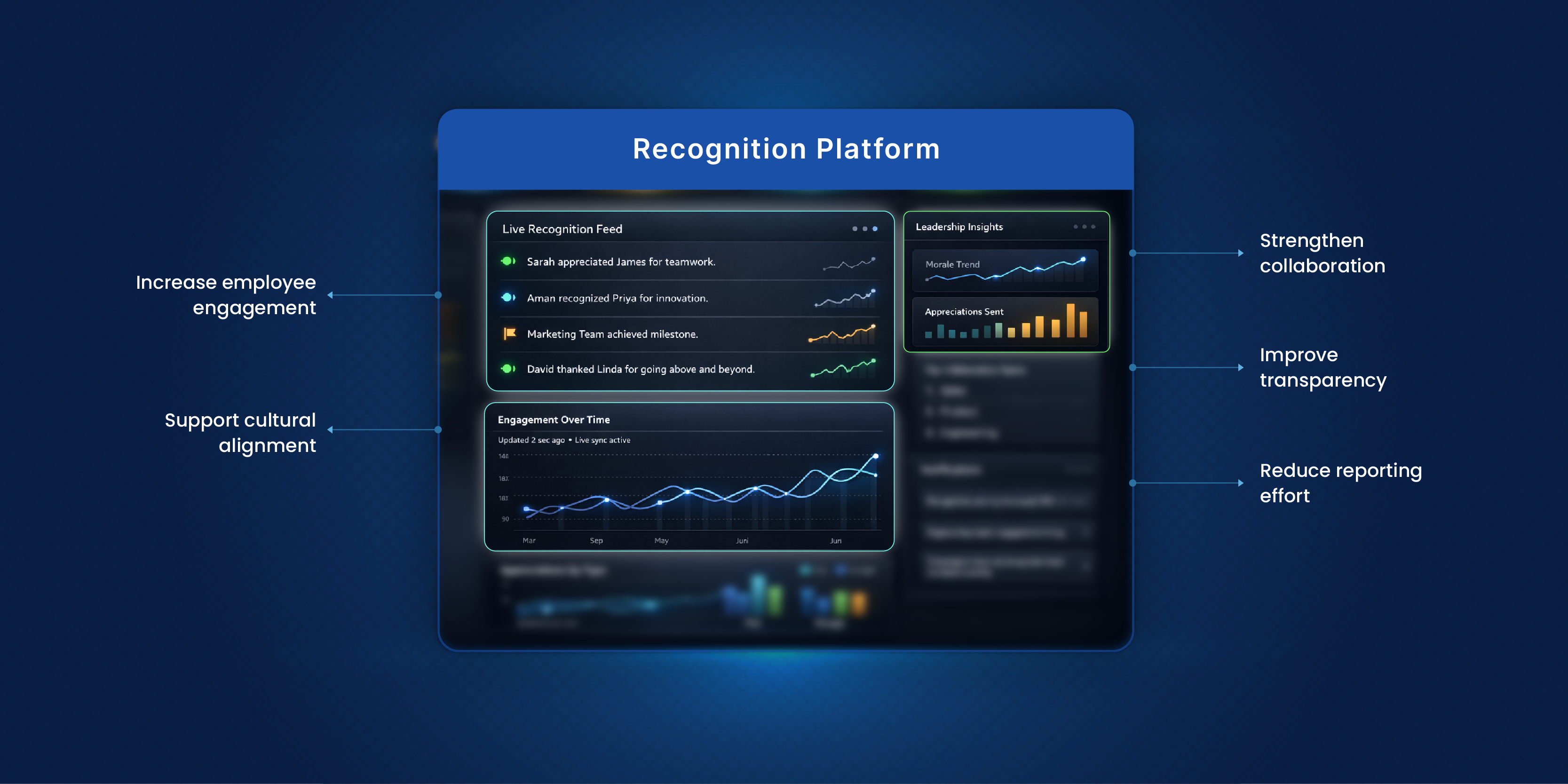
According to McKinsey, organisations improve decision quality when leaders have access to timely operational data rather than retrospective reporting. Recognition platforms support this by collecting recognition activity automatically and presenting insights through interactive dashboards.
Modern recognition platforms typically provide:
Automation also improves reporting accuracy by reducing manual data entry and ensuring leaders work from a single, consistent source of information.
What Organisational Benefits Come from Recognition Analytics?
Recognition analytics transform appreciation into measurable workforce intelligence. Rather than simply tracking the number of awards issued, HR Leaders can evaluate how recognition influences organisational performance and employee experience.
A practical analytics framework includes:
According to O.C. Tanner, organisations strengthen workplace culture when recognition becomes frequent, visible, and meaningful. Analytics enable HR teams to identify whether those conditions exist consistently across departments and locations.
Recognition insights also support strategic workforce planning by highlighting areas where engagement may be declining or where leadership teams require additional coaching. Instead of relying on annual surveys alone, HR Leaders gain continuous visibility into employee behaviour throughout the year.
By replacing manual reporting with real time analytics, recognition platforms help organisations make faster, better informed workforce decisions while reducing administrative effort.
How Does ApplaudIQ Deliver Cross Functional Visibility?
Cross functional visibility requires more than dashboards. HR Leaders need a recognition platform that consolidates workforce data, automates reporting, and provides actionable insights for HR, business leaders, and executives.
According to Deloitte, organisations that embed analytics into people management improve decision-making because leaders gain timely visibility into workforce trends rather than relying on historical reports. Recognition platforms contribute to this by transforming everyday appreciation into measurable organisational intelligence.
ApplaudIQ enables HR teams to monitor recognition performance through:
By bringing recognition data into one platform, ApplaudIQ reduces manual reporting while providing HR Leaders with reliable, organisation-wide insights that support culture, engagement, and workforce planning.
What Framework Should HR Leaders Use to Measure Recognition Performance?
Recognition analytics are most valuable when they connect employee behaviour with strategic business outcomes. HR Leaders should evaluate recognition using a balanced scorecard rather than relying on participation figures alone.
A practical framework includes:
According to Mercer, organisations that use workforce analytics to improve employee experience make better people decisions because they identify engagement opportunities earlier. Recognition reporting should therefore support continuous improvement rather than annual review cycles.
Combining quantitative dashboards with employee feedback enables HR teams to refine recognition strategies while ensuring programmes remain aligned with organisational priorities.
Which Analytics Matter Most for Executive Reporting?
Executive leaders need concise, meaningful insights that demonstrate how recognition contributes to organisational performance. Effective reporting should move beyond activity counts to explain behavioural and business impact.
Key executive metrics include:
According to Gallup, frequent and meaningful recognition contributes to stronger employee engagement and improved retention. Monitoring these indicators enables HR Leaders to present recognition as a strategic business initiative rather than an administrative activity.
Executive dashboards also help leadership identify emerging trends quickly, enabling proactive interventions before engagement challenges affect organisational performance.
Frequently Asked Questions
How do recognition platforms replace manual HR reporting?
Recognition platforms automatically collect recognition activity, reward data, participation metrics, and engagement trends into central dashboards. This removes the need for manual spreadsheet consolidation and provides HR Leaders with real time workforce insights.
What cross functional data do recognition platforms surface?
Modern recognition platforms provide visibility into department participation, manager engagement, recognition frequency, collaboration patterns, reward utilisation, employee engagement trends, and programme performance across the organisation.
Why is recognition analytics important for HR Leaders?
Recognition analytics help HR Leaders understand whether programmes support organisational culture, improve engagement, encourage leadership participation, and reinforce company values. They also support evidence-based workforce planning.
Can ApplaudIQ provide executive dashboards?
Yes. ApplaudIQ includes analytics dashboards, reporting tools, participation metrics, governance controls, and exportable reports that help HR Leaders and executives monitor recognition performance across the organisation.
When should recognition reports be reviewed?
Operational dashboards should be monitored continuously, while strategic reporting is typically reviewed monthly or quarterly. Regular analysis enables HR teams to identify trends early and optimise programme performance.
Conclusion
Recognition platforms have transformed workforce reporting by replacing manual processes with continuous organisational visibility. Through real time analytics, HR Leaders gain actionable insights into employee engagement, leadership participation, collaboration, and programme effectiveness.
As organisations increasingly rely on workforce intelligence to shape culture and performance, integrated recognition analytics will become an essential component of strategic HR decision-making.
Discover how ApplaudIQ helps HR teams replace manual reporting with real time analytics dashboards, automated workforce insights, governance tools, and executive reporting that strengthen employee recognition programmes.
Sign up for our newsletter for trending top content!


