
The Real Cost of Employee Attrition: How to Build a Board-Level Business Case for Recognition Investment

Sign up for our newsletter for trending top content!
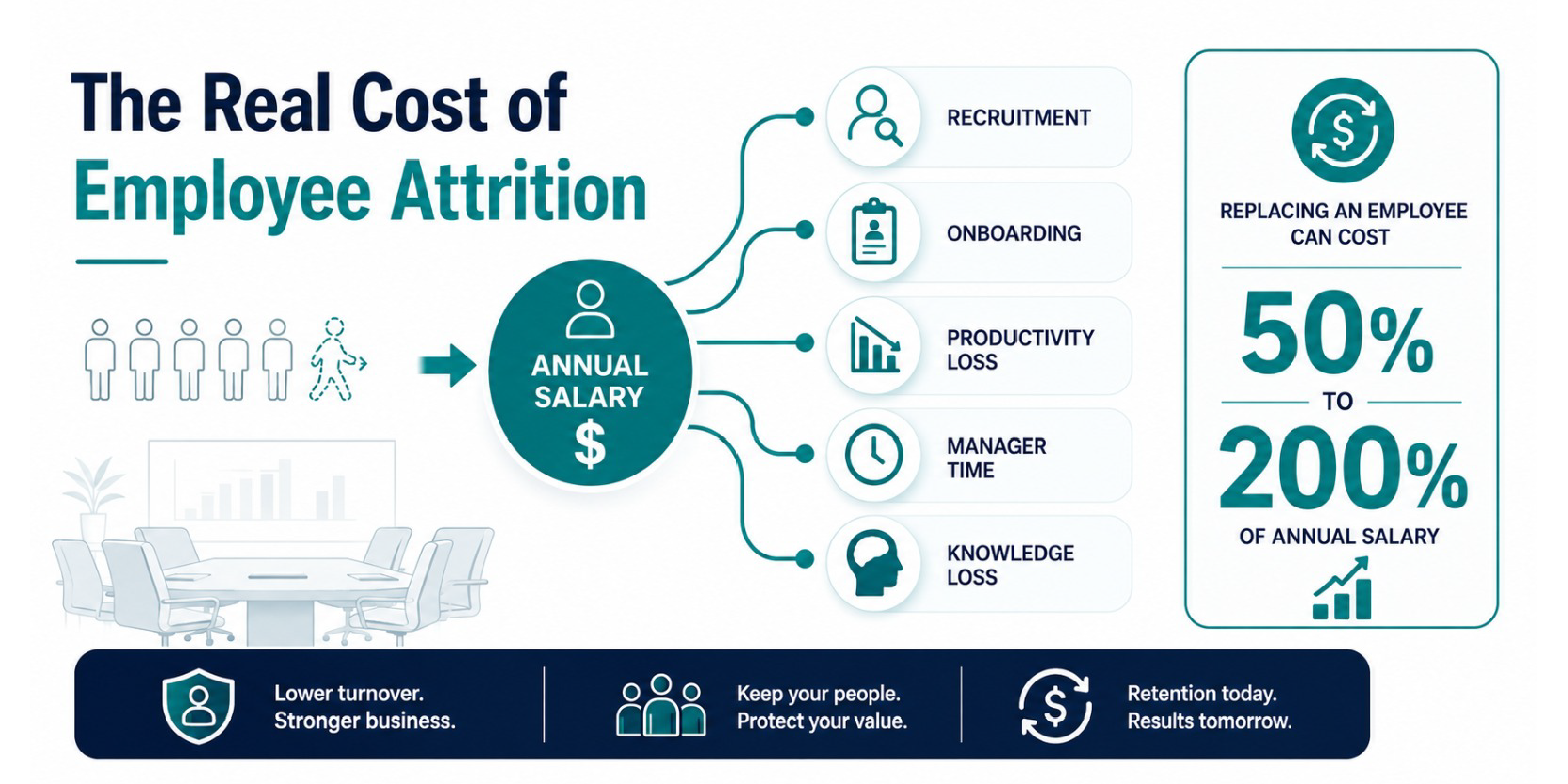
Employee turnover is rarely a line item that attracts boardroom attention until it becomes a crisis. Yet research from SHRM estimates that replacing an employee can cost between six and nine months of their salary, while senior and specialist roles often cost significantly more. Gallup has also consistently linked disengagement to higher turnover, lower productivity, and weaker business performance.
For CXOs, the challenge is not proving that attrition is expensive. The challenge is quantifying the true financial impact and demonstrating how a strategic recognition investment can reduce those costs. Most organisations underestimate the full burden of employee exits because they focus only on recruitment expenses while ignoring productivity loss, knowledge drain, customer impact, and leadership disruption.
This article explains how to calculate the true cost of employee attrition, identify the hidden costs most analyses miss, and build a board-level business case for employee recognition investment using measurable financial outcomes.
How to Calculate the True Cost of Losing One Employee at Each Seniority Level
Many organisations calculate attrition costs incorrectly because they focus on recruitment agency fees and onboarding expenses. Research from SHRM and Deloitte shows that replacement costs extend far beyond hiring.
A practical attrition cost calculation should include:
- Recruitment and sourcing costs
- Interview and assessment time
- Onboarding and training costs
- Lost productivity during vacancy periods
- Reduced productivity during ramp-up
- Manager time spent on replacement activities
- Team disruption and project delays
Attrition Cost Framework by Seniority
For example, losing a manager earning £80,000 annually may create a replacement cost exceeding £120,000 when organisations include recruitment, onboarding, productivity gaps, and team impact.
Gallup research has repeatedly shown that highly engaged teams experience significantly lower turnover rates than disengaged teams. That relationship makes employee engagement and recognition measurable financial variables rather than HR initiatives.
The first step in any board-level business case is calculating attrition cost by employee segment. CXOs who understand cost at each seniority level gain a far more accurate view of workforce risk and investment priorities.
The Indirect Costs That Most Attrition Analyses Completely Miss
Most attrition reports capture direct costs. The largest financial losses often come from indirect effects that never appear on a balance sheet.
McKinsey research highlights that knowledge-intensive organisations depend heavily on institutional expertise and collaborative networks. When experienced employees leave, organisations lose more than individual productivity. They lose relationships, tacit knowledge, customer familiarity, and internal influence.
Hidden Cost Areas
Knowledge Loss
Experienced employees often carry undocumented operational knowledge. Rebuilding that expertise can take months or years.
Customer Impact
Bain & Company research has repeatedly demonstrated strong links between employee engagement and customer loyalty outcomes. High employee turnover can weaken service quality and customer retention.
Leadership Bandwidth
Managers spend significant time recruiting, interviewing, onboarding, and supporting replacements. Gartner research indicates that manager workload continues to increase across modern organisations, making replacement activity increasingly expensive.
Team Productivity Decline
When one employee leaves, remaining team members frequently absorb additional responsibilities. Deloitte research has shown that excessive workload and burnout contribute to further turnover risk, creating a costly cycle.
Employer Brand Damage
High turnover can affect recruitment quality and hiring speed. According to LinkedIn Workforce insights and Gartner employer brand research, candidate perception directly influences talent acquisition effectiveness.
These indirect costs explain why attrition often becomes a strategic risk rather than simply an HR metric. Boards that focus exclusively on replacement costs may underestimate the true financial exposure by a substantial margin.
Recognition Investment vs Attrition Cost: How the ROI Maths Actually Works
Employee recognition often struggles to secure budget because organisations classify it as a cultural initiative rather than a business investment. The data tells a different story.
Gallup research has consistently found that employees who receive meaningful recognition are more likely to remain with their employer and report higher engagement levels. O.C. Tanner research similarly identifies recognition as one of the strongest drivers of employee experience and retention.
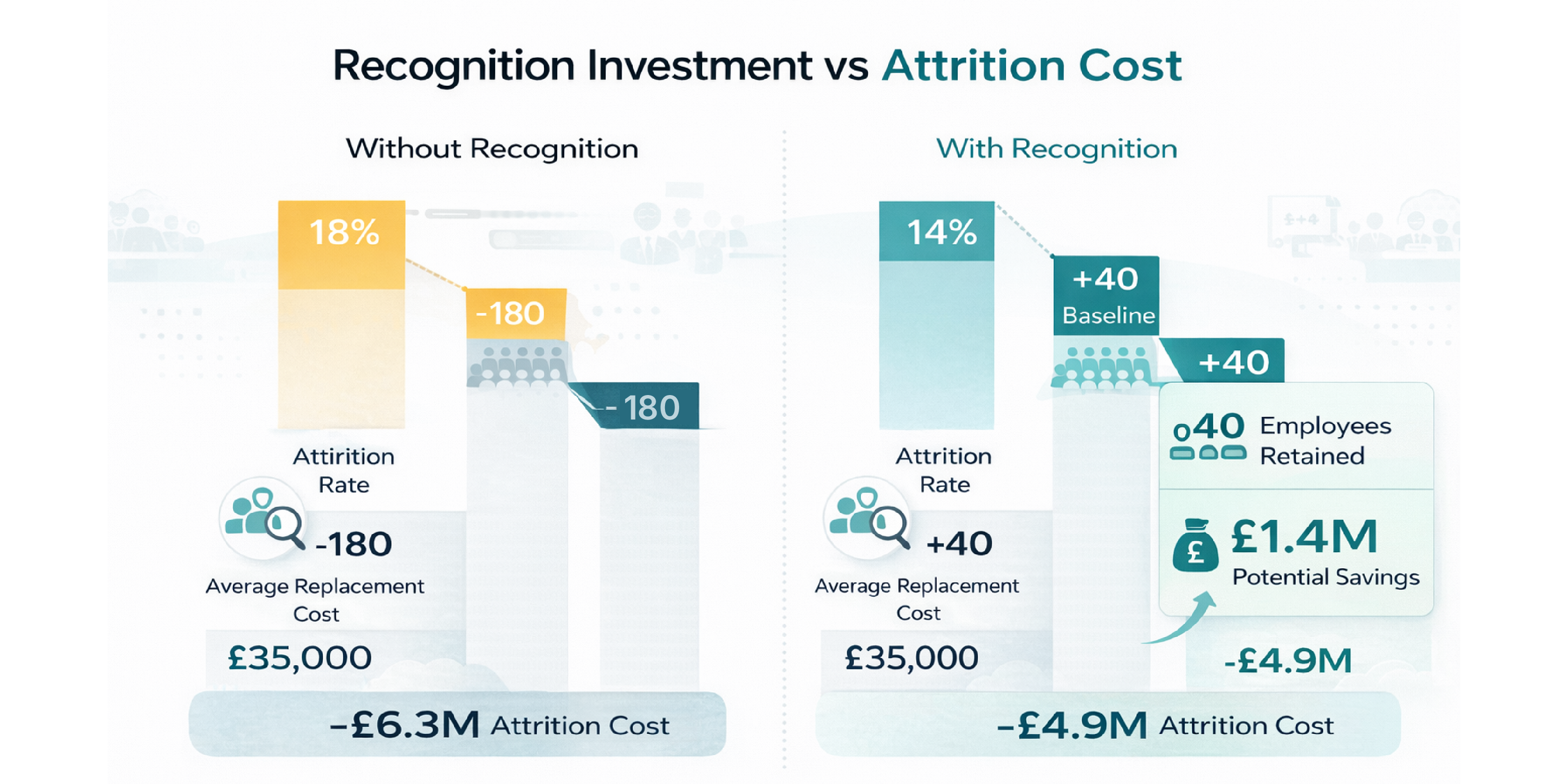
A Simple ROI Comparison
This simplified model illustrates how even modest improvements in retention can generate significant financial returns.
Recognition platforms help organisations operationalise engagement rather than relying on occasional manager-led appreciation. Solutions such as ApplaudIQ support continuous peer-to-peer recognition, milestone celebrations, manager visibility, and reward-based engagement across global teams.
When organisations automate recognition and connect it to measurable workforce outcomes, they create a clearer link between employee experience and financial performance.
The boardroom conversation should therefore focus on avoided attrition costs rather than reward expenditure alone.
How to Frame Recognition ROI for a CFO Who Has Never Seen the Data
CFOs rarely approve investments based on employee sentiment alone. They approve investments that demonstrate measurable financial outcomes.
The most effective recognition business cases connect workforce metrics to financial performance indicators.
CFO Decision Framework
Step 1: Quantify Current Attrition Cost
Calculate annual turnover volume and average replacement cost.
Formula:
Annual Attrition Cost = Number of Exits × Average Cost per Exit
Step 2: Estimate Improvement Potential
Use external benchmarks from Gallup, O.C. Tanner, Mercer, and Deloitte to model realistic retention improvements.
Step 3: Calculate Financial Savings
Estimate savings generated through lower turnover and improved productivity.
Step 4: Compare Against Investment
Compare projected savings against annual recognition programme expenditure.
Questions CFOs Typically Ask
- What is our current turnover cost?
- Which employee segments create the highest financial risk?
- How much turnover reduction is required to break even?
- How quickly can we measure impact?
- What reporting mechanisms validate results?
This is where analytics become essential. Platforms such as ApplaudIQ provide leadership dashboards, recognition activity reporting, milestone tracking, and engagement visibility that help organisations connect recognition activity with workforce outcomes.
A CFO does not need to believe in recognition. A CFO needs evidence that recognition reduces costs and protects productivity.
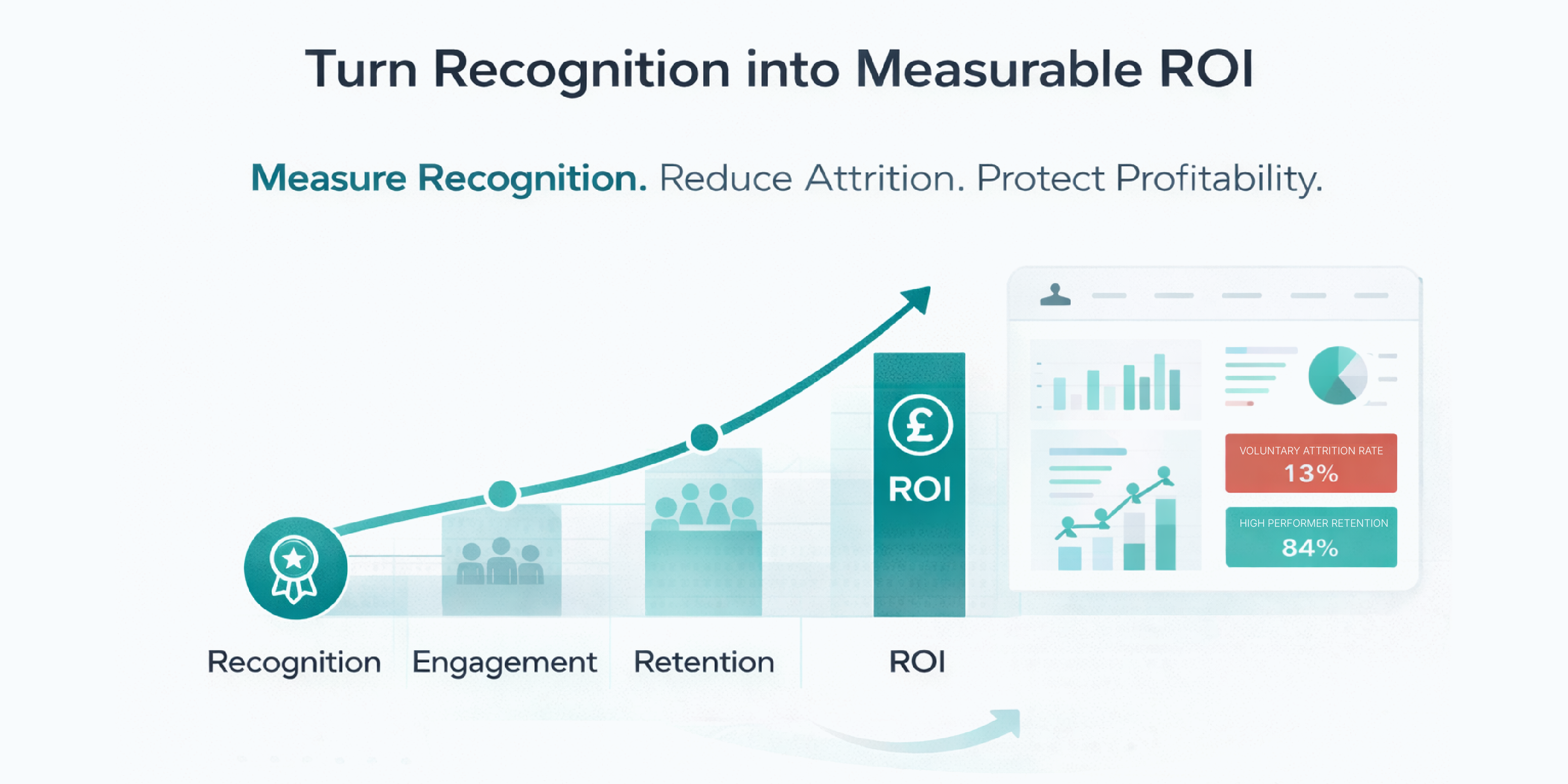
The Metrics CXOs Need to Track Recognition Impact at Board Level
Recognition initiatives often fail because organisations measure activity instead of business outcomes.
According to Forrester and Gartner workforce analytics research, executive reporting should focus on indicators that connect directly to organisational performance.
Core Board-Level Metrics
Voluntary Attrition Rate
Track changes across business units, geographies, and employee segments.
High Performer Retention
Monitor retention among top contributors and critical talent pools.
Recognition Participation Rate
Measure employee and manager adoption levels.
Employee Engagement Score
Track engagement trends alongside recognition activity.
Internal Mobility Rate
Strong recognition cultures often correlate with higher internal career movement.
Time to Productivity
Assess whether recognised employees ramp up more quickly and sustain stronger performance.
Revenue Per Employee
Measure whether engagement improvements contribute to workforce productivity gains.
Leading Indicators vs Lagging Indicators
Board reporting should combine both categories.
Recognition activity shows whether the strategy is being adopted. Retention and productivity metrics show whether the strategy is generating business value.
CXOs who monitor both gain a stronger understanding of workforce health and future talent risk.
A Simple Template for Building Your Recognition Business Case
Many recognition proposals fail because they focus on culture before finance.
A stronger approach starts with business outcomes.
Recognition Business Case Template
1. Define the Problem
- Current attrition rate
- Critical talent loss
- Recruitment challenges
- Engagement gaps
2. Quantify Financial Impact
- Annual exits
- Average replacement cost
- Total attrition cost
- Productivity losses
3. Establish Strategic Objectives
- Reduce voluntary turnover
- Improve employee engagement
- Strengthen manager effectiveness
- Increase retention of key talent
4. Define the Solution
Describe how recognition will operate across:
- Peer-to-peer recognition
- Milestone rewards
- Manager recognition
- Global reward redemption
- Reporting and analytics
5. Build the ROI Model
- Expected turnover reduction
- Estimated cost savings
- Productivity gains
- Programme investment
6. Define Success Metrics
- Attrition rate
- High performer retention
- Engagement scores
- Recognition participation
For organisations building executive-level workforce strategies, resources such as the ApplaudIQ CXO solution page and employee recognition best-practice content can help establish benchmarking and implementation frameworks.
A board-level business case succeeds when it demonstrates measurable financial outcomes rather than cultural aspirations.
Frequently Asked Questions
What is the average cost of employee attrition?
Research from SHRM suggests that replacing an employee often costs between 50% and 200% of annual salary, depending on role complexity and seniority. Leadership and specialist positions typically sit at the higher end of that range. Organisations should also include indirect costs such as productivity loss and knowledge transfer.
How do CXOs calculate employee attrition cost accurately?
The most reliable approach combines direct costs, such as recruitment and onboarding, with indirect costs, including lost productivity, customer disruption, manager time, and knowledge loss. Segmenting calculations by seniority level provides a more realistic picture of organisational risk.
Why does employee recognition affect retention?
Gallup and O.C. Tanner research consistently show that employees who feel recognised are more engaged and more likely to remain with their employer. Recognition reinforces desired behaviours, strengthens belonging, and improves employee experience. These factors contribute directly to retention outcomes.
Can a recognition platform deliver measurable ROI?
Yes. When organisations reduce turnover, improve engagement, and retain high-performing employees, recognition investments can generate measurable cost savings. The strongest ROI models compare programme costs against avoided attrition expenses and productivity improvements.
How can ApplaudIQ help build a recognition business case?
ApplaudIQ provides recognition analytics, engagement visibility, milestone automation, peer-to-peer recognition capabilities, and reporting dashboards. These insights help CXOs quantify participation, monitor workforce trends, and connect recognition activity to measurable business outcomes.
Conclusion
Employee attrition is one of the largest hidden costs on an organisation's balance sheet. The most effective CXOs treat retention as a financial performance issue and build investment cases using measurable workforce data rather than assumptions.
As workforce competition intensifies and talent expectations continue to evolve, organisations will increasingly need board-level visibility into the relationship between recognition, engagement, and retention. The leaders who quantify that connection will make stronger investment decisions and protect long-term organisational performance.
Get the board-level data on recognition ROI. See ApplaudIQ's analytics and reporting
Sign up for our newsletter for trending top content!


