
When Should You Give a Physical Gift as a Performance Reward And What Should It Be?

Sign up for our newsletter for trending top content!
Introduction
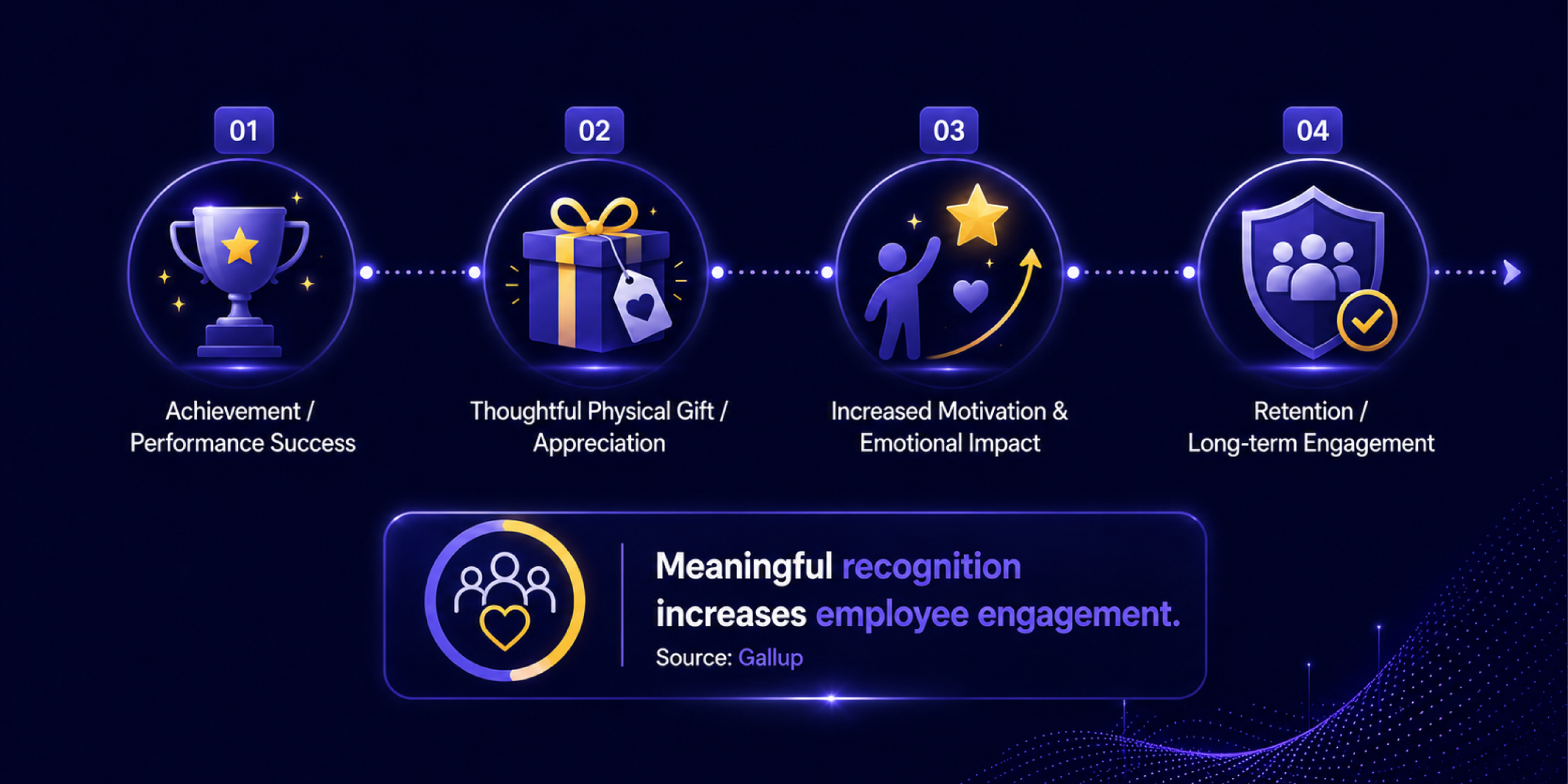
Gallup's State of the Global Workplace research consistently shows that employees who receive meaningful recognition are more engaged, more productive, and significantly less likely to leave their organisation. Likewise, O.C. Tanner's Global Culture Report found that effective recognition programmes can reduce the likelihood of attrition while strengthening employees' sense of purpose and belonging. These findings present a clear challenge for HR leaders. Recognition is not simply about rewarding results. It is about reinforcing behaviours that organisations want to see repeated.
Yet many organisations still rely on cash bonuses or standard certificates for every achievement, regardless of context. That approach often overlooks the emotional value of recognition and misses opportunities to create memorable employee experiences.
This guide explains when a physical gift creates greater impact than other reward formats, how to select the right gift for different achievements, and how HR teams can build scalable recognition programmes that remain personal, consistent, and commercially effective.
Performance Rewards vs Recognition Rewards. The Critical Distinction Most HR Teams Miss
Many organisations use the terms performance reward and recognition reward interchangeably. They are closely related, but they serve different strategic purposes. Understanding the distinction helps HR leaders allocate budgets more effectively and create recognition programmes that genuinely influence employee behaviour.
A performance reward acknowledges measurable outcomes. Sales targets achieved, projects delivered ahead of schedule, exceptional productivity, or significant revenue contributions all fall into this category. The reward recognises results against defined business objectives. According to Gartner, organisations that clearly connect rewards to measurable performance improve employee understanding of organisational priorities and increase performance transparency.
Recognition rewards, by contrast, reinforce behaviours and values that contribute to long-term organisational success. These may include collaboration, innovation, mentoring colleagues, customer service excellence, or demonstrating company values. Deloitte's research into employee experience highlights that organisations with strong recognition cultures are more likely to develop engaged workforces because employees understand which behaviours matter, not just which targets count.
The distinction becomes particularly important when choosing the reward itself.
Cash bonuses work well for contractual or financial performance incentives because employees naturally associate them with compensation. Physical gifts create stronger emotional resonance when the organisation wants employees to remember the achievement long after payday. The Incentive Research Foundation reports that tangible awards often generate greater memorability because recipients repeatedly interact with the reward, creating ongoing reminders of the accomplishment rather than a one-time financial transaction.
Performance rewards typically recognise:
- Revenue generation.
- Productivity improvements.
- Sales achievements.
- Project delivery.
- Operational excellence.
- Business outcomes.
Recognition rewards typically reinforce:
- Collaboration.
- Innovation.
- Leadership behaviours.
- Customer service.
- Company values.
- Team contribution.
For HR leaders, the objective should not be choosing one approach over the other. The strongest recognition strategies combine financial incentives for measurable outcomes with carefully selected physical gifts that celebrate exceptional achievements and reinforce organisational culture. Employees remember how recognition made them feel, not simply how much it was worth.
When a Physical Gift Outperforms a Bonus, a Certificate, or a Public Mention
Not every achievement deserves the same form of recognition. Choosing the wrong reward can unintentionally reduce its impact. A modest certificate for an exceptional achievement may feel underwhelming, while an expensive gift for a routine milestone can appear disproportionate. The most effective recognition aligns the reward with the emotional significance of the accomplishment.
Research from O.C. Tanner shows that meaningful recognition creates lasting memories when it feels personal, timely, and authentic. Similarly, Gallup's workplace studies demonstrate that employees value recognition most when it arrives soon after the achievement and clearly explains why the contribution mattered.
Physical gifts often outperform cash because they create a tangible reminder of success. Unlike bonuses, which quickly merge into everyday spending, a thoughtfully selected gift continues to reinforce positive emotions each time the employee sees or uses it. The Incentive Research Foundation also reports that tangible awards frequently achieve stronger emotional engagement because recipients perceive them as intentional rather than transactional.
Comparison: Choosing the Right Recognition Format
Physical gifts become particularly effective when organisations want employees to remember a defining career moment. Examples include completing a complex transformation project, delivering sustained high performance, mentoring future leaders, or making an outstanding customer impact.
The Reward Store's Physical Gifting service supports this objective through professionally curated and fully customised gift hampers that reflect both the significance of the achievement and the organisation's brand identity. From premium tech accessories and branded lifestyle products to wellness hampers and eco-friendly stationery, HR teams can match recognition to the occasion while maintaining consistency across locations and employee groups.
How to Match the Physical Gift to the Achievement Without the Gift Feeling Disproportionate
Selecting the right gift requires more than setting a budget. Employees rarely judge recognition solely by monetary value. Instead, they evaluate whether the organisation genuinely understood the importance of their contribution. A poorly matched gift can unintentionally reduce the impact of an otherwise meaningful recognition programme.
The Society for Human Resource Management (SHRM) recommends aligning rewards with both organisational values and employee expectations rather than focusing exclusively on cost. O.C. Tanner similarly notes that personalisation consistently increases the perceived value of recognition because employees interpret customised experiences as evidence of sincere appreciation.
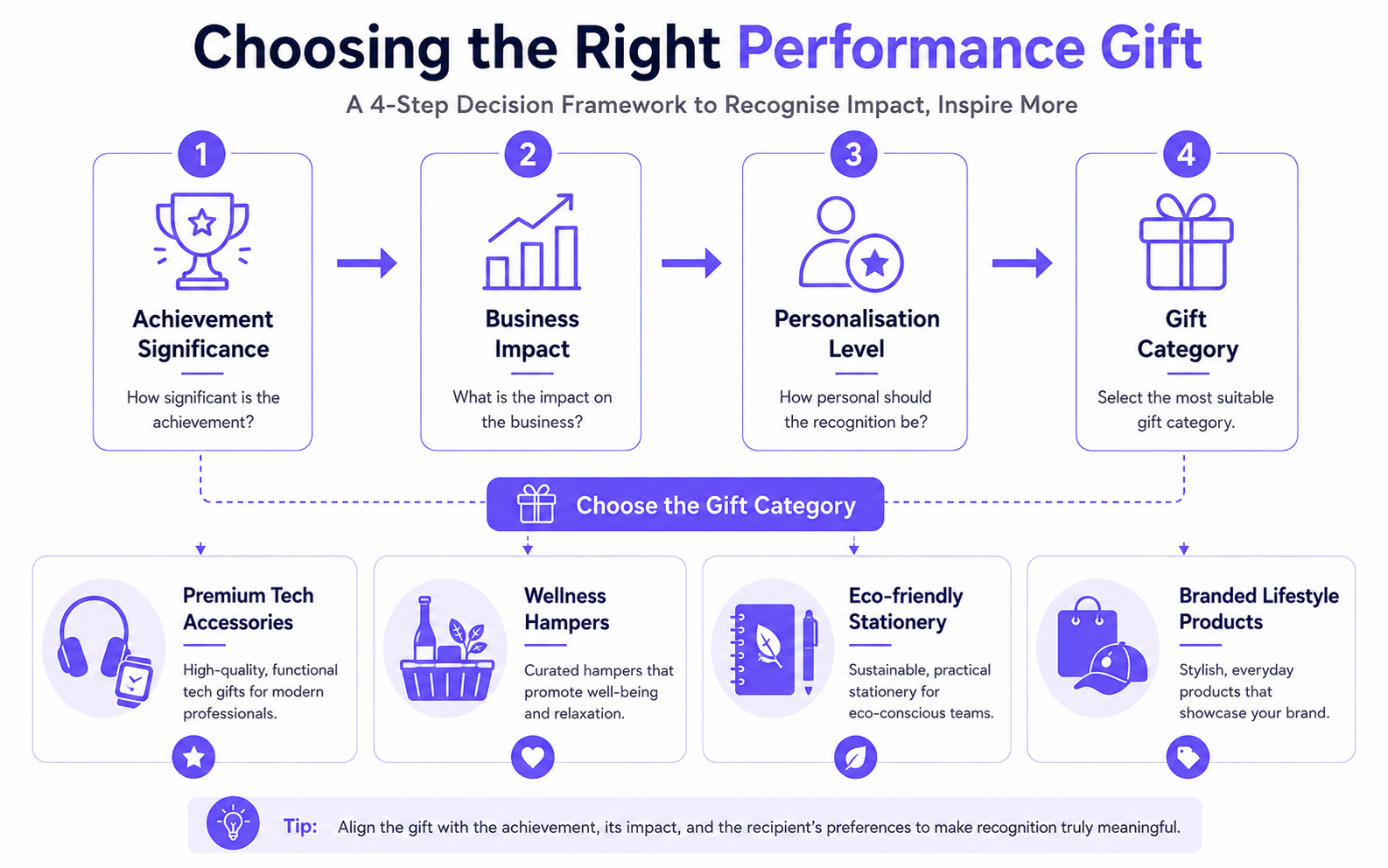
A practical decision framework
HR leaders can simplify gift selection by assessing four questions before choosing any reward.
1. How significant was the achievement?
Routine accomplishments require modest recognition, while exceptional business outcomes justify premium gifts.
2. Was the contribution individual or team based?
Individual achievements may warrant personalised gifts, whereas team milestones often suit coordinated hampers or themed gift collections.
3. Will the achievement have long-term business impact?
Major innovations, customer wins, or strategic initiatives deserve recognition that employees will remember for years.
4. Does the gift reinforce organisational values?
Every reward should reflect the behaviours the organisation wants to encourage again.
Matching achievement with gift category
Presentation also influences perceived value. Deloitte's employee experience research shows that experiences surrounding recognition frequently matter as much as the reward itself. Custom packaging, personalised messages, and thoughtful presentation increase emotional impact without necessarily increasing spend.
The Reward Store enhances this experience through customised branding, premium packaging, handwritten notes, personalised greeting cards, QR codes linking to individual video messages, and carefully curated themed inserts. These elements help organisations demonstrate that recognition was planned deliberately rather than selected from a standard catalogue.
Ultimately, employees remember thoughtful recognition because it reflects genuine appreciation. The right physical gift does not simply celebrate past performance. It encourages future excellence by showing employees that exceptional contributions receive exceptional recognition.
How Presentation and Timing Make a Performance Gift More Motivating Than the Item Itself
Many organisations invest considerable effort in selecting the right gift but overlook two factors that have an even greater influence on employee motivation: how the gift is presented and when it is delivered. Research consistently shows that timing and presentation shape employees' emotional response more than the monetary value of the reward.
Gallup recommends recognising achievements as close to the accomplishment as possible. Immediate recognition strengthens the connection between the behaviour and the reward, making employees more likely to repeat high performance. Similarly, the O.C. Tanner Global Culture Report found that recognition feels significantly more meaningful when it is personal, specific and delivered in a memorable way rather than as part of a routine administrative process.
A simple four-step recognition process
- Recognise promptly. Present the gift within days of the achievement whenever practical.
- Explain the impact. Clearly describe what the employee achieved and why it mattered to the organisation.
- Personalise the experience. Include a handwritten note, customised greeting card or personalised message from a senior leader.
- Share appropriately. Celebrate achievements publicly when suitable, while respecting individual preferences.
This process reinforces both the achievement and the behaviours the organisation wants others to emulate.
The presentation should also reflect the significance of the accomplishment. Premium packaging, company branding and thoughtful finishing touches create anticipation before the gift is even opened. Deloitte's research on employee experience suggests that emotionally engaging moments strengthen employees' connection to their employer because they signal genuine appreciation rather than compliance with a reward policy.
The Reward Store's Physical Gifting service helps HR teams create these memorable moments through fully customised gift packaging, branded inserts, handwritten notes, QR codes linking to personalised video messages and same-day delivery within Bengaluru for time-sensitive recognition. These features ensure that recognition feels deliberate, timely and authentic rather than routine.
When organisations combine thoughtful presentation with prompt delivery, the physical gift becomes more than an item. It becomes a lasting symbol of achievement that employees associate with pride, appreciation and future success.
How to Scale Performance Gifting Across Hundreds of Employees Without Losing Meaning
Scaling employee recognition presents a common challenge for growing organisations. As workforces expand across multiple offices, departments and countries, consistency often replaces personalisation. Yet employees still expect recognition to feel individual rather than automated.
According to SHRM, organisations achieve better engagement when recognition follows clear guidelines while allowing flexibility for managers to acknowledge individual contributions. Gartner also recommends standardising governance rather than standardising every reward, ensuring fairness without creating identical employee experiences.
Checklist for a scalable performance gifting programme
Technology also plays an important role. HR teams benefit from centralised catalogues, approval workflows and fulfilment tracking that reduce administrative effort while maintaining quality. Standard operating procedures help procurement teams control budgets without limiting managers' ability to recognise exceptional work.
The Reward Store's Physical Gifting service supports organisations at scale by offering curated gift catalogues, branded packaging, sustainable gifting options, nationwide and international fulfilment, and customised messaging for every recipient. HR teams can deliver a consistent recognition experience across employee onboarding, work anniversaries, performance awards, festive celebrations and client appreciation without managing multiple vendors.
Finally, measure success beyond gift distribution. Gallup recommends monitoring employee engagement, retention, recognition participation and manager adoption to determine whether recognition programmes influence behaviour. The most successful organisations treat gifting as part of a broader employee experience strategy rather than a standalone initiative.
Scaling recognition does not require sacrificing authenticity. It requires clear processes, thoughtful personalisation and a trusted gifting partner that can deliver consistently across every employee touchpoint.
Frequently Asked Questions
What is the best time to give a physical gift as a performance reward?
The most effective time is immediately after a significant achievement. Gallup's research shows that prompt recognition strengthens the connection between performance and appreciation, making employees more likely to repeat positive behaviours. Delayed recognition often loses much of its emotional impact.
How do I choose the right physical gift for an employee?
Start by considering the significance of the achievement, the employee's role and the message you want the reward to reinforce. Premium tech accessories, wellness hampers, eco-friendly stationery and branded lifestyle products suit different recognition occasions. The gift should feel proportionate to the accomplishment rather than simply matching a budget.
Why are physical gifts often more memorable than cash bonuses?
Cash rewards usually become part of everyday spending and quickly lose their emotional connection to the achievement. The Incentive Research Foundation has found that tangible awards create stronger and longer-lasting memories because recipients continue to interact with them. A thoughtfully presented physical gift serves as an ongoing reminder of success.
Can physical gifting work for large organisations with hundreds of employees?
Yes. Successful organisations combine clear recognition policies with scalable fulfilment processes. The Reward Store's Physical Gifting service enables HR teams to manage branded gift catalogues, personalised messaging, customised packaging and delivery across multiple locations while maintaining a consistent employee experience.
Does personalised packaging make a measurable difference?
Yes. O.C. Tanner's research indicates that employees perceive recognition as more meaningful when it feels personal and intentional. Handwritten notes, customised branding and tailored messaging increase the emotional value of a gift without necessarily increasing its cost.
Conclusion
The most effective performance rewards do more than acknowledge results. They reinforce the behaviours, values and achievements that organisations want employees to repeat. A carefully chosen physical gift, delivered promptly and presented thoughtfully, creates a lasting reminder of appreciation that cash alone rarely achieves.
As organisations continue to prioritise employee experience and retention, performance gifting will become an increasingly strategic component of recognition programmes. Choosing the right gifting partner ensures every achievement receives the recognition it deserves.

Design performance gifts that motivate the next achievement. Talk to The Reward Store.
Explore The Reward Store's Physical Gifting service: https://www.therewardstore.com/physical-gifting
Sign up for our newsletter for trending top content!


