
Peer Recognition vs Manager Recognition: What Does the Data Show About Engagement Impact?

Sign up for our newsletter for trending top content!
Introduction
Gallup and Workhuman found that employees who receive feedback and recognition from their manager at least once a week show 61% engagement, compared with 38% among employees who receive weekly feedback but less frequent recognition. That makes recognition a performance lever, not a soft culture gesture.
For HR leaders, the practical question is how to balance peer recognition and manager recognition. Managers connect recognition to performance, priorities and career growth. Peers capture collaboration, support and everyday contribution that managers may not see.
This article compares both models, explains what Gallup and Deloitte linked research shows about engagement impact, and outlines how ApplaudIQ Cheers can help organisations scale peer-led appreciation while keeping recognition measurable and aligned.
Why Does Manager Recognition Have a Direct Engagement Impact?
Manager recognition has a direct engagement impact because managers shape the employee’s daily experience of clarity, support, fairness and contribution. When a manager recognises work quickly and specifically, the employee sees a direct link between effort and organisational value.
Gallup’s Q12 engagement model asks whether employees have received recognition or praise for doing good work in the last seven days. Gallup states that moving the share of employees who strongly agree with this item from one in four to six in ten could support a 28% improvement in quality, a 31% reduction in absenteeism and a 12% reduction in shrinkage.
What Manager Recognition Does Best
Gallup also found that well-recognised employees are 45% less likely to have turned over two years later. That retention data gives HR leaders a strong reason to make manager recognition frequent, specific and trackable.
Manager recognition should not be reserved for annual reviews. It should operate as a weekly habit.
Why Does Peer Recognition Capture Work Managers Often Miss?
Peer recognition captures collaboration, problem-solving, mentoring and informal support that managers may not observe. In hybrid, distributed and project-based teams, employees often experience more of their colleagues’ daily contribution than their manager does. A recognition system that relies only on managers will miss many of these moments.
Deloitte’s recognition guidance states that recognition in the workplace is associated with higher engagement, lower turnover and a more positive working environment. Deloitte also notes that appreciation benefits the person expressing recognition, not only the recipient.
Bersin and Deloitte linked research has also been widely cited for finding that, in organisations where recognition occurs, employee engagement, performance and productivity are approximately 14% higher than in organisations where recognition does not occur.
What Peer Recognition Does Best
Peer recognition works best when HR gives employees simple prompts, clear values-based categories and guardrails for meaningful messages.
Peer Recognition vs Manager Recognition: Which Has Stronger Engagement Value?
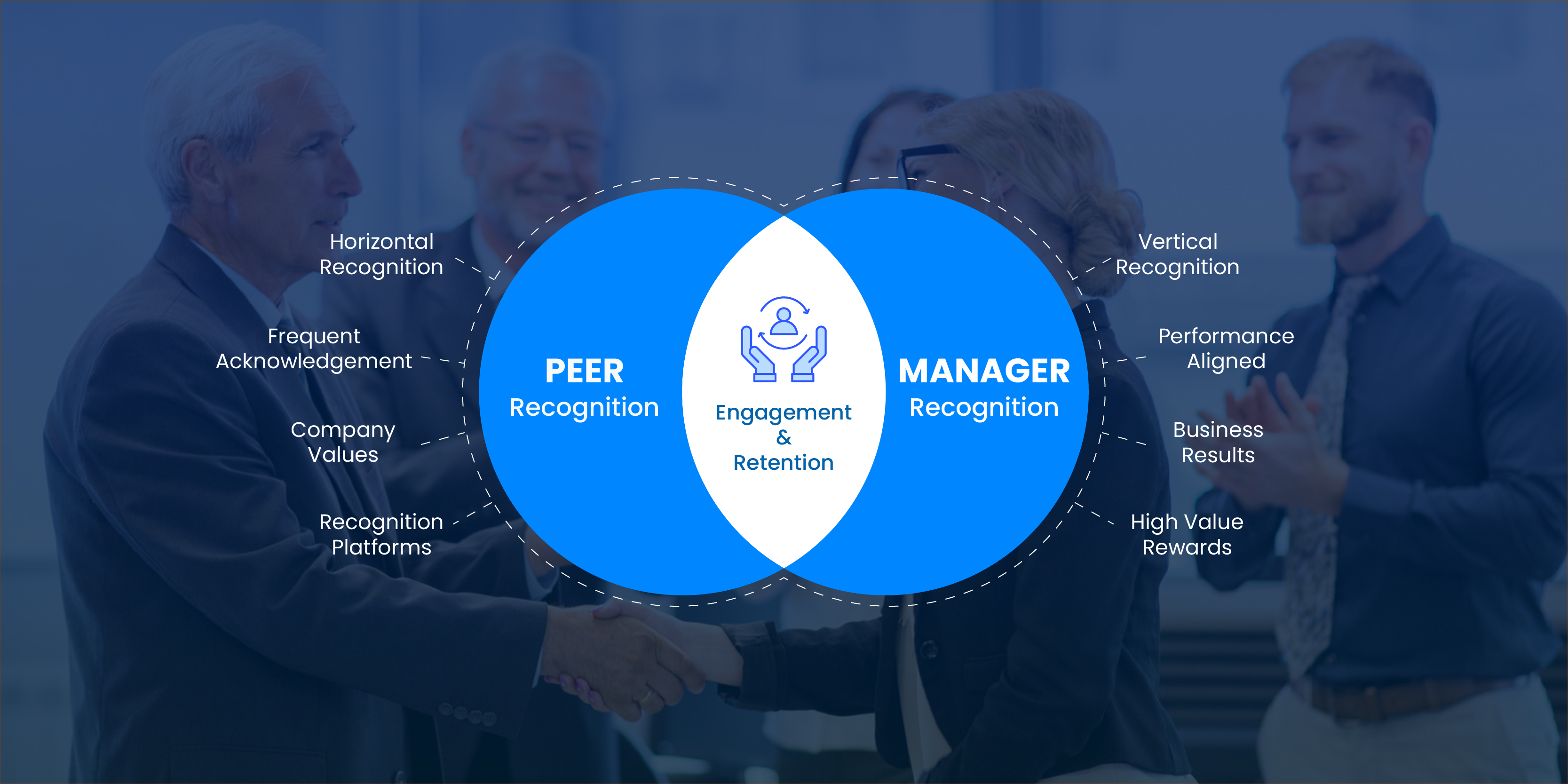
Peer recognition and manager recognition create different types of engagement value. Manager recognition carries authority because it comes from the person responsible for priorities, development and performance evaluation. Peer recognition carries social credibility because it comes from colleagues who experience the work directly.
Peer Recognition vs Manager Recognition Comparison
Gallup’s recognition guidance states that the best managers create a recognition-rich environment where appreciation comes from every direction and employees know how others prefer to receive recognition.
The best answer is not peer or manager recognition. It is both. HR leaders need a recognition architecture where managers provide direction and peers expand reach.
How Should HR Design a Recognition Mix That Improves Engagement?
HR should design a recognition mix that gives managers accountability and employees access. Manager recognition should reinforce priorities, performance and career moments. Peer recognition should reinforce collaboration, values and everyday contribution.
The BOTH Framework
Gallup recommends frequent recognition, including praise within a seven-day window, because timely recognition helps employees connect appreciation to a recent achievement.
A practical HR design could look like this:
This mix helps recognition feel both credible and inclusive.
How Can ApplaudIQ Cheers Support Peer Recognition at Scale?
ApplaudIQ Cheers helps employees recognise colleagues quickly for helpful actions, values-led behaviour and collaborative support. This matters because peer recognition loses momentum when the process feels formal, delayed or manager-dependent.
Through ApplaudIQ Features, HR teams can support peer recognition, manager recognition, automated milestones, recognition campaigns, analytics and points-based rewards. Cheers gives employees an easy way to celebrate contribution as it happens, while HR can track recognition frequency, participation, reach and trends.
Employees can redeem recognition points through The Reward Store’s integrated storefront, including gift cards from 5,000+ brands, flight bookings, hotel bookings, dining, golf, sports, experiences, merchandise, bus bookings and concierge services.
The advantage is visibility. HR can move peer appreciation from informal praise into a measurable culture signal without removing the human tone of recognition.
What Metrics Should HR Track for Peer and Manager Recognition?
HR should track recognition activity, recognition quality and engagement outcomes. A high volume of recognition does not automatically prove impact. HR needs to know who recognises, who receives recognition, whether messages are meaningful and whether recognition correlates with engagement and retention.
Gallup and Workhuman’s recognition research found that well-recognised employees were 45% less likely to have turned over after two years. This makes recognition data useful for retention analysis when HR compares recognition cohorts over time.
Recognition Analytics Dashboard
HR should review manager participation carefully. A team with high peer recognition but low manager recognition may feel socially supportive but under-led. A team with high manager recognition but low peer recognition may depend too heavily on hierarchy.
What Mistakes Reduce the Impact of Peer and Manager Recognition?
Recognition loses impact when it becomes generic, uneven or disconnected from real contribution. HR leaders should protect quality while encouraging frequency.
Common Recognition Mistakes
Mistake 1: Treating peer recognition as casual praise only.
Peer recognition should connect to behaviours, values and collaboration outcomes.
Mistake 2: Letting managers outsource recognition to peers.
Peer appreciation cannot replace the authority and developmental value of manager recognition.
Mistake 3: Recognising only visible employees.
Operational contributors, remote employees and quieter team members may be missed without data checks.
Mistake 4: Rewarding volume over meaning.
Recognition should be specific. Generic praise reduces credibility.
Mistake 5: Not tracking reach.
A recognition programme can look active while excluding certain teams, locations or roles.
Mistake 6: Ignoring manager training.
Gallup highlights the manager’s role in creating a recognition-rich environment. HR should help managers recognise in a timely, honest and individualised way.
The goal is not to flood employees with praise. The goal is to make meaningful appreciation frequent enough to affect engagement.
Frequently Asked Questions
What is the difference between peer recognition and manager recognition?
Peer recognition comes from colleagues who observe collaboration, support and everyday contribution. Manager recognition comes from leaders who connect contribution to goals, performance and development.
How does peer recognition affect engagement?
Peer recognition improves engagement by making teamwork and informal support visible. Deloitte states that recognition is associated with higher engagement, lower turnover and a more positive working environment.
Why is manager recognition important?
Manager recognition carries authority because managers define priorities and influence career growth. Gallup found that employees who receive weekly manager feedback plus recognition show 61% engagement, compared with 38% when weekly feedback occurs without frequent recognition.
What does the Deloitte peer recognition data show?
Bersin and Deloitte linked research found that organisations where recognition occurs report employee engagement, performance and productivity scores approximately 14% higher than organisations where recognition does not occur. HR leaders should use this as directional evidence and validate impact with internal engagement and retention data.
Can ApplaudIQ support both peer and manager recognition?
Yes. ApplaudIQ supports peer recognition through Cheers, manager recognition, automated milestones, recognition campaigns, analytics and points-based rewards. This helps HR teams scale appreciation while tracking participation and recognition reach.
How often should employees receive recognition?
Gallup recommends frequent recognition and highlights recognition or praise within the last seven days as part of its engagement model. Weekly recognition gives employees a stronger link between recent contribution and appreciation.
Conclusion
Peer recognition and manager recognition both improve engagement, but they do different jobs. Managers provide authority, clarity and performance reinforcement. Peers make collaboration, support and everyday contribution visible. Gallup data shows the engagement value of frequent manager recognition, while Deloitte and Bersin linked research supports the wider business value of recognition-rich cultures.
The future of recognition will combine human appreciation with analytics. HR leaders who balance peer Cheers, manager praise and measurable reward journeys will build more inclusive and engaging workplaces.
Ready to scale peer recognition without losing manager accountability?
Explore how ApplaudIQ helps HR teams use Cheers, milestone recognition, analytics and points-based rewards to build a recognition-rich culture.
Explore ApplaudIQ Features for Peer and Manager Recognition
Sign up for our newsletter for trending top content!


