
How Hospitals, Pharmacy Chains, and Health Insurers Can Use Loyalty Programmes to Increase Patient Retention

Sign up for our newsletter for trending top content!
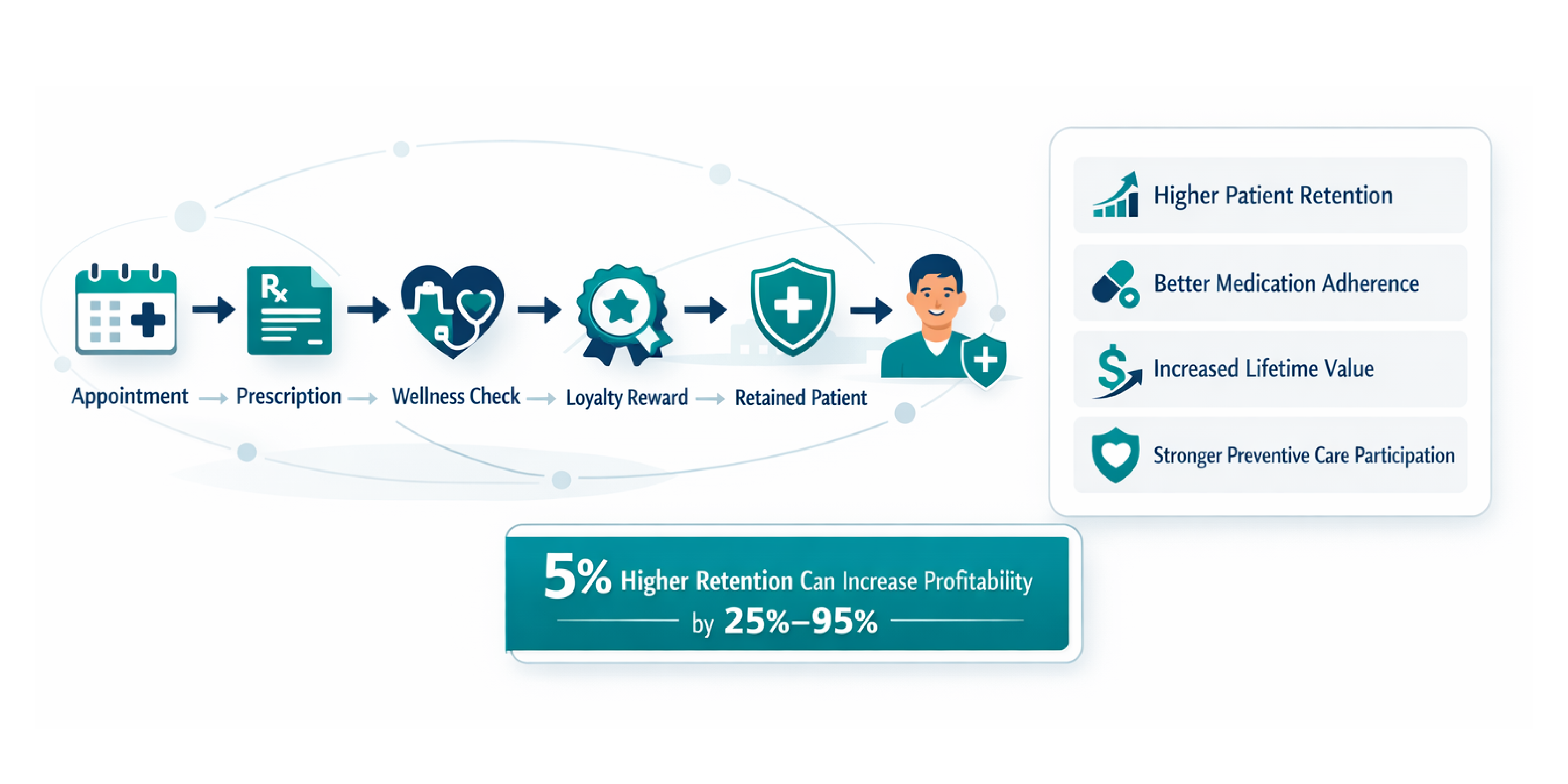
Healthcare providers spend significant resources acquiring new patients, yet many struggle to retain them. According to Bain & Company, increasing customer retention by just 5% can increase profits by 25% to 95%, a principle that applies across service industries, including healthcare. At the same time, Deloitte reports that consumers increasingly expect healthcare experiences to mirror the convenience and personalisation they receive from retail and digital brands.
For hospitals, pharmacy chains, and health insurers, patient attrition creates more than a revenue challenge. It disrupts continuity of care, reduces medication adherence, and weakens long-term health outcomes. Patients now have more choices than ever, from digital health platforms to pharmacy aggregators and telehealth providers.
This article explores how healthcare organisations can use loyalty programmes to improve patient retention, increase prescription adherence, encourage preventive care, and strengthen lifetime patient value. It also examines the compliance and measurement frameworks Marketing Leaders need to build sustainable healthcare loyalty strategies.
The Patient Retention Problem: Why Healthcare Providers Lose Patients to Convenience Competitors
Patient loyalty is no longer determined solely by clinical outcomes. Convenience, accessibility, communication quality, and personalised experiences increasingly influence healthcare decisions.
According to McKinsey & Company, consumers now compare healthcare experiences with the digital experiences they receive from leading consumer brands. Patients expect appointment reminders, personalised recommendations, digital engagement, and frictionless service journeys. When providers fail to deliver these experiences, patients often switch to alternative providers that offer greater convenience.
Healthcare organisations face competition from multiple directions:
- Digital-first healthcare platforms
- Pharmacy aggregator applications
- Telemedicine providers
- Specialist networks
- Health insurers offering integrated wellness ecosystems
Deloitte research shows that consumers increasingly favour providers that offer connected and personalised experiences. This shift creates a retention challenge for hospitals and pharmacy chains that rely on traditional engagement models.
Why retention matters more than acquisition
Acquiring a new patient often costs substantially more than retaining an existing one. Bain & Company consistently highlights retention as one of the strongest drivers of long-term profitability.
For healthcare providers, retention creates additional benefits:
- Higher repeat visit frequency
- Better continuity of care
- Improved treatment adherence
- Greater trust and advocacy
- Higher lifetime patient value
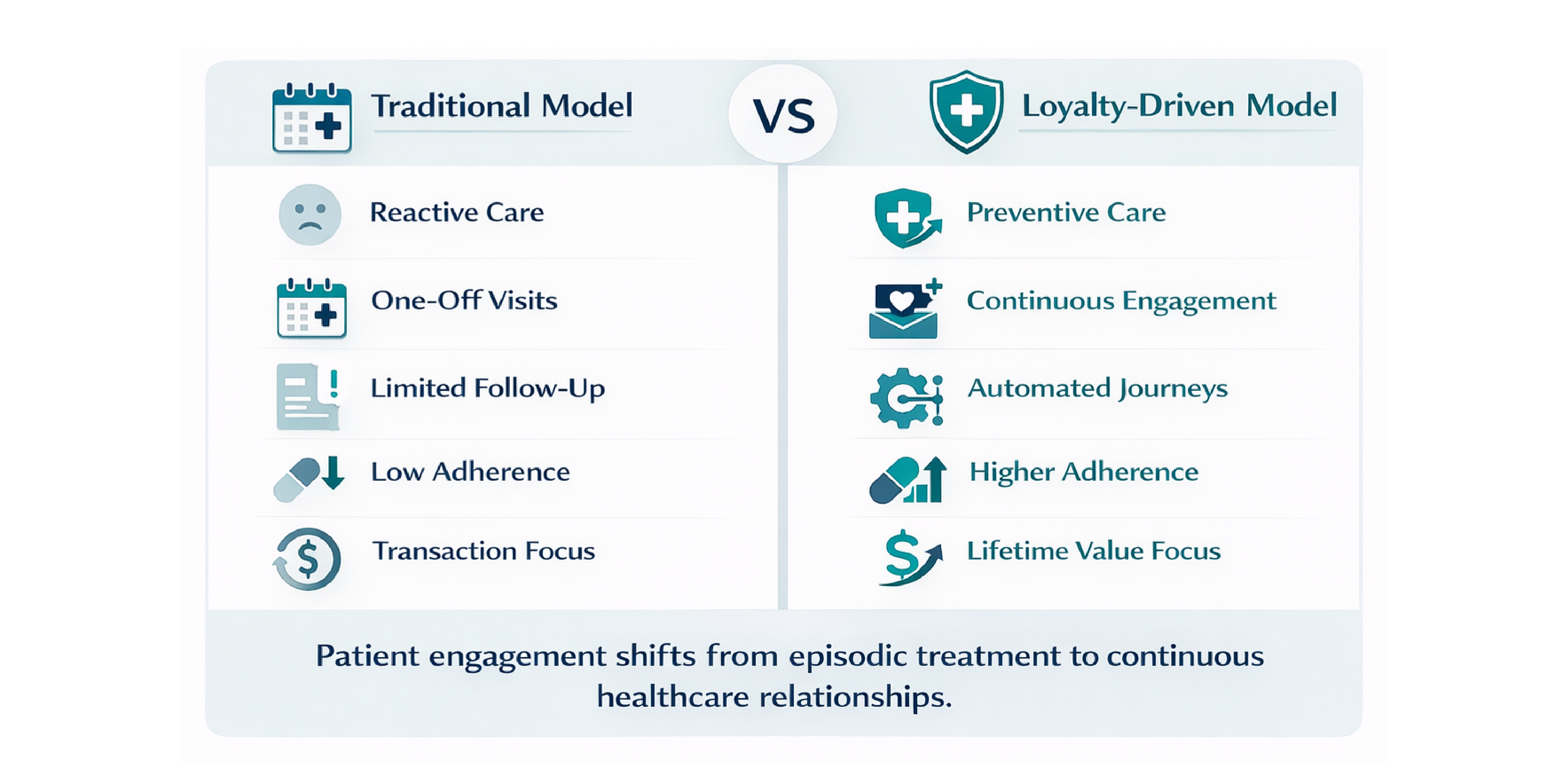
A well-designed patient loyalty programme helps organisations maintain ongoing engagement beyond individual appointments or transactions. Rather than focusing exclusively on treatment episodes, providers can create continuous relationships that encourage patients to remain within their healthcare ecosystem.
Prescription Adherence as a Loyalty Mechanic: How Rewards Change Patient Behaviour
Medication non-adherence remains one of healthcare's most expensive challenges. According to the World Health Organization, adherence among patients with chronic diseases averages only around 50% in developed countries. Poor adherence contributes to avoidable complications, hospitalisations, and increased healthcare costs.
Behavioural science suggests that rewards can positively influence habit formation. Research published by Deloitte on consumer engagement programmes shows that incentives encourage repeated behaviours when organisations align rewards with desired outcomes.
Healthcare organisations can apply the same principle to medication adherence.
Examples include:
- Rewarding timely prescription refills
- Recognising medication completion milestones
- Encouraging regular health check-ins
- Promoting chronic disease management activities
Moving beyond transactional rewards
The most effective healthcare loyalty programmes focus on health outcomes rather than simple purchases.
For example, a pharmacy chain could reward patients for maintaining refill consistency over six months. A health insurer could incentivise preventive screenings and wellness activities. Hospitals could encourage participation in post-discharge care programmes.
This approach aligns commercial objectives with patient wellbeing.
Platforms such as Rekyndl enable healthcare organisations to build these engagement journeys through automated segmentation, personalised communication workflows, and integrated reward experiences. Instead of delivering generic campaigns, organisations can create behaviour-based engagement programmes that encourage long-term adherence and retention.
McKinsey research indicates that personalised engagement can significantly improve customer satisfaction and participation rates, making behavioural loyalty mechanics particularly relevant in healthcare environments.
Designing Wellness Milestone Programmes That Drive Preventive Healthcare Engagement
Preventive healthcare remains one of the most underutilised opportunities for patient engagement.
According to the World Health Organization, many chronic diseases can be prevented or better managed through early detection and consistent preventive care. However, patients often delay screenings, wellness assessments, and routine check-ups because they perceive little immediate benefit.
Loyalty programmes can help change this behaviour.
Wellness milestone framework
Healthcare organisations can create structured milestone programmes that reward proactive health actions.
This framework transforms healthcare engagement from reactive treatment into proactive health management.
Gamification and long-term engagement
Gartner research highlights that thoughtfully designed gamification initiatives can increase participation and engagement rates when organisations focus on meaningful behaviours.
Healthcare providers can introduce:
- Wellness badges
- Health achievement levels
- Screening completion challenges
- Preventive care milestones
- Family wellness programmes
Rekyndl supports these engagement models through gamification capabilities, automated customer journeys, and integrated redemption experiences. Marketing teams can create targeted campaigns that encourage preventive actions while maintaining consistent communication throughout the patient lifecycle.
The objective is not simply rewarding activity. The goal is encouraging healthier behaviours that improve outcomes and strengthen patient relationships.
How Pharmacy Chains Can Use Loyalty Programmes to Compete Against Aggregator Apps
Pharmacy chains increasingly compete with digital aggregators that prioritise convenience, discounts, and delivery speed.
Competing solely on price often becomes unsustainable. Instead, successful pharmacy loyalty programmes focus on relationship depth and long-term value creation.
According to Forrester, emotionally connected customers are more likely to remain loyal, increase spending, and recommend brands to others.
Loyalty strategy comparison
Pharmacy chains possess unique advantages that aggregators often cannot replicate:
- Trusted healthcare relationships
- Physical presence and local accessibility
- Pharmacist consultations
- Chronic care support
- Preventive health services
By integrating loyalty programmes with these strengths, pharmacy brands can create differentiated patient experiences.
For example, pharmacies can reward medication adherence, health screenings, wellness participation, and consultation attendance rather than simply rewarding purchases. This positions the pharmacy as a healthcare partner rather than a transaction channel.
McKinsey research consistently shows that customers respond more positively to personalised ecosystems than to generic discount programmes.
Data and Compliance: What Healthcare Loyalty Programmes Must Get Right on Patient Privacy
Healthcare loyalty programmes require a different approach from retail loyalty initiatives because they involve sensitive personal information.
Patient trust remains the foundation of any successful healthcare engagement strategy.
According to Deloitte, consumers increasingly value transparency around how organisations collect, store, and use personal data. Healthcare providers must therefore prioritise privacy and compliance from the outset.
Core compliance principles
Healthcare organisations should focus on:
- Explicit consent management
- Clear data usage policies
- Secure data storage
- Controlled access permissions
- Regular compliance reviews
- Transparent communication
Marketing teams must avoid collecting unnecessary information and ensure every engagement activity supports a legitimate healthcare objective.
Building trust through transparency
Trust directly influences participation rates. Research from Edelman consistently demonstrates that consumers engage more readily with organisations they trust.
Healthcare loyalty programmes should therefore explain:
- What information is collected
- Why it is collected
- How it improves patient experiences
- How patients can manage preferences
Strong privacy governance does more than reduce compliance risk. It strengthens participation, retention, and programme credibility.
Healthcare providers that treat privacy as a competitive advantage often create stronger patient relationships than those that treat compliance as a regulatory obligation alone.
Measuring Patient Loyalty ROI: Visit Frequency, Adherence Rates, and Lifetime Patient Value
Many healthcare organisations launch engagement initiatives without defining success metrics. This creates uncertainty around programme effectiveness and investment decisions.
According to Gartner, organisations that align loyalty metrics with business outcomes achieve significantly stronger programme performance.
Core healthcare loyalty KPIs
Marketing Leaders should track:
Retention Metrics
- Patient retention rate
- Repeat visit frequency
- Appointment rebooking rate
Adherence Metrics
- Prescription refill consistency
- Treatment completion rates
- Follow-up attendance
Engagement Metrics
- Programme participation rate
- Wellness challenge completion
- Campaign response rates
Financial Metrics
- Lifetime patient value
- Revenue per patient
- Cost of retention versus acquisition
Connecting engagement to outcomes
The strongest healthcare loyalty programmes connect engagement activities directly to measurable outcomes.
For example:
- Increased refill adherence improves patient health outcomes.
- Preventive care participation reduces long-term treatment costs.
- Higher retention improves lifetime value.
- Personalised engagement increases utilisation of healthcare services.
By combining behavioural data, engagement metrics, and financial performance indicators, healthcare organisations can quantify the full impact of loyalty investments.
For organisations seeking a unified approach, Rekyndl provides loyalty management, customer segmentation, automated journeys, gamification, and reward fulfilment within a single ecosystem, enabling healthcare marketers to measure programme performance from acquisition through retention.
Frequently Asked Questions
What is a patient loyalty programme?
A patient loyalty programme is a structured engagement initiative that rewards patients for behaviours such as repeat visits, prescription adherence, preventive screenings, wellness participation, and ongoing healthcare engagement. Unlike retail programmes, healthcare loyalty programmes focus on improving both patient outcomes and retention.
How can hospitals improve patient retention through loyalty programmes?
Hospitals can encourage repeat engagement by rewarding preventive care activities, post-treatment follow-ups, wellness milestones, and long-term care participation. Personalised communication and targeted rewards help maintain relationships between visits.
Why are pharmacy loyalty programmes important in India?
Pharmacy chains face growing competition from digital aggregators and online healthcare platforms. Loyalty programmes help pharmacies strengthen direct patient relationships, encourage refill adherence, and differentiate through personalised healthcare experiences rather than price competition alone.
How does Rekyndl support healthcare loyalty programmes?
Rekyndl enables healthcare organisations to build personalised loyalty programmes through customer segmentation, automated engagement journeys, gamification, wellness milestones, reward management, and integrated redemption experiences. This helps providers increase retention while encouraging healthier patient behaviours.
Can healthcare loyalty programmes improve medication adherence?
Yes. Research from the World Health Organization and behavioural engagement studies indicates that incentives, reminders, and milestone recognition can encourage consistent medication adherence. Well-designed programmes reinforce positive habits and improve long-term treatment participation.
Conclusion
Patient loyalty increasingly depends on engagement, convenience, personalisation, and trust. Healthcare providers that reward positive health behaviours can improve retention, strengthen adherence, and increase lifetime patient value while supporting better patient outcomes.
As healthcare becomes more consumer-driven, loyalty programmes will evolve from optional marketing initiatives into core patient engagement infrastructure. Organisations that invest early will build stronger relationships and create sustainable competitive advantages.
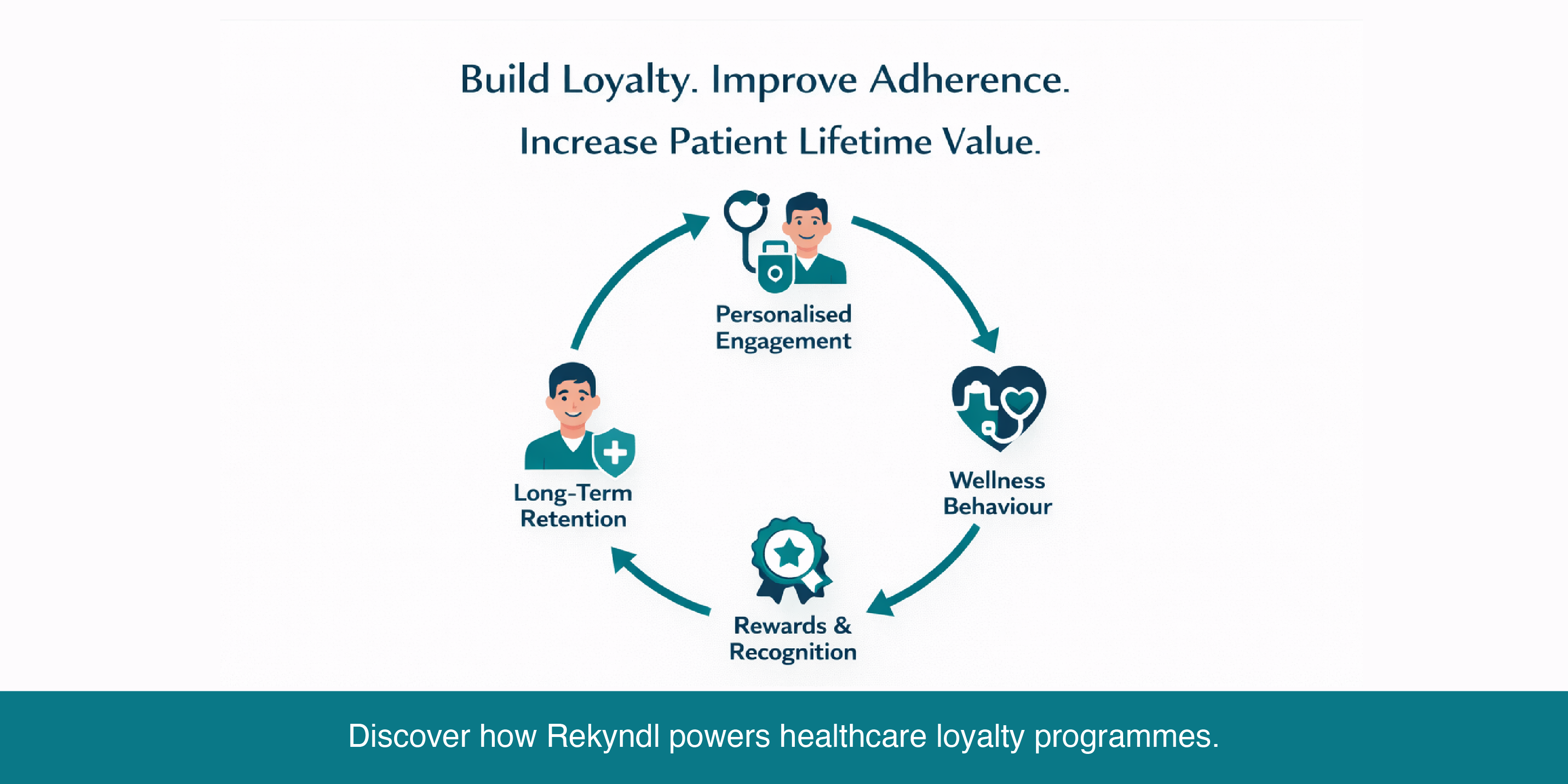
See how Rekyndl helps hospitals, pharmacy chains, and health insurers build patient loyalty, improve adherence, and increase retention through personalised engagement journeys. Visit https://www.therewardstore.com/rekyndl/overview
Sign up for our newsletter for trending top content!


