
How to Design Multi-Tier Channel Incentive Programmes That Motivate Distributors, Sub-Dealers, and Retailers Simultaneously

Sign up for our newsletter for trending top content!
A well designed multi-tier channel incentive programme does more than increase sales. It aligns every participant in the distribution ecosystem around common business objectives. Yet many organisations unintentionally reward one channel tier while creating friction for another. Research from the Incentive Research Foundation (IRF) shows that carefully structured incentive programmes can improve performance by up to 44%, while McKinsey & Company reports that companies with highly engaged channel ecosystems consistently outperform competitors on revenue growth.
For Sales Leaders, the challenge is not simply creating attractive rewards. It is designing earning rules, visibility, performance measures, and payout structures that motivate distributors, sub-dealers, and retailers without creating conflict or administrative complexity. This guide explains the best practices behind successful multi-tier channel incentive programme design and shows how organisations can create measurable improvements in partner performance while maintaining healthy relationships across every level of their channel network.
The Multi-Tier Alignment Problem: Why Incentivising One Channel Level Demotivates Another
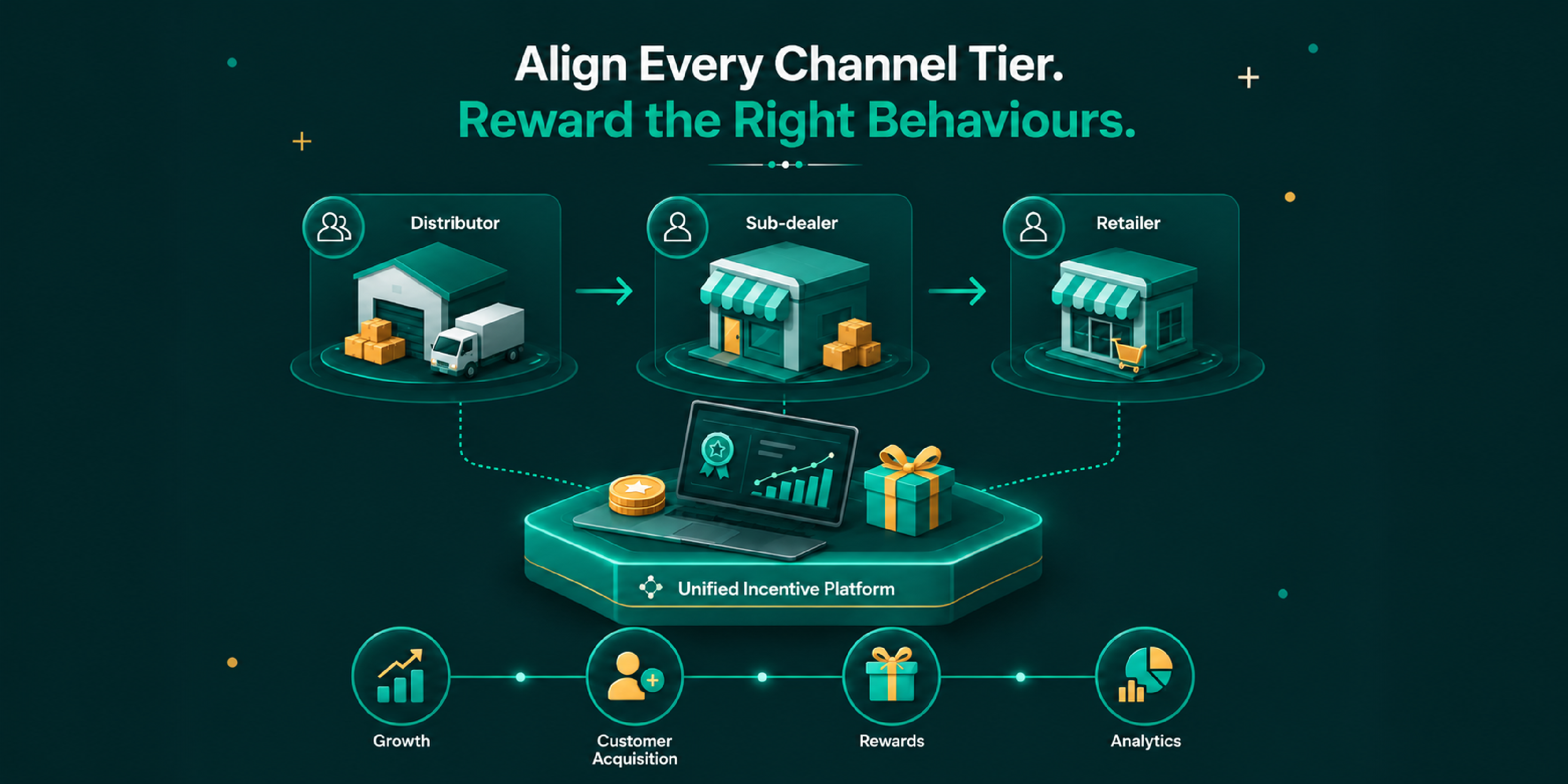
Most channel incentive programmes begin with good intentions but fail because they treat every participant as if they contribute value in exactly the same way. Distributors manage inventory, logistics, credit and territory development. Sub-dealers focus on regional market expansion. Retailers influence purchasing decisions at the final point of sale. Each tier has different commercial priorities.
According to Gartner, channel performance improves when organisations recognise the distinct motivations of each partner type rather than applying identical reward structures across the network. Uniform targets often encourage behaviour that benefits one tier while reducing profitability for another.
For example, rewarding distributors solely for shipment volumes may encourage excessive inventory movement into the channel. Retailers then struggle with slower sell through, while sub-dealers receive reduced margin opportunities. Eventually, every participant questions whether the programme supports their commercial success.
Different roles require different incentives
Effective multi-tier programmes begin by defining the business outcome expected from each participant.
This approach reflects recommendations from Forrester, which advises organisations to align incentive design with the specific commercial responsibilities of each partner type rather than a single revenue metric.
Sales Leaders should also recognise behavioural differences. Gallup consistently reports that people respond more positively when performance expectations feel achievable and directly connected to activities they control. Rewarding retailers for distributor purchasing decisions, or distributors for retail footfall, weakens motivation because participants cannot fully influence those outcomes.
The objective is alignment rather than equality. Every tier should pursue different targets while contributing towards shared commercial growth.
How to Design Earning Rules That Work Differently at Each Tier Without Creating Confusion
Complexity often destroys participation long before reward budgets become a concern. Research from Deloitte shows that employees and partners engage more consistently when performance criteria remain transparent, measurable and easy to understand. The same principle applies across channel ecosystems.
Sales Leaders should avoid creating dozens of earning rules simply because different partner tiers require different objectives. Instead, organisations should standardise programme logic while varying the qualifying activities.
A practical framework for earning rules
A consistent structure could include three common elements across every tier.
- One primary performance objective.
- One growth objective.
- One strategic behaviour objective.
Only the qualifying activities change.
For example:
- Distributors earn points for regional volume growth and inventory availability.
- Sub-dealers earn incentives for onboarding new retailers and expanding active accounts.
- Retailers earn rewards for product mix, repeat sales and promotional participation.
This creates consistency without making the programme identical.
The Incentive Research Foundation recommends limiting the number of primary performance measures because participants engage more actively when they clearly understand how daily actions influence rewards.
Technology also reduces complexity. Rather than relying on spreadsheets or manual calculations, modern channel incentive platforms automate earning logic according to partner type. Paytives allows organisations to configure different earning rules, approval workflows and incentive calculations for multiple channel tiers while maintaining a single administration platform. This reduces operational effort and improves programme transparency across geographically distributed partner ecosystems.
Sales Leaders should also review earning rules quarterly rather than annually. According to Bain & Company, organisations that adapt commercial incentives to changing market conditions respond faster to competitive shifts while maintaining stronger partner engagement.
The most effective programmes make complexity invisible to participants. Each partner should immediately understand what actions generate rewards without needing lengthy documentation or repeated clarification.
Visibility Architecture: What Information Each Tier Should. And Should Not. See
Transparency builds trust. Excessive transparency creates conflict.
Many organisations mistakenly assume every channel participant should see identical performance information. In reality, different partner tiers require different levels of visibility. Gartner advises organisations to balance transparency with commercial confidentiality by providing each participant with information relevant to their responsibilities.
Distributors require strategic reporting across territories, inventory performance and downstream sales trends. Retailers need visibility into their own progress, targets and available rewards. Sub-dealers typically require regional performance information without gaining access to commercially sensitive distributor data.
Designing role based visibility
An effective visibility architecture separates information into three categories.
This structure protects commercial relationships while maintaining programme credibility.
Research from Mercer indicates that participants trust performance systems when they understand how rewards are calculated but do not gain unnecessary visibility into confidential commercial information.
Modern platforms also support role based dashboards. With Paytives, organisations can configure personalised portals for distributors, sub-dealers and retailers, ensuring every participant views the information required to improve performance without exposing commercially sensitive data from other channel levels.
Sales Leaders should also consider communication frequency. Executive reports may suit distributors, while retailers often benefit from weekly progress updates, simplified scorecards and milestone notifications. According to Aberdeen Group, regular performance feedback significantly improves participation rates in incentive programmes because partners can adjust behaviour before reporting periods end.
Visibility should encourage action rather than curiosity. Every dashboard, report and notification should answer one simple question: What should I do next to earn more?
How to Set KPI Weightings Across Volume, Acquisition, and Value Metrics for Each Channel Level
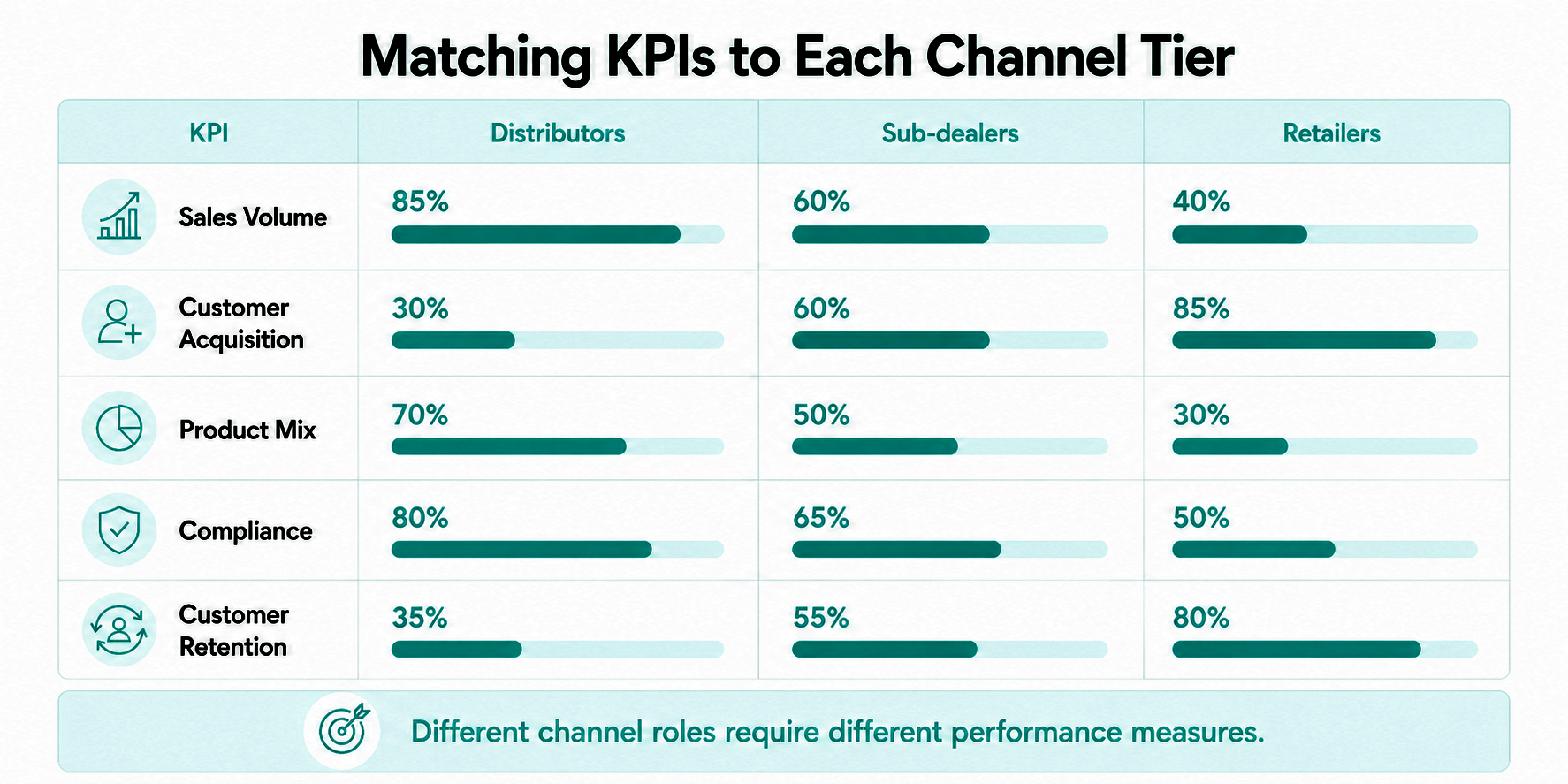
Selecting the right KPIs matters as much as selecting the right rewards. Many channel programmes overemphasise sales volume because it is easy to measure. However, McKinsey & Company has found that organisations achieve stronger long term channel performance when they balance revenue growth with customer acquisition, profitability and partner capability development.
Rather than applying identical KPIs across every tier, Sales Leaders should assign weightings based on the role each partner plays in the route to market.
These percentages should act as a planning framework rather than a fixed formula. A mature distribution network may prioritise profitability, while an expanding market may place greater emphasis on acquisition.
Sales Leaders should also review KPI performance quarterly. According to Bain & Company, organisations that regularly refine commercial performance metrics respond more effectively to changing market conditions than those using static annual targets.
Automating KPI calculations reduces administrative effort and improves trust. Paytives enables organisations to configure weighted scorecards, calculate incentives automatically and provide real time performance tracking across multiple partner tiers. This allows channel managers to spend less time validating spreadsheets and more time coaching partner performance.
The objective is simple. Reward the behaviours that create sustainable commercial growth rather than rewarding sales figures in isolation.
Managing Conflict Between Tiers: When Sub-Dealer Incentives Undermine Distributor Margins
Channel conflict rarely begins with poor relationships. It usually begins with poorly aligned incentives.
Consider a situation where sub-dealers receive generous incentives for aggressive discounting while distributors earn rewards based on maintaining healthy margins. Both groups attempt to maximise their earnings, yet each succeeds at the other's expense. According to Forrester, conflicting performance measures reduce channel collaboration and often weaken overall programme effectiveness.
Sales Leaders should identify potential conflicts during programme design instead of reacting after launch.
Practical ways to reduce channel conflict
- Align incentive objectives across shared commercial goals.
- Introduce minimum pricing or compliance requirements before incentives become payable.
- Reward collaboration as well as individual achievement.
- Create escalation processes for disputed claims.
- Review performance data jointly with regional channel managers.
Research from the Incentive Research Foundation suggests that incentive programmes produce stronger business outcomes when participants perceive reward rules as fair and consistently applied.
Technology also helps remove ambiguity. Centralised platforms provide a single source of truth for sales validation, approvals and payouts. This reduces disputes over eligibility and improves confidence in programme governance.
Finally, communicate the commercial purpose behind each incentive. Partners are more likely to support differentiated reward structures when they understand why targets differ across the distribution network. Transparency around objectives often prevents misunderstandings that no amount of financial reward can solve.
How to Roll Out a Multi-Tier Programme Without Disrupting Mid-Quarter Channel Performance
Even the strongest programme design can fail if implementation disrupts existing sales activity. According to Gartner, successful incentive launches follow a phased adoption model that allows partners to adapt without interrupting commercial momentum.
Sales Leaders should avoid replacing every incentive simultaneously. Instead, introduce the new structure in stages while maintaining continuity for existing targets.
A practical rollout plan includes:
- Validate earning rules with a representative group of distributors, sub-dealers and retailers.
- Communicate programme objectives before launch using clear examples and frequently asked questions.
- Run the new incentive calculations alongside the existing process for one reporting cycle.
- Train internal channel managers before training external partners.
- Monitor participation, claims and feedback during the first ninety days.
According to Deloitte, structured change management significantly improves adoption rates for new sales initiatives because stakeholders understand both the operational changes and the commercial benefits.
Automation further reduces implementation risk. By integrating with CRM and ERP systems, Paytives enables organisations to migrate earning rules, calculate incentives accurately and issue multi-currency payouts across global partner networks without increasing administrative workload.
The first quarter after launch should focus on learning rather than perfection. Review participation rates, identify areas of confusion and refine the programme before expanding it across the wider channel ecosystem. Continuous improvement creates stronger long term engagement than attempting to design a flawless programme from day one.
Frequently Asked Questions
What is a multi-tier channel incentive programme?
A multi-tier channel incentive programme rewards different levels of a distribution network, including distributors, sub-dealers and retailers, using tailored performance criteria. Each tier earns incentives based on activities it can directly influence. This approach creates stronger alignment across the entire sales ecosystem while reducing channel conflict.
How do you prevent channel partners from competing against one another?
Start by assigning different KPIs to different partner roles rather than rewarding everyone for the same outcome. Establish clear eligibility rules, protect commercially sensitive information and communicate how each tier contributes to shared business objectives. Regular programme reviews also help identify unintended conflicts before they affect performance.
Why should KPI weightings differ between distributors and retailers?
Distributors typically influence inventory planning, territory coverage and supply efficiency, while retailers focus on customer conversion and repeat purchases. Applying identical KPI weightings ignores these differences and can encourage behaviours that reduce overall profitability. Tailored scorecards create fairer performance expectations and stronger engagement.
Can Paytives manage incentives for multiple channel tiers?
Yes. Paytives enables organisations to configure different earning rules, KPI weightings, approval workflows and payout structures for distributors, sub-dealers and retailers within a single platform. Real time reporting and automated calculations reduce administration while giving Sales Leaders greater visibility across the entire channel ecosystem.
Conclusion
Successful multi-tier channel incentive programmes recognise that every partner contributes differently to commercial growth. By aligning earning rules, KPI weightings, visibility and governance with the responsibilities of each channel tier, Sales Leaders create stronger engagement and more predictable business outcomes.
As channel ecosystems become increasingly data driven, organisations will rely more heavily on automation, real time performance insights and flexible incentive design. Investing in the right programme architecture today will position your channel network for sustainable growth tomorrow.
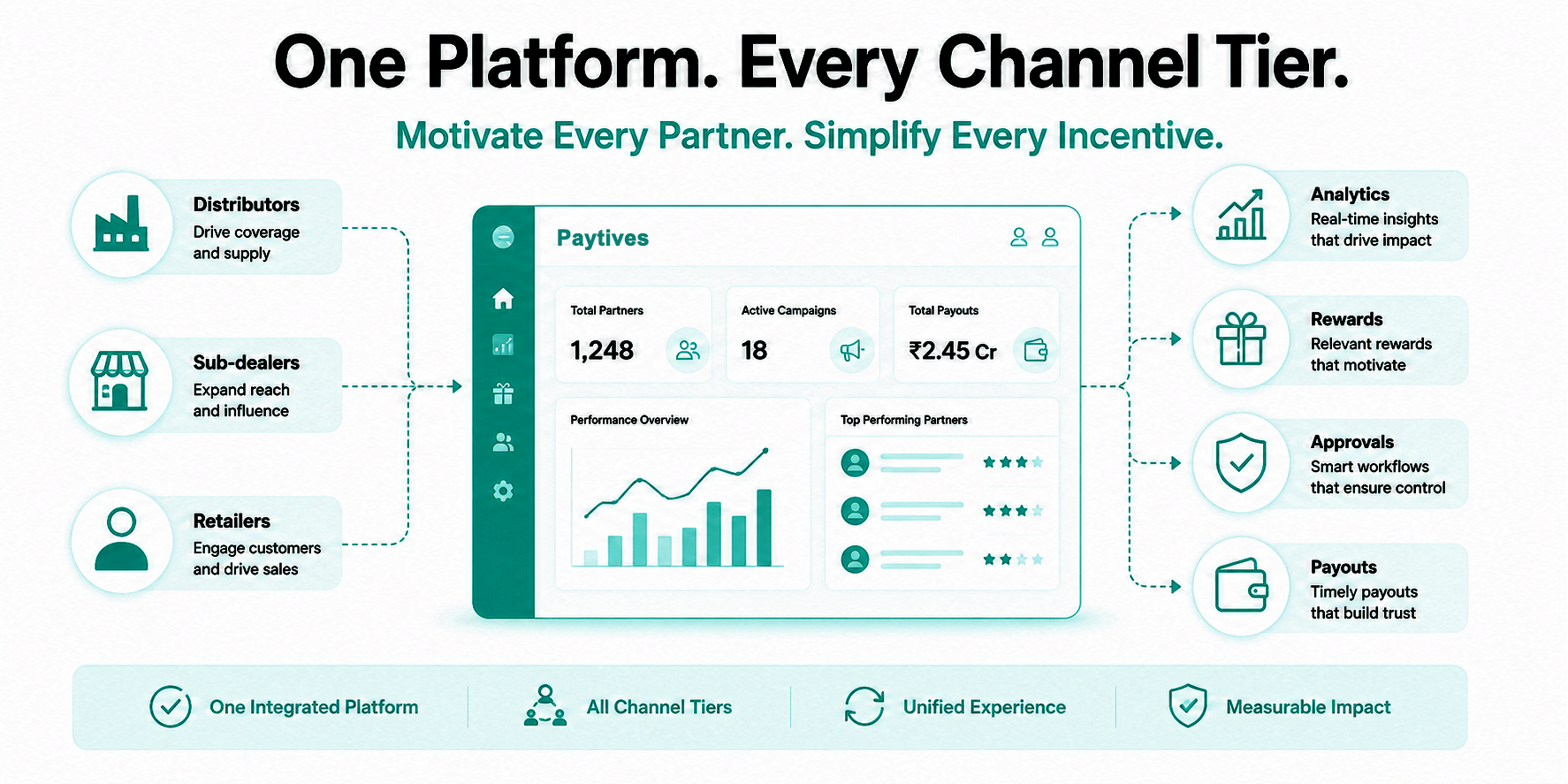
See how Paytives manages multi-tier channel incentives without the administrative overhead, from automated KPI tracking to global multi-currency payouts. Explore how you can motivate distributors, sub-dealers and retailers through one intelligent platform.
Sign up for our newsletter for trending top content!


