
How Media Companies and Agencies Can Use Recognition to Retain Creative Talent and Prevent Post-Production Burnout

Sign up for our newsletter for trending top content!
Introduction
Employee turnover remains one of the most expensive challenges facing creative organisations. Gallup research shows that employees who do not feel adequately recognised are twice as likely to say they will quit within the next year. For media companies, agencies, production houses and post-production teams, the risk is even greater because creative professionals often work under intense deadlines, extended production schedules and highly visible client expectations.
The challenge for HR leaders is not simply retaining talent. It is retaining highly specialised creative talent whose knowledge, relationships and creative judgement directly influence business outcomes. When editors, designers, producers, animators, writers and creative directors leave, projects slow down, client satisfaction suffers and recruitment costs rise.
This article explores why creative talent retention requires a different approach, where traditional recognition programmes often fail, and how media organisations can build meaningful recognition experiences that reduce burnout, strengthen engagement and improve retention.
Why Creative Talent Attrition Is Different From Every Other Industry's Retention Problem
Creative professionals operate in an environment where emotional investment often exceeds contractual obligation. Unlike many operational roles that focus on repeatable processes, creative work requires individuals to contribute original thinking, personal perspective and intellectual effort to every project.
According to Deloitte's Global Human Capital Trends research, employees increasingly evaluate employers based on purpose, belonging and recognition rather than compensation alone. This trend is particularly visible among creative professionals, who often associate their professional identity with the work they produce.
Recognition Directly Influences Creative Engagement
Gallup consistently reports that meaningful recognition strengthens engagement, productivity and retention. Creative employees frequently receive feedback when something goes wrong but receive limited acknowledgement when projects succeed.
This creates a dangerous imbalance. Teams may complete a demanding campaign, launch a successful production or deliver a complex client project only to move immediately into the next deadline cycle.
HR leaders in media organisations must recognise that creative attrition often stems from emotional exhaustion rather than dissatisfaction with compensation. When employees feel invisible, they disengage before they resign.
Why Traditional Retention Tactics Fall Short
Many retention initiatives focus on annual reviews, compensation adjustments and career progression frameworks. While important, these measures rarely address the daily recognition needs identified by O.C. Tanner's Global Culture Report.
O.C. Tanner research shows that employees who receive meaningful recognition are significantly less likely to experience burnout and substantially more likely to remain with their employer.
For creative organisations, retention starts with making contribution visible, not simply rewarding tenure.
The Production Cycle Recognition Gap: Why Creative Teams Feel Invisible After a Campaign Ships
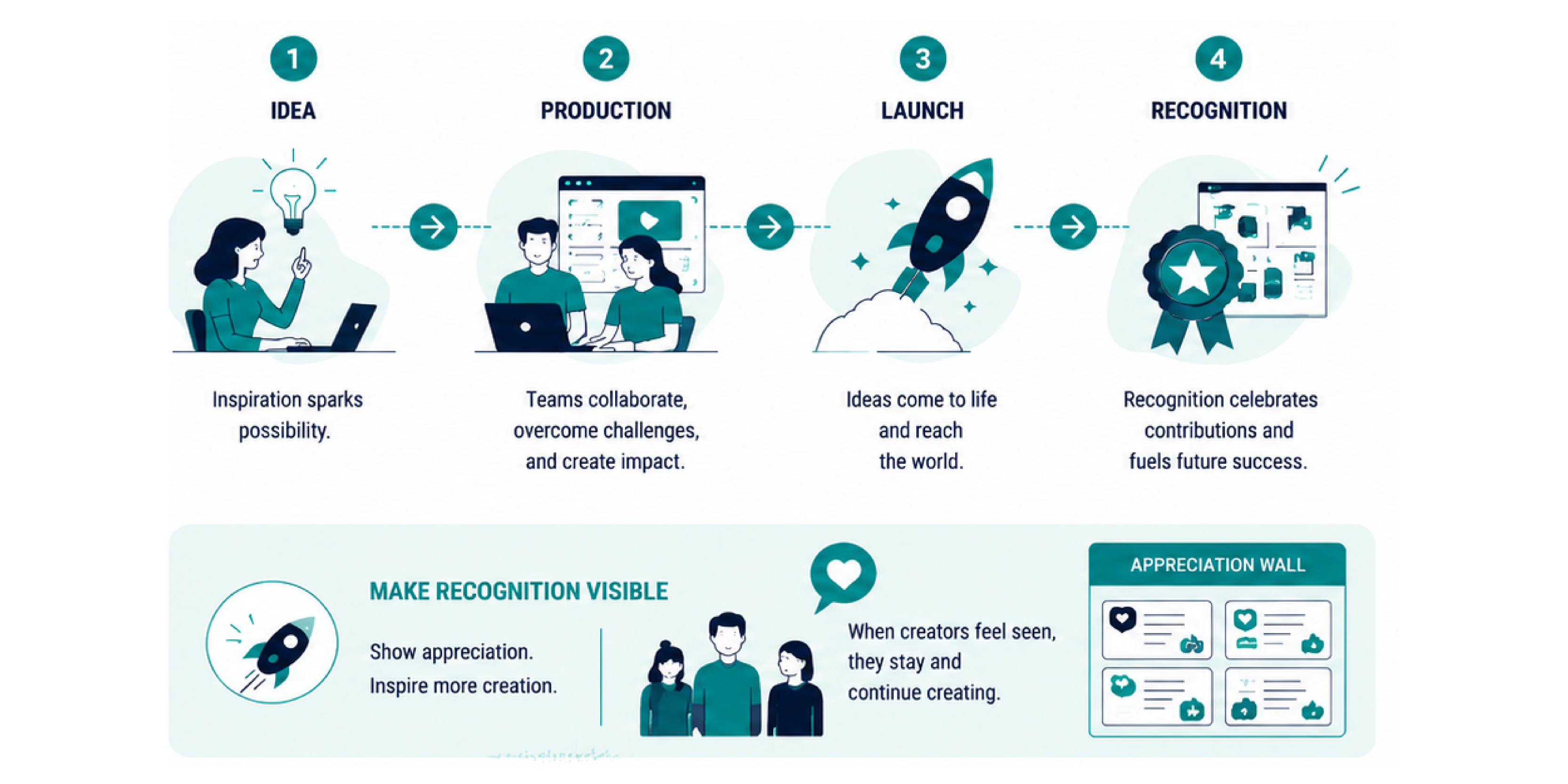
Most media organisations invest heavily in project kick-offs and campaign launches. Far fewer invest in recognising the people responsible for delivering the final outcome.
This creates what many HR leaders describe as the production cycle recognition gap.
The Hidden Cost of Project Completion
McKinsey research highlights that employee recognition remains one of the most effective non-financial drivers of workplace motivation. Yet creative teams often experience a sudden drop in visibility once a project reaches completion.
A campaign launches.
A film releases.
A client signs off.
Then attention immediately shifts to the next deadline.
The result is predictable. Employees perceive their contribution as transactional rather than valued.
Building Recognition Into Production Workflows
Recognition should become part of the production lifecycle rather than an afterthought.
Organisations can embed recognition at:
- Major project milestones.
- Client approval stages.
- Campaign launch dates.
- Production wrap events.
- Quarterly creative showcases.
Platforms such as ApplaudIQ allow organisations to automate milestone recognition, create peer-to-peer appreciation moments and showcase achievements through a Wall of Appreciation. This ensures recognition occurs consistently rather than depending on manager discretion.
SHRM research indicates that structured recognition programmes improve employee commitment and strengthen workplace culture because employees understand that their effort receives ongoing acknowledgement.
When recognition becomes part of project delivery, employees remain connected to organisational success long after the campaign ships.
How to Build Recognition That Includes Freelancers and Contract Creatives, Not Just Permanent Staff
The media and entertainment workforce increasingly relies on freelance specialists, contractors and project-based contributors.
According to Gartner, organisations continue expanding contingent workforce models to access specialised skills and improve workforce flexibility. However, many recognition programmes still focus exclusively on permanent employees.
This creates a significant cultural gap.
Why Exclusion Damages Team Cohesion
Freelancers often contribute alongside full-time employees for weeks or months. They attend meetings, solve production challenges and help achieve client outcomes.
When recognition excludes them, organisations unintentionally create a two-tier culture.
Research from Deloitte shows that inclusive workplace experiences improve collaboration, trust and team performance. Recognition practices should reflect this reality.
A Simple Recognition Inclusion Framework
The objective is not identical rewards for every contributor. The objective is consistent appreciation for meaningful contribution.
Modern recognition platforms such as ApplaudIQ enable organisations to extend recognition across diverse workforce groups while maintaining governance and programme consistency.
Inclusive recognition strengthens employer reputation and increases the likelihood that top freelance talent will return for future projects.
Project Completion Rewards: Recognising the Effort, Not Just the Output
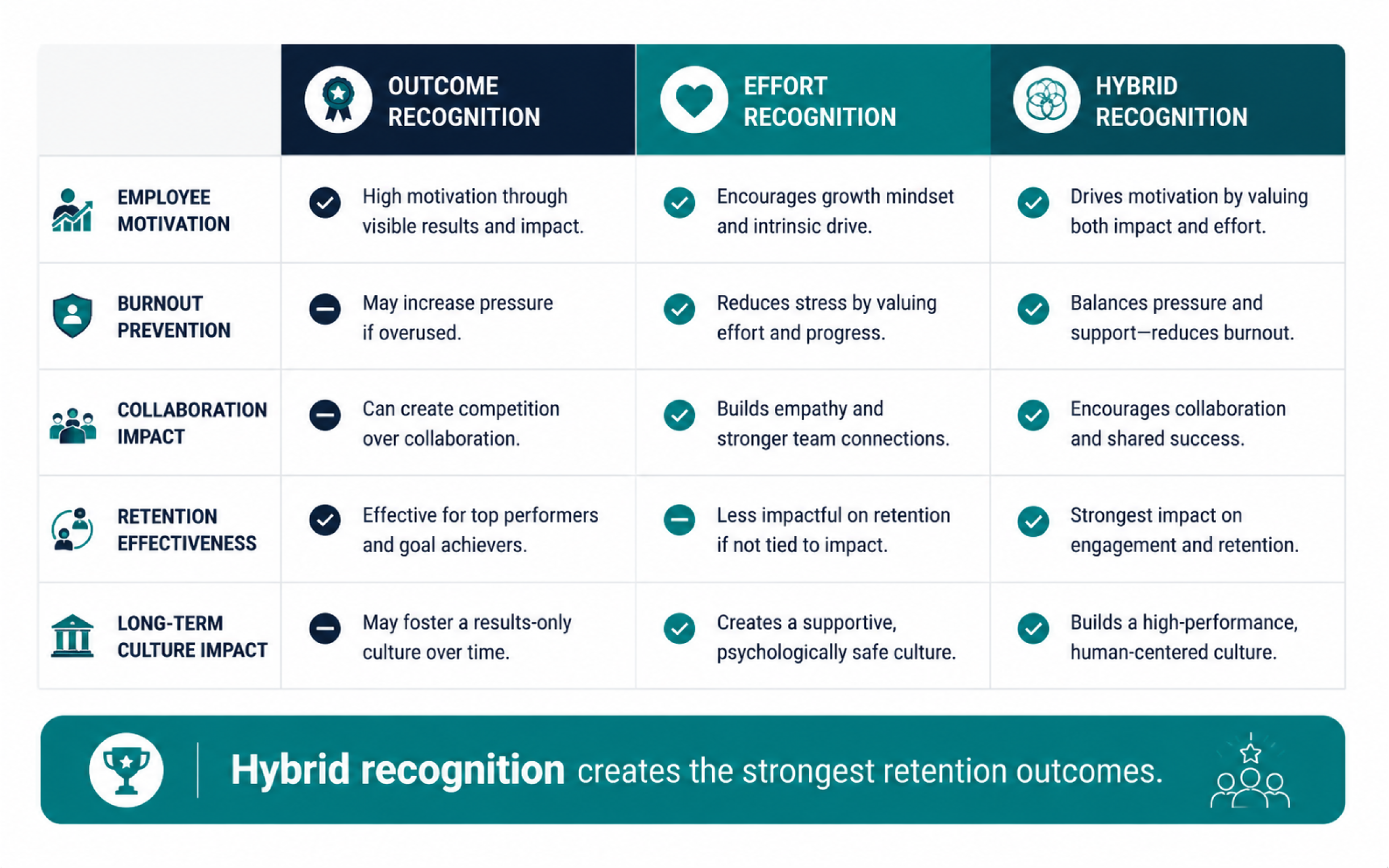
Many recognition programmes reward outcomes while ignoring the effort required to achieve them.
Creative organisations cannot afford this mistake.
Why Effort Recognition Matters
According to O.C. Tanner, employees who believe their effort is recognised report stronger wellbeing, higher engagement and lower burnout levels.
Creative projects often involve:
- Late-night production schedules.
- Last-minute client revisions.
- Complex stakeholder management.
- Technical problem solving.
- Collaborative ideation sessions.
Not every project wins awards or generates exceptional commercial results. However, teams still invest significant effort and expertise.
Outcome Recognition Versus Effort Recognition
The Incentive Research Foundation (IRF) reports that meaningful rewards tied to achievement strengthen motivation when employees perceive fairness and authenticity.
HR leaders should therefore create recognition moments that celebrate:
- Production milestones.
- Problem-solving achievements.
- Cross-functional support.
- Extraordinary effort during high-pressure periods.
Recognition should tell employees that the organisation values how work gets done, not just the final metric.
Cross-Functional Recognition in Creative Organisations: Making Collaboration Visible
Creative work rarely happens in isolation.
Campaign success depends on collaboration between creative, strategy, client services, production, finance, technology and operations teams.
Yet recognition frequently flows only toward the most visible contributors.
The Visibility Problem
Forrester research highlights that employee experience improves when organisations create stronger connections between individual contribution and organisational outcomes.
In creative environments, hidden contributors often include:
- Editors.
- Motion graphics specialists.
- Sound engineers.
- Producers.
- Project managers.
- Quality assurance teams.
When recognition focuses exclusively on client-facing roles or senior creatives, organisations unintentionally reduce collaboration incentives.
Creating Peer-Driven Recognition
Peer recognition provides a powerful solution because employees often see contributions managers miss.
Gallup research shows that recognition from colleagues can have an equally significant impact on engagement as recognition from leadership.
Effective cross-functional recognition should:
- Encourage peer nominations.
- Highlight collaborative achievements.
- Recognise behind-the-scenes contributions.
- Reward knowledge sharing.
- Showcase project-wide success stories.
Features such as peer-to-peer recognition, social appreciation feeds and team-based acknowledgements help organisations create visibility across departments.
When collaboration becomes visible, teams become more willing to support each other during demanding production periods.
Wellness Rewards After Intense Production Periods: What Works and What Is Just Noise
Post-production burnout remains a significant concern across media and entertainment organisations.
According to Mercer, employee wellbeing has become one of the most influential drivers of retention, particularly among knowledge workers and creative professionals.
However, many organisations respond with initiatives that generate little lasting impact.
What Does Not Work
Employees quickly identify superficial wellbeing efforts.
Examples include:
- Generic wellness emails.
- One-off motivational sessions.
- Recognition disconnected from actual workload realities.
These activities often fail because they do not address recovery needs.
What Works
Research from Deloitte and Mercer suggests employees value wellbeing initiatives that provide genuine support and flexibility.
Effective post-production recognition may include:
- Additional recovery days.
- Flexible scheduling periods.
- Wellness-focused reward options.
- Experiential rewards that encourage rest and recovery.
- Team celebrations following major project completion.
Recognition becomes particularly powerful when paired with recovery opportunities.
The message shifts from "thank you for working hard" to "thank you, and we want you to recover properly.
This distinction significantly influences employee perceptions of organisational care and long-term commitment.
Frequently Asked Questions
What is a creative talent retention recognition programme?
A creative talent retention recognition programme is a structured approach that acknowledges the contributions of creative professionals through appreciation, rewards and visibility. The goal is to strengthen engagement, reduce burnout and improve retention. These programmes focus on recognising effort, collaboration and innovation rather than only final outcomes.
Why do creative professionals leave despite competitive salaries?
Research from Deloitte and Gallup shows that belonging, recognition and meaningful work strongly influence retention decisions. Creative employees often leave when they feel invisible, undervalued or emotionally exhausted. Compensation alone rarely solves these challenges.
How can media organisations reduce post-production burnout?
Organisations can reduce burnout by combining recognition with recovery opportunities. Examples include milestone recognition, flexible schedules after intensive projects, wellness-focused rewards and peer appreciation initiatives. O.C. Tanner research indicates that meaningful recognition can reduce burnout risk significantly.
Can freelancers be included in employee recognition programmes?
Yes. Inclusive recognition strengthens culture and improves future workforce engagement. Media organisations can recognise freelance and contract contributors through project-based appreciation, milestone rewards and team celebrations without creating administrative complexity.
How does ApplaudIQ help media and entertainment companies retain creative talent?
ApplaudIQ helps organisations automate milestone rewards, enable peer-to-peer recognition, celebrate project achievements and create visibility across creative teams. HR leaders can recognise both individual and team contributions while connecting employees to a global rewards catalogue that supports engagement and retention objectives.
Conclusion
Creative talent retention requires more than compensation reviews and career frameworks. Media organisations must address the recognition gaps that emerge throughout demanding production cycles. Employees who feel seen, appreciated and supported are more likely to remain engaged, collaborate effectively and stay with the organisation.
As project-based work and contingent talent models continue expanding, recognition programmes will increasingly become a strategic retention tool rather than a cultural nice-to-have. Organisations that invest now will build stronger creative teams and reduce costly turnover in the years ahead.
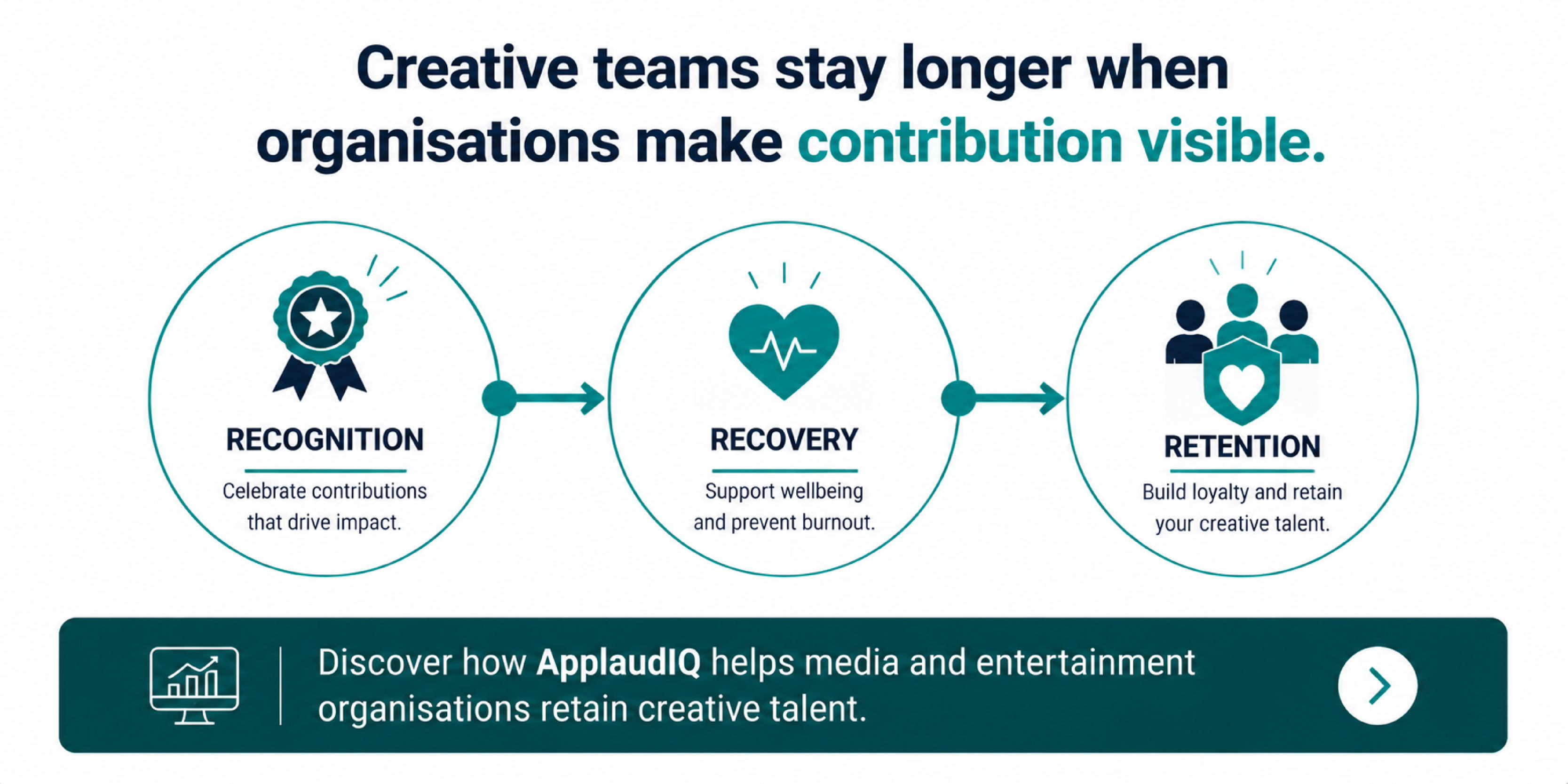
See how ApplaudIQ helps media and entertainment companies retain creative talent and prevent post-production burnout. Book a demo: https://www.therewardstore.com/applaudiq/solutions/media-entertainment
Sign up for our newsletter for trending top content!


