
Last Minute Diwali Rewards: Why Digital Redemption Works After the Physical Dispatch Cutoff

Sign up for our newsletter for trending top content!
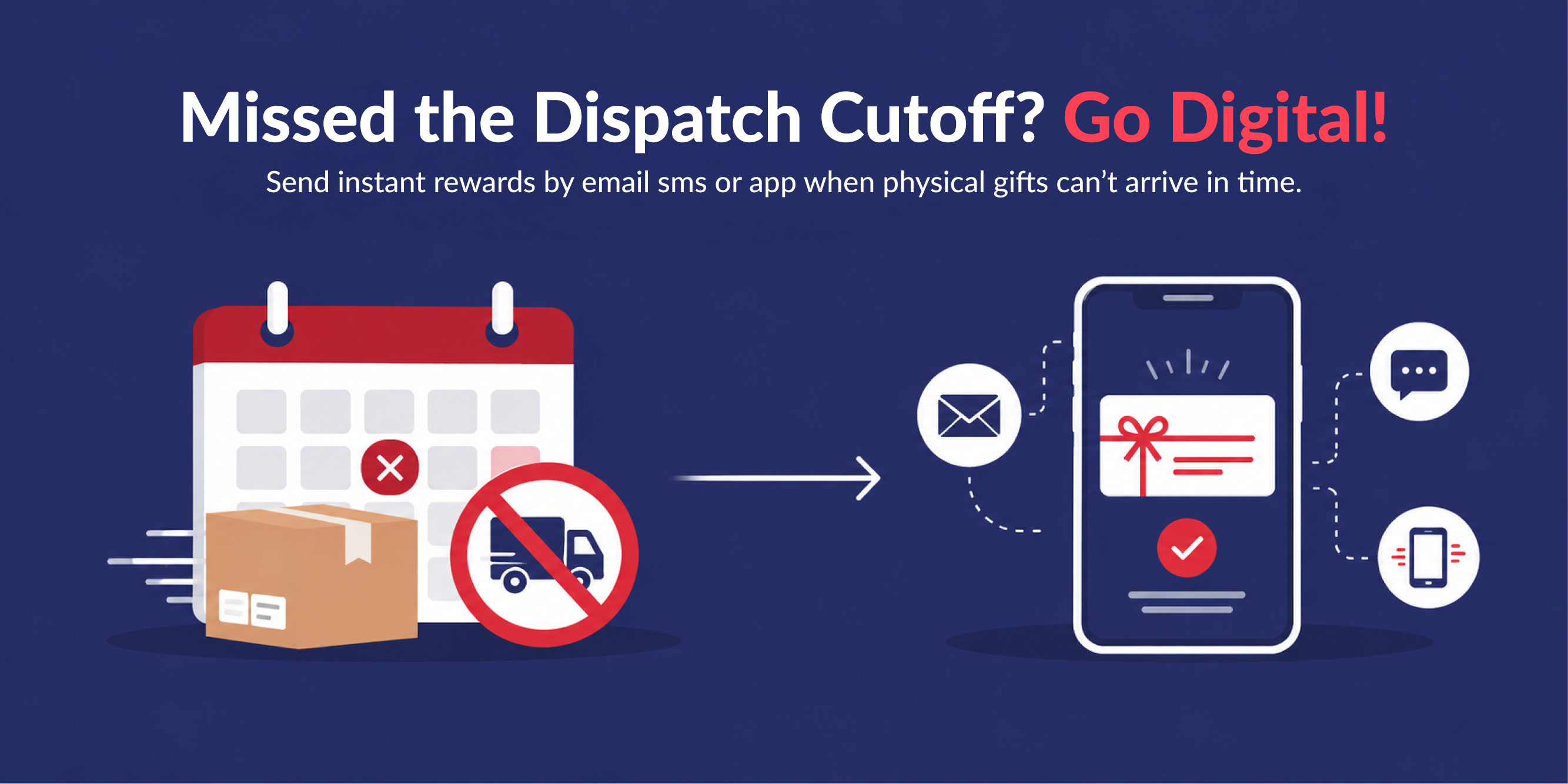
Once the physical dispatch cutoff has passed, digital vouchers are the practical option for last minute Diwali gifts for employees, because a voucher travels as data and arrives almost immediately, whereas a parcel still needs packing, courier transit and a correct address. Digital redemption works in the final weeks only when the programme owner controls three things: a choice the recipient can make quickly, a delivery channel confirmed in advance, and tracking with retry so that a failed delivery is corrected before the festival.
What Changes After the Physical Dispatch Cutoff
After the cutoff, the limiting factor shifts from the quality of the gift to the time it needs to physically reach the person, and a digital reward removes most of that time because nothing is handled or transported. A physical dispatch cutoff is the last date on which a gift vendor accepts an order and still expects delivery before the festival, set by the slowest stage in its fulfilment chain.
Why the cutoff cannot be bought back
Physical fulfilment runs in sequence: stock confirmation, personalisation, packing, hub consolidation, line haul and last mile delivery. Each stage waits for the one before it, and festive volume lengthens queues at stages that cannot run in parallel. A vendor can add packers but cannot shorten a congested line haul route, so a premium for a late order rarely restores the delivery date.
What digital redemption removes and what remains
Digital redemption is a process in which a recipient exchanges an entitlement, such as a points balance or an allocated budget, for a reward delivered electronically. It removes packing, transit and dependence on a home address. It leaves in place the need for a valid contact detail, the time the recipient takes to choose, and the finance approvals that precede any reward.
The recipient data row matters most. Physical gifts fail on stale home addresses and digital rewards fail on stale email addresses and mobile numbers, so the first diagnostic question is which channel the HRMS holds for each employee and when it was last verified.
Why Choice Makes a Late Reward Feel Considered
A late reward feels considered when the recipient selects something that suits them, because people read fit, not timing, as effort. A fixed gift that arrives late invites the inference that it was an afterthought, whereas a chosen reward carries no such signal.
How much choice is enough
A curated catalogue is a limited selection of reward options, chosen by the programme owner, that a recipient browses at redemption. Too narrow a selection restores the fit problem, since a single brand suits few people. Too wide a selection causes decision fatigue and delays redemption past the festival. The deciding criteria are the spread of regions, ages and household types in the workforce, and the presence of everyday categories, such as groceries, mobile recharges and utility payments, beside discretionary ones such as travel and experiences. Not every employee observes Diwali, so neither the catalogue nor the message should assume that they do.
The fair objection
A reasonable objection is that a voucher resembles cash and therefore feels transactional, whereas a hamper on a desk creates a shared moment. That holds when the voucher is a single denomination with a generic message. Where a team values the ritual, send the digital reward now and arrange a small shared gesture, such as sweets at a team meeting, after the festival.
Delivery Channels and Timing for the Final Week
Choose the channel according to where each employee reliably reads messages, send in staggered waves instead of one batch, and finish sending early enough to leave room for retries before the festival. A delivery channel is the medium, such as email, SMS or an in app notification, through which a voucher link or code reaches a recipient.
Sequencing the final week
Send a test to a small internal group on every channel first, and redeem a test voucher completely, so that problems with filtering, templates or catalogue display appear while time remains. Then send in waves by location or shift. A single batch concentrates every question to HR on one afternoon, and a systematic fault such as a blocked template then affects one wave instead of the whole workforce. Avoid the last day before the festival for first sends, because greeting traffic on messaging networks is highest then and delays are most likely.
Contact details in an HRMS were collected for employment purposes, so check the Digital Personal Data Protection Act, 2023 and the organisation’s privacy notice before passing them to any service that delivers rewards.
When a digital reward is the wrong choice
A digital reward is the wrong choice where many recipients have no personal device or no reliable mobile number on record, as with contract workers who share a phone or use a supervisor’s number. A link sent to a shared number invites redemption by the wrong person and leaves no record of who received the reward. In that case, use printed voucher cards held in stock and handed over by a site coordinator with a signed acknowledgement, or announce a reward after the festival with a sincere message that acknowledges the timing.
Tracking and Retrying Deliveries So Nothing Is Lost
A late reward becomes a failed reward when nobody learns that delivery failed, so the programme needs a record of each voucher’s state and a defined second attempt for each failure. Delivery tracking is a record, updated as each message progresses, that shows whether a voucher was queued, sent, delivered or returned as undeliverable. A retry is a repeat delivery attempt, made automatically or by an operator, after a first attempt fails.
Reading failures correctly
A hard bounce is a permanent failure, such as a mailbox that does not exist, and a soft bounce is a temporary failure, such as a full mailbox. Each state needs a different response.
Keep the last row apart from the others. Reminding someone whose message never arrived achieves nothing, and treating an unredeemed voucher as a fault wastes support time. A second control concerns duplicates: a manual resend must reissue the original entitlement and not create a new one, otherwise an anxious operator can issue two vouchers to one person and the budget overruns without notice.
A worked scenario
Consider a manufacturing company with a head office and two plants. On a Monday the HR operations lead learns that the hamper vendor cannot deliver before the festival. Office staff have monitored corporate mailboxes, and plant staff mostly have personal mobile numbers on record. A test SMS fails at one plant because the template was registered against a different sender ID, and the fix takes time that the schedule must allow for. Office staff then receive email in the morning and plant staff receive SMS at shift change. The status record shows hard bounces and failed messages to changed numbers. Plant HR coordinators correct those records, and contract workers without a personal number receive printed voucher cards with a signed acknowledgement. Failures arrive as tasks, not as complaints.
How the redemption layer helps
A reward redemption engine is a system that converts an existing points or budget balance into a delivered reward and keeps a record of what happened to each delivery. RedeemStack is a white label reward redemption engine and storefront from The Reward Store. It provides real time tracking, automatic retry when a delivery fails, and webhooks for delivery status, redemption events and catalogue updates. A webhook is an automatic message that one system sends to another when an event occurs, so a delivery status webhook can create a task in an HR ticket queue for each failed delivery.
Presenting a Digital Reward With the Giver’s Brand
Employees redeem a reward when the message and the page carry a name they recognise, so a digital reward should arrive under the employer’s own name, domain and voice and not under that of an unfamiliar third party. The mechanism is security awareness: staff are trained to distrust unexpected links, and an unfamiliar sender is a prompt to report the message to IT, which delays redemption and creates support work. White label is an arrangement in which a provider’s technology is presented under the client’s own name and identity.
Domain, sender and storefront
Ask IT to confirm that the sending domain passes SPF, DKIM and DMARC checks, because messages that fail them are more likely to reach spam. Announce the voucher in advance through the intranet, Slack or Microsoft Teams, naming the sender and the expected date, so the message is expected when it arrives. Where a reward redemption engine presents the catalogue, check whether the storefront can carry the programme’s own domain, colours and logo, since the redemption page is the part the employee actually judges.
The message itself
State four things in order: the recognition, the action, the deadline and the contact. Lead with the recognition, such as the contribution of the team, because a message that opens with redemption mechanics reads as a notice and not as a thank you. Send it in the name of a leader the employee knows and not “the HR team”. Set the redemption window to end after the festival, so a late message does not create a deadline that feels like pressure. Do not describe the reward as hand picked unless it was.
A Last Minute Digital Reward Checklist
A last minute digital reward programme is ready to launch when the following nine checks are complete, in this order.
- Agree the budget and recipient list with Finance, and confirm the income tax and GST treatment of the gift with the payroll team.
- Audit the HRMS for one verified channel per recipient, and list every employee who has none.
- Name a fallback and an owner for those employees, such as printed voucher cards handed over by a site coordinator.
- Curate the catalogue so that it includes everyday categories and does not assume that every recipient celebrates Diwali.
- Ask IT to authenticate the sending domain with SPF, DKIM and DMARC, and confirm SMS sender ID and template registration.
- Send a test on every channel to a small group and redeem a test voucher from start to finish.
- Write the message in a leader’s name, lead with the recognition, and set a redemption window that ends after the festival.
- Ask the vendor or reward redemption engine how a failed delivery is retried and how a manual resend is recorded.
- Send in waves, assign an owner for each failure state, and keep the last days for retries and follow up.
Record every exception in a log, so that next year’s physical cutoff can be set with evidence.
Where RedeemStack Fits
A reward redemption engine fits between the points or budget balance an organisation already holds and the reward the employee receives. RedeemStack, offered by The Reward Store, is the redemption layer in that arrangement. It converts an existing points or budget balance into a delivered reward. The catalogue includes 5,000+ gift cards across 100+ countries, alongside prepaid cards, mobile recharges and utility payments, flights and hotels, gift boxes and experiences. The storefront is white label, with the programme’s own domain, colours, logo and curated catalogue selection. Vouchers are delivered by email, SMS and in app, with real time tracking and automatic retry when a delivery fails. It does not issue points, currency or gift cards, does not fund rewards and does not run the programme itself.
Frequently Asked Questions
Can I still send Diwali gifts to employees if the courier cutoff has passed?
Yes, if the gift is digital. A voucher or points based reward does not depend on packing, courier transit or a home address, so it can arrive after the physical cutoff. The programme still needs a current email address or mobile number for each recipient, an authenticated sending domain, and a plan for failed deliveries, so that the reward arrives before the festival.
How quickly does RedeemStack deliver vouchers?
RedeemStack, a reward redemption engine, delivers vouchers instantly by email, SMS and in app. It provides real time tracking of each delivery and retries automatically when a delivery fails. Webhooks are available for delivery status, redemption events and catalogue updates. No specific time in seconds or minutes is stated here.
What is the best way to send digital Diwali vouchers to employees who have no company email address?
Use SMS to a personal mobile number held in the HRMS, after confirming that the sender ID and message template are registered on the telecom operators’ DLT platforms in India. Test on the main operators before sending. For employees with no reliable personal number, such as contract workers on shared phones, hand over printed voucher cards through a site coordinator and record a signed acknowledgement.
Do digital vouchers feel less personal than a physical Diwali hamper?
They can, when a voucher is a single brand with a generic message. Personal feel comes from fit and specificity, so a curated catalogue the recipient chooses from, a message from a named leader that cites the team’s contribution, and a redemption window that extends beyond the festival narrow the gap. Where a team values shared rituals, add a small physical gesture after Diwali.
What should I do when an employee says they never received their Diwali voucher?
Check the delivery status first. A hard bounce means the address is wrong, so correct it from the HRMS and resend. An SMS failure usually points to a changed number or a blocked template, so switch channel. If the status shows delivered, the voucher is unredeemed and not lost, so send a reminder. Always reissue the original entitlement instead of creating a second one.
Are digital Diwali vouchers for employees taxable in India?
The treatment depends on the form of the reward, its value and the organisation’s policy, so confirm it with Finance and the payroll team before sending. Gifts to employees can be treated as perquisites for income tax withholding, and goods and services tax rules on input credit for gifts can also apply. Obtain the position in writing, because it governs whether payroll must record the value. This is general information and not tax advice.
Sign up for our newsletter for trending top content!


