
How IT Hardware and Technology Vendors Can Build Partner Incentive Programmes That Drive Genuine Solution Selling

Sign up for our newsletter for trending top content!
Introduction
Research from Gartner consistently shows that B2B buying has become significantly more complex, with multiple stakeholders involved in most enterprise technology purchases. At the same time, Forrester reports that buyers increasingly expect partners to provide consulting, implementation guidance and long term business outcomes instead of simply supplying hardware or software. Yet many IT channel incentive programmes still reward transaction volume rather than solution quality.
For Sales Leaders, this creates a costly disconnect. Partners naturally prioritise quick product sales instead of investing time in solution discovery, proof of concept work and customer success. The result is lower attach rates, weaker margins and missed opportunities to grow strategic accounts.
This guide explains how IT hardware and technology vendors can redesign partner incentive programmes to encourage genuine solution selling, build deeper partner capability and measure commercial impact more effectively.
Why IT Channel Programmes Reward Box Shifting Instead of the Solution Sales You Actually Need
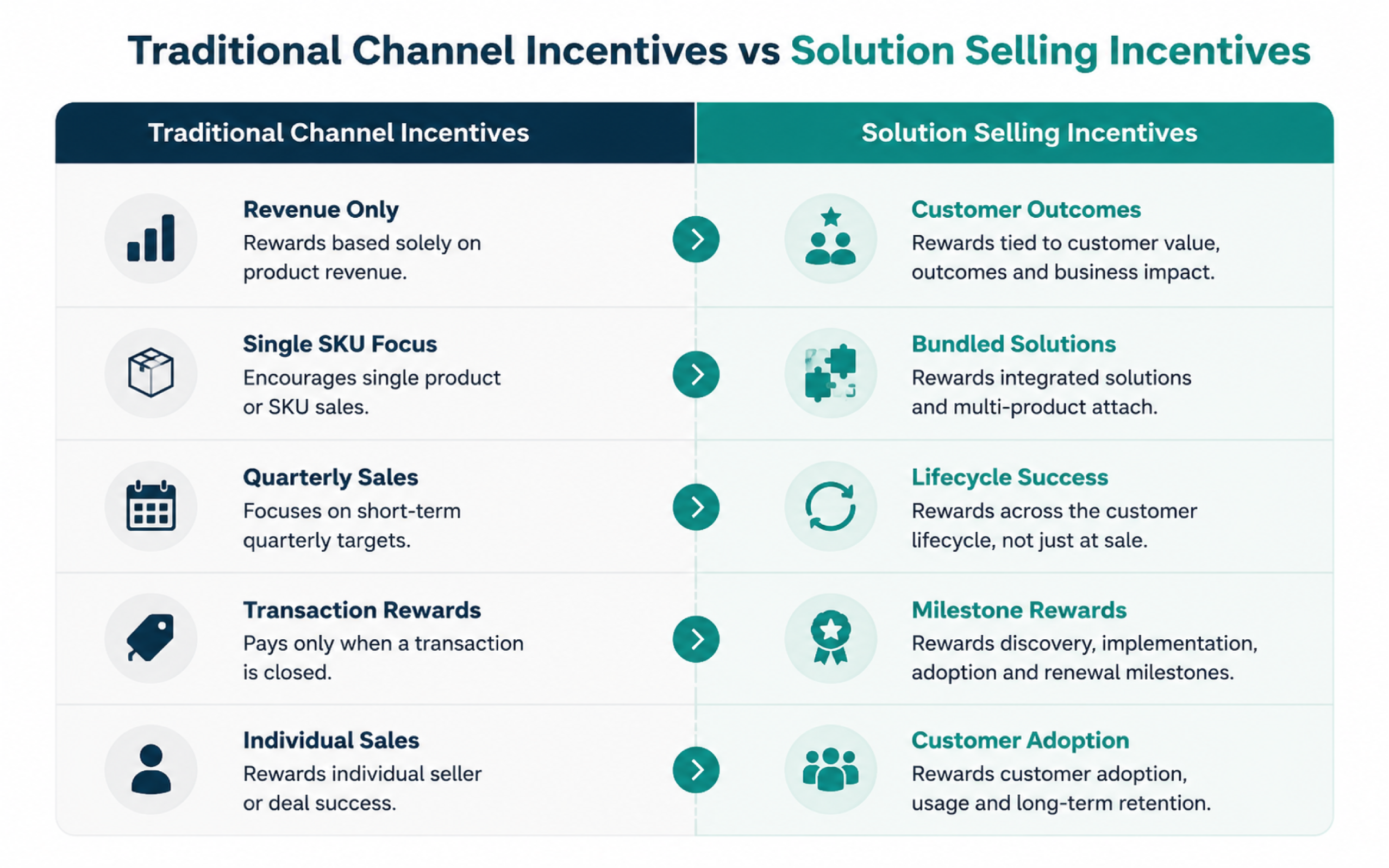
Traditional channel incentives evolved when hardware transactions dominated enterprise technology purchasing. Vendors rewarded shipment volume because volume was easy to measure and forecast. Modern enterprise buying looks very different.
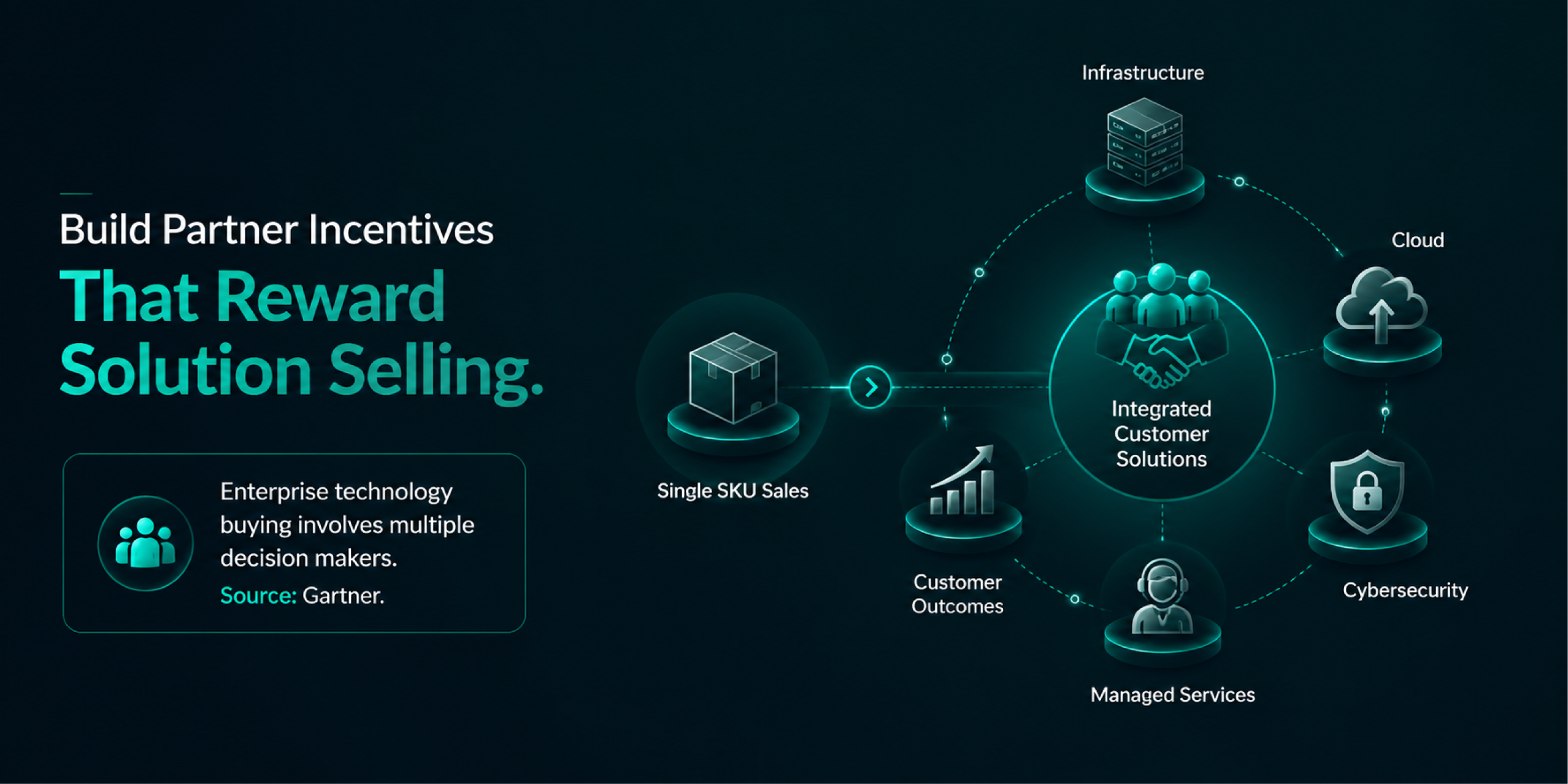
According to Gartner, enterprise customers increasingly purchase integrated technology ecosystems rather than isolated products. Buyers expect partners to combine infrastructure, cloud services, cybersecurity, managed services and ongoing support into a single business solution. Despite this shift, many incentive structures still pay partners only after a completed sale.
This creates several behavioural problems.
- Partners avoid lengthy discovery conversations.
- Presales consultants receive little recognition.
- High value solution opportunities lose priority to faster transactions.
- Cross sell opportunities remain underdeveloped.
McKinsey research has shown that organisations aligning commercial incentives with customer outcomes consistently outperform peers on profitable growth. The Incentive Research Foundation also notes that incentive design strongly influences participant behaviour, making reward structure one of the most powerful management tools available.
Sales Leaders should therefore ask a different question.
Instead of asking, "How many products did this partner sell?", ask, "How much customer value did this partner create?"
That subtle change shifts incentives from product movement towards business transformation, creating stronger customer retention, higher recurring revenue and larger average deal values.
Solution Complexity Incentives: How to Reward Partners for Selling Full Stacks, Not Single SKUs
Enterprise technology rarely delivers value through one product alone. Customers purchase complete solutions that integrate hardware, software, cloud infrastructure, security, services and ongoing support.
Forrester research indicates that customers increasingly select partners capable of solving business problems rather than simply recommending products. Incentives should therefore reward complexity, not simplicity.
A practical framework
This approach encourages partners to recommend broader technology solutions that increase customer value while improving vendor profitability.
NASSCOM has repeatedly highlighted that India's technology ecosystem continues to move towards integrated digital transformation projects. Vendors that encourage partners to build complete customer solutions position themselves more effectively for long term growth.
This is where Paytives becomes valuable. Rather than calculating incentives from basic sales data alone, Sales Leaders can configure rules around bundled solutions, attach rates, customer segments and strategic products. Automated calculations remove manual complexity while ensuring partners clearly understand how solution selling increases their rewards.
Presales Investment Incentives: How to Compensate Partners for Proof of Concept Effort That Does Not Always Close
Solution selling demands significant investment before revenue appears. Partners often spend weeks conducting workshops, technical assessments, demonstrations and proof of concept exercises.
Many of these opportunities never convert.
When vendors ignore this investment, partners naturally shift attention towards opportunities with quicker returns.
According to Gartner, technical buying cycles continue to lengthen as purchasing committees demand greater evidence before approving investments. Forrester similarly reports that buyers increasingly expect vendors and partners to demonstrate measurable business outcomes during the buying journey.
Sales Leaders should therefore recognise qualified presales activity rather than rewarding only successful transactions.
Examples include:
Qualified discovery
Reward partners that complete structured customer discovery aligned with strategic solution categories.
Proof of concept delivery
Offer fixed incentive payments for approved proof of concept projects regardless of final purchase outcome.
Executive workshops
Recognise collaborative planning sessions involving customer leadership.
Strategic opportunity registration
Provide milestone rewards when opportunities progress through agreed qualification stages.
The Incentive Research Foundation has consistently found that well designed milestone incentives improve participant engagement throughout longer commercial cycles.
Using Paytives, organisations can automate milestone validation, connect CRM activity with incentive eligibility and ensure partners receive timely recognition for valuable presales contributions. This encourages sustained investment in enterprise opportunities that may require several months before closing.
Certification and Specialisation Bonuses: How to Build Partner Depth Without Over-Incentivising Breadth
Many partner programmes reward certifications purely by counting completed courses.
That creates unintended behaviour.
Partners collect credentials across numerous technologies without building meaningful expertise in strategic solution areas.
According to Deloitte, organisations achieve stronger commercial performance when learning aligns directly with business strategy rather than activity metrics. Gartner also recommends encouraging specialised capability rather than broad certification accumulation.
Sales Leaders should focus incentives on three areas.
Strategic certifications
Reward certifications supporting priority growth markets.
Customer success application
Increase rewards when certified teams successfully deploy customer solutions.
Ongoing capability
Provide annual bonuses for maintaining specialist expertise instead of repeatedly rewarding new certifications.
Mercer research demonstrates that sustained capability development produces stronger long term organisational performance than one time achievement incentives.
A balanced certification framework may include:
- Entry certification requirements.
- Specialist capability levels.
- Customer implementation success.
- Annual recertification.
- Customer satisfaction performance.
This creates deeper expertise across the partner ecosystem while preventing unnecessary training activity that contributes little commercial value.
How to Design a Partner Business Planning Process That Connects to Incentive Eligibility
Annual partner business planning often becomes an administrative exercise completed purely to satisfy programme requirements.
High performing vendors treat business planning differently.
According to Bain & Company, organisations that align incentives with strategic objectives achieve significantly higher execution consistency. Aberdeen Group has similarly reported that structured performance management improves sales productivity across partner ecosystems.
Business planning should directly influence incentive eligibility.
A practical planning framework includes:
- Joint annual revenue objectives.
- Target customer segments.
- Strategic solution priorities.
- Marketing activity commitments.
- Technical capability investment.
- Quarterly business reviews.
Partners meeting agreed commitments should receive access to enhanced incentive opportunities, marketing development support and accelerated reward multipliers.
Paytives enables Sales Leaders to connect business plan milestones with automated incentive eligibility. Rather than manually validating commitments, organisations can track partner activity, approved objectives, performance progression and reward qualification through a single platform.
This creates transparency for both vendors and partners while reducing administrative effort for channel teams.
For organisations modernising their broader channel engagement strategy, explore The Reward Store's IT and SaaS incentive solutions:
https://www.therewardstore.com/paytives/solutions/it-saas
Measuring IT Partner Programme ROI: Revenue Influence, Pipeline Coverage, and Solution Attach Rate
Many channel programmes measure success using only total sales.
That approach misses the broader commercial picture.
According to McKinsey, leading commercial organisations evaluate multiple growth indicators to understand long term performance. Gartner similarly recommends measuring customer value creation alongside revenue outcomes.
Sales Leaders should monitor:
- Solution attach rate.
- Multi product opportunity growth.
- Pipeline coverage.
- Average deal value.
- Customer retention.
- Renewal revenue.
- Partner certification quality.
- Time to first sale.
- Presales engagement.
- Partner profitability.
Among these, solution attach rate often provides one of the clearest indicators of successful solution selling. A higher attach rate demonstrates that partners recommend broader customer solutions instead of isolated products.
Revenue influence should also include indirect contribution from workshops, demonstrations, customer success activity and cross functional collaboration.
Regular quarterly reviews allow vendors to refine incentive models before undesirable behaviours become embedded.
When performance data, incentive calculations and payout management operate within one platform, Sales Leaders gain faster visibility into programme effectiveness while reducing operational overhead.
Frequently Asked Questions
What is an IT hardware technology partner incentive programme?
An IT hardware technology partner incentive programme rewards distributors, resellers, system integrators and solution providers for behaviours that support a vendor's commercial strategy. Modern programmes reward solution development, customer success, technical expertise and long term growth instead of focusing solely on product sales. This creates stronger customer outcomes and healthier partner relationships.
How can vendors encourage partners to sell complete solutions instead of individual products?
Vendors should reward bundled solutions, solution attach rates, strategic customer wins and successful deployments. Incentives should recognise the additional effort involved in consulting, implementation and customer success. Research from Gartner and Forrester supports aligning rewards with customer outcomes rather than transactional volume.
Why should proof of concept work receive incentives?
Proof of concept activity requires significant technical investment and often determines whether enterprise opportunities progress. Rewarding qualified presales work encourages partners to pursue complex opportunities without carrying all the financial risk. This supports healthier long term pipeline development.
Can Paytives automate complex partner incentive programmes?
Yes. Paytives allows organisations to automate incentive rules, milestone tracking, performance measurement, multi currency payouts and partner visibility through a single platform. This reduces manual administration while improving transparency for channel teams and partners operating across multiple regions.
Conclusion
Successful IT partner programmes no longer reward the fastest transaction. They reward the partners who create the strongest customer outcomes through discovery, technical expertise, integrated solutions and long term engagement. Vendors that redesign incentives around solution selling strengthen partner capability, improve profitability and create more predictable growth. As enterprise buying continues to become more consultative, incentive strategies will increasingly determine which partners invest in long term customer success.
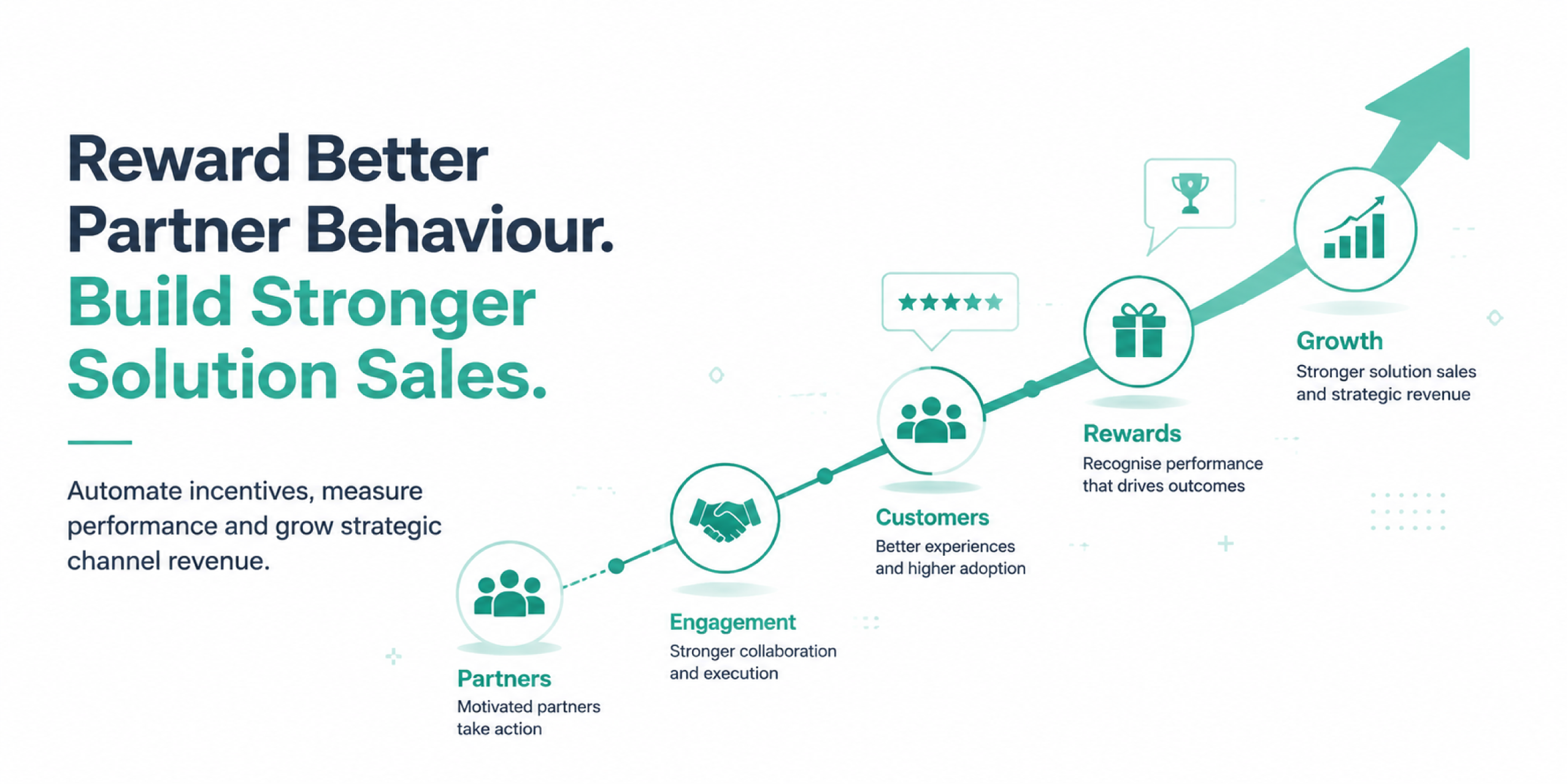
See how Paytives helps IT vendors build partner incentive programmes that reward genuine solution selling, automate complex payouts and improve partner performance across global channel ecosystems.
Sign up for our newsletter for trending top content!


