
How Recognition Platforms Reduce Administrative Overhead for HR Teams

Sign up for our newsletter for trending top content!
Employee recognition is essential for engagement, retention, and workplace culture. However, many organisations still manage recognition programmes manually through spreadsheets, emails, approval chains, and disconnected systems. This creates unnecessary administrative work for HR teams and reduces the effectiveness of recognition initiatives.
Recognition platforms solve this challenge by automating repetitive processes, simplifying approvals, and centralising programme management. As a result, HR teams save time, reduce errors, and focus more on strategic people initiatives instead of administrative tasks.
What Are the Administrative Challenges in Manual Recognition Programmes?
Manual employee recognition programmes often appear manageable at first. However, as organisations grow, administration becomes increasingly complex.
Common administrative challenges include:
- Tracking nominations through email chains.
- Managing approvals manually.
- Maintaining spreadsheets for reward points and budgets.
- Following up with managers for pending approvals.
- Generating reports manually for leadership teams.
- Monitoring programme participation across departments.
- Handling reward fulfilment individually.
- Correcting human errors in records and calculations.
These tasks consume significant HR resources and often create delays in employee recognition.
Why Manual Recognition Processes Create HR Bottlenecks
When recognition processes depend heavily on manual administration, HR teams spend more time managing workflows than improving employee experience.
Typical bottlenecks include:
As organisations expand, these inefficiencies become more difficult to manage consistently.
How Recognition Platforms Simplify HR Operations
Recognition platforms automate key processes that traditionally require manual effort. This reduces administrative burden while improving programme accuracy and speed.
How Do Recognition Platforms Automate Nominations?
Modern recognition platforms allow employees and managers to submit nominations through a centralised digital system.
Automated nomination features include:
- Predefined nomination categories.
- Automated eligibility checks.
- Structured submission forms.
- Instant notifications to approvers.
- Real time tracking of nomination status.
This removes the need for HR teams to manually collect and organise submissions.
How Do Recognition Platforms Improve Approval Workflows?
Approval management is one of the most time consuming tasks in manual recognition programmes.
Recognition platforms automate approval workflows using predefined rules and hierarchy structures.
Automated approval benefits include:
- Faster approval cycles.
- Automatic reminders for pending approvals.
- Escalation workflows for delays.
- Reduced email dependency.
- Improved transparency for managers and HR teams.
For example, instead of HR following up with multiple department heads manually, the platform automatically routes approvals to the correct stakeholders.
How Platforms Improve Tracking and Reporting
Tracking recognition activity manually can be extremely difficult, especially in large organisations.
Recognition platforms provide centralised dashboards that offer real time visibility into programme performance.
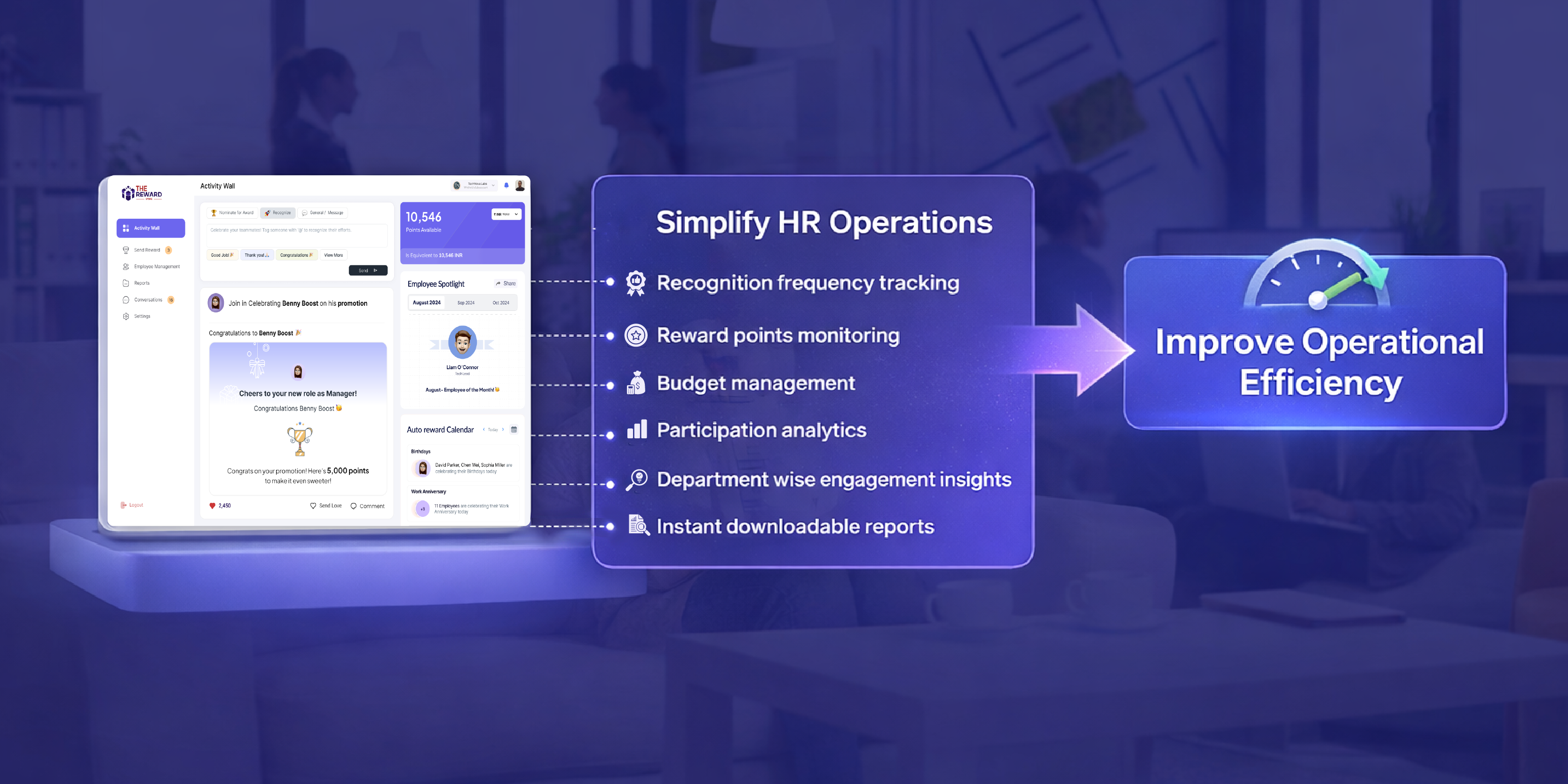
Automated tracking capabilities include:
- Recognition frequency tracking.
- Reward points monitoring.
- Budget management.
- Participation analytics.
- Department wise engagement insights.
- Instant downloadable reports.
This eliminates hours of spreadsheet work and manual report creation.
Examples of Reduced HR Workload Through Recognition Platforms
Many HR teams experience significant operational improvements after implementing automated recognition systems.
Example 1: Reduced Administrative Time
A mid-sized company managing employee awards manually may spend several hours every week processing nominations, validating approvals, and updating spreadsheets.
With a recognition platform:
- Nominations are submitted automatically.
- Approval workflows are triggered instantly.
- Reports are generated in real time.
This can reduce administrative effort by more than half.
Example 2: Faster Employee Recognition
In manual systems, recognition delivery may take several days due to approval delays and administrative backlogs.
Automated platforms help organisations:
- Deliver rewards faster.
- Recognise employees in real time.
- Improve employee satisfaction through timely appreciation.
Example 3: Simplified Global Programme Management
For multinational organisations, manual recognition management across regions can become highly complex.
Recognition platforms centralise:
- Currency management.
- Reward catalogues.
- Approval structures.
- Regional reporting.
This allows HR teams to manage global programmes from a single platform.
How Recognition Platforms Improve Operational Efficiency
Recognition platforms do more than reduce workload. They improve overall operational efficiency across the organisation.
Key operational benefits include:
Centralised Programme Management
HR teams can manage all recognition activities from one system instead of multiple spreadsheets and email threads.
Reduced Human Error
Automation minimises mistakes in calculations, approvals, and reward allocation.
Better Compliance and Audit Readiness
Digital records create transparent audit trails for recognition budgets and approvals.
Improved Employee Experience
Employees receive recognition faster and more consistently.
Scalable Recognition Programmes
Platforms support organisation wide recognition without increasing administrative complexity.
Why Automation Matters in Employee Recognition
Recognition loses impact when processes become slow or inconsistent. Employees value timely appreciation, and managers need simple tools to participate actively.
Automation helps organisations:
- Maintain consistency.
- Increase programme participation.
- Reduce delays.
- Improve visibility.
- Strengthen workplace culture.
For HR teams, this means less administrative pressure and more time for strategic initiatives such as employee engagement, retention, and leadership development.
Frequently Asked Questions
What is a recognition platform?
A recognition platform is a digital solution that helps organisations manage employee recognition programmes through automated nominations, approvals, rewards, and reporting.
How do recognition platforms reduce HR workload?
Recognition platforms automate repetitive administrative tasks such as tracking nominations, managing approvals, generating reports, and monitoring budgets.
Why are manual recognition programmes inefficient?
Manual programmes rely heavily on spreadsheets, emails, and follow ups, which increases errors, delays, and administrative complexity.
Can recognition platforms improve employee engagement?
Yes. Faster and more consistent recognition improves employee morale, participation, and workplace engagement.
Are recognition platforms suitable for large organisations?
Yes. Recognition platforms help large organisations manage recognition programmes efficiently across multiple departments and locations.
Conclusion
Manual recognition programmes create unnecessary administrative challenges for HR teams. Managing nominations, approvals, tracking, and reporting manually consumes valuable time and increases operational inefficiencies.
Recognition platforms simplify these processes through automation, centralised management, and real time visibility. By reducing administrative overhead, organisations enable HR teams to focus on building stronger employee experiences and more effective workplace cultures.
As businesses continue to prioritise employee engagement and retention, automated recognition platforms are becoming essential tools for operational efficiency and scalable people management.
Sign up for our newsletter for trending top content!


