
How FMCG Brands Can Build Consumer Loyalty Programmes That Reduce Discount Dependency

Sign up for our newsletter for trending top content!
Introduction
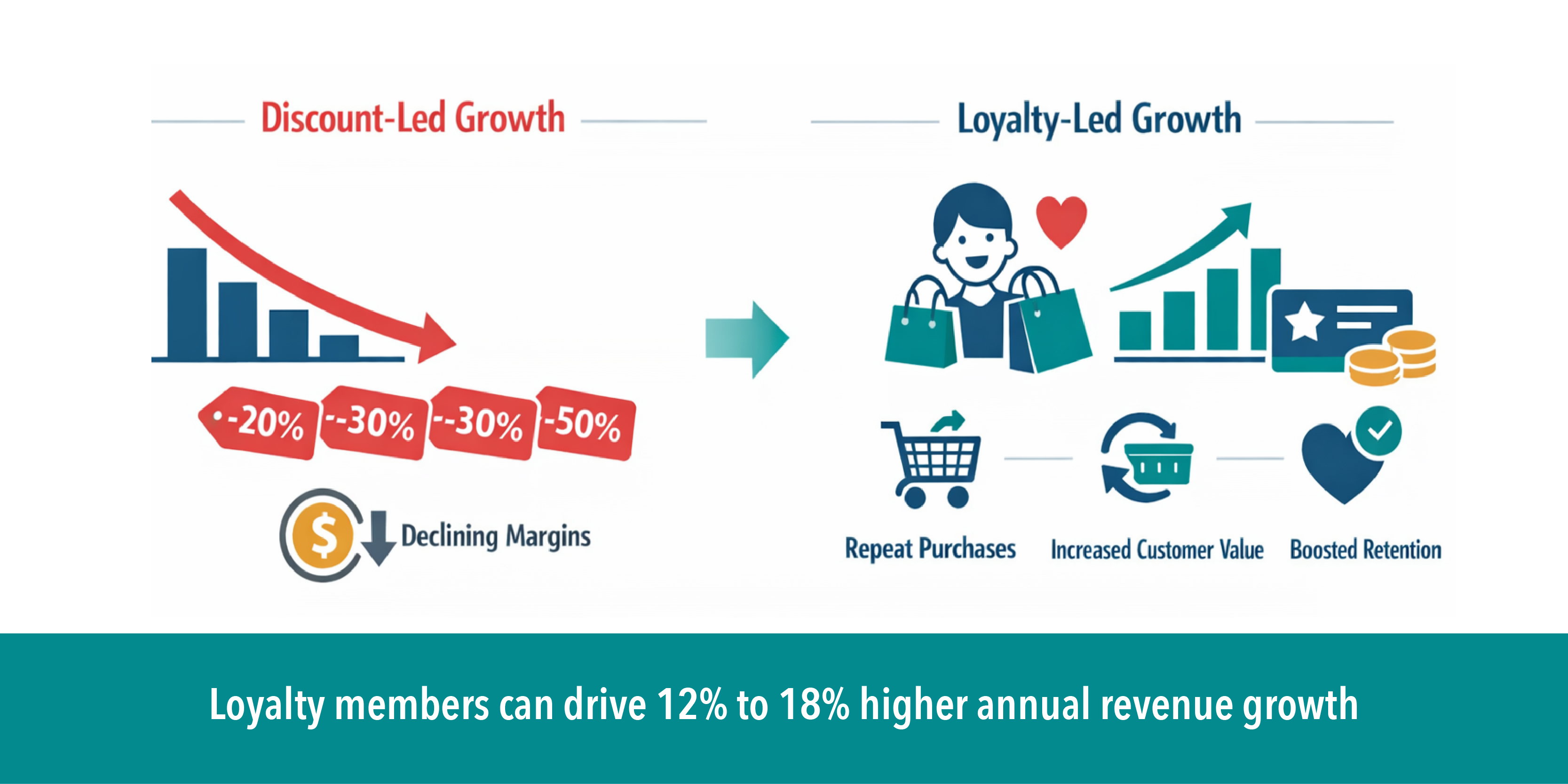
Research from McKinsey shows that loyalty programme members often generate 12% to 18% more incremental revenue growth per year than non-members, while top-performing programmes can drive growth rates above 25%. For FMCG brands operating in highly competitive categories, that finding highlights a critical challenge: discounts may create short-term sales spikes, but they rarely create long-term customer loyalty.
Many FMCG brands continue to rely on price promotions to drive volume. However, repeated discounting conditions shoppers to delay purchases until the next offer appears. Over time, brands sacrifice margin, reduce perceived value, and struggle to build meaningful customer relationships.
This article explores how FMCG brands in India can design consumer loyalty programmes that encourage repeat purchases without creating dependence on discounts. Marketing leaders will learn how to structure earning rules, apply customer segmentation, create omnichannel engagement, and measure programme success beyond simple repeat purchase metrics.
The Discount Trap: Why FMCG Brands Train Consumers to Wait for Sales
Frequent discounting often creates a behavioural cycle that becomes difficult to reverse. Consumers learn that waiting produces savings, reducing the urgency to purchase at full price.
According to Bain & Company research, increasing customer retention by just 5% can increase profits by between 25% and 95%, depending on the industry. Yet many FMCG brands focus disproportionately on short-term acquisition campaigns and promotional pricing instead of retention strategies.
Why discounts lose effectiveness over time
Discounts initially stimulate demand. However, repeated promotions gradually reset customer expectations. NielsenIQ research has consistently shown that many promotional sales simply shift purchasing timing rather than generating genuinely incremental demand.
The consequences include:
- Reduced gross margins
- Lower perceived product value
- Increased promotional spending
- Reduced customer loyalty
- Greater vulnerability to competitor discounts
Marketing leaders face an additional challenge in India's FMCG sector. Consumers now shop across supermarkets, neighbourhood stores, quick commerce platforms, marketplaces, and direct-to-consumer channels. As purchasing options expand, price alone becomes an increasingly fragile differentiator.
A well-designed loyalty programme changes the value exchange. Instead of rewarding customers only when they spend less, brands reward behaviours that strengthen long-term relationships. This creates engagement that competitors cannot easily replicate through another temporary price reduction.
What a Loyalty Programme Offers That a Discount Never Can
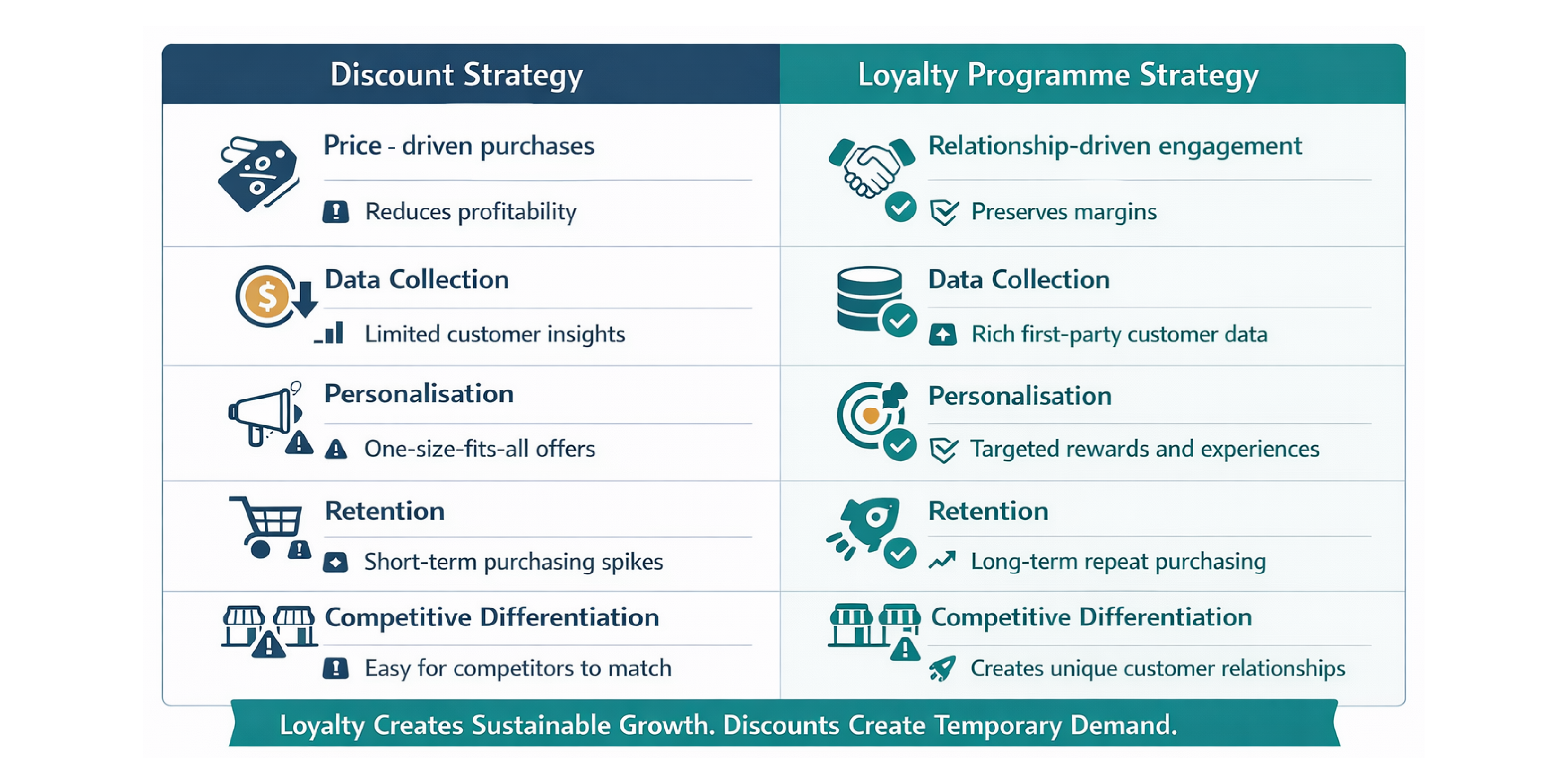
A discount changes the transaction. A loyalty programme changes the relationship.
According to Deloitte, customers increasingly expect personalised experiences and relevant rewards in exchange for sharing data and engaging with brands. Loyalty programmes create opportunities to gather first-party customer insights that promotional campaigns rarely provide.
Discounts versus loyalty programmes
Loyalty programmes encourage behaviours beyond purchasing. Brands can reward product reviews, referrals, app engagement, survey participation, QR code scans, and category exploration.
This approach increases engagement while preserving pricing power.
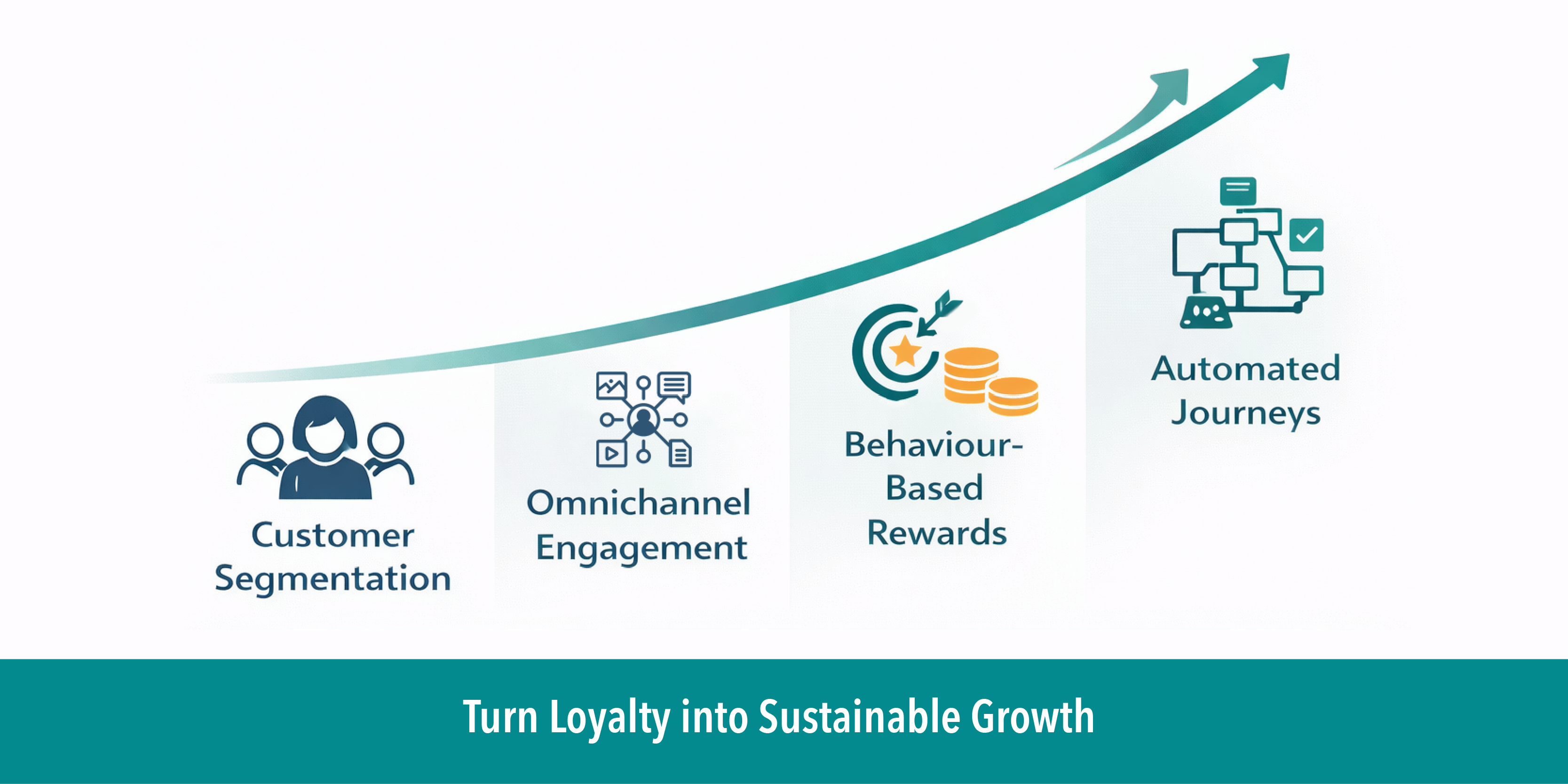
For FMCG brands, platforms such as Rekyndl support this model through integrated loyalty programme management, customer segmentation, gamification, and automated customer journeys. Rather than running isolated campaigns, marketers can create structured engagement ecosystems that continuously encourage repeat interaction.
The result is a stronger emotional connection between brand and consumer, supported by measurable behavioural data rather than transactional incentives alone.
Designing Earning Rules for FMCG: How to Reward Purchase Frequency Without Margin Erosion
The success of an FMCG loyalty programme often depends on one critical element: earning design.
Many programmes fail because they reward spending too generously. When reward costs rise faster than incremental revenue, profitability suffers.
According to Forrester, successful loyalty programmes align rewards with desired customer behaviours rather than simply reimbursing spending.
Focus on frequency rather than discount replacement
Instead of offering large rewards on every transaction, FMCG brands should encourage:
- Purchase frequency
- Category expansion
- Product trial
- Referral activity
- Digital engagement
- Profile completion
- Survey participation
Effective earning framework
A practical framework might include:
This structure rewards behaviours that create long-term value without reducing product margins.
Gamification can further strengthen engagement. Gartner research indicates that programmes incorporating behavioural incentives and progression mechanics often achieve stronger participation rates than points-only models.
Through Rekyndl, marketers can configure earning rules, milestone rewards, badges, and engagement challenges that align directly with business objectives. This allows brands to influence behaviour strategically rather than relying on broad discount campaigns that affect every customer equally.
How to Use Customer Segmentation to Deliver the Right Loyalty Offer to the Right Shopper
Not every customer deserves the same reward.
McKinsey research shows that companies excelling at personalisation generate significantly higher revenue growth than organisations using broad, untargeted campaigns.
Segment by behaviour, not demographics alone
Traditional FMCG segmentation often focuses on age, income, or geography. Loyalty programmes allow brands to segment based on actual behaviour.
Key segments may include:
- High-frequency loyalists
- Category specialists
- Lapsed customers
- New programme members
- High-value households
- Promotion-driven shoppers
Each segment requires a different engagement strategy.
Example segmentation framework
Automated journey orchestration becomes particularly important at scale.
Marketing leaders managing millions of customers cannot manually deploy personalised campaigns. Rekyndl enables segmentation-driven automation, including welcome journeys, birthday rewards, abandoned-cart engagement, and reactivation campaigns across multiple channels.
The combination of segmentation and automation increases relevance while reducing marketing inefficiencies. Customers receive offers aligned with their behaviour, improving engagement without increasing promotional costs.
Omnichannel Loyalty for FMCG: Making Points Work Across Modern Trade, General Trade, and D2C
Consumer purchasing journeys no longer follow a single path.
A shopper may discover a product on social media, purchase through a supermarket, reorder through quick commerce, and engage directly through a brand-owned app.
According to Deloitte, customers increasingly expect connected experiences across channels. Disconnected loyalty programmes create friction and reduce participation.
Why omnichannel loyalty matters
An effective FMCG loyalty programme should recognise customer activity regardless of purchase location.
This means enabling reward earning and redemption across:
- Modern trade retailers
- General trade outlets
- Direct-to-consumer websites
- Mobile applications
- Marketplace channels
- In-store activations
Receipt uploads, QR code validation, digital wallets, and customer identification mechanisms help connect these interactions.
When brands unify customer data, they gain a more accurate view of purchasing behaviour and customer value.
Rekyndl supports omnichannel programme design through integrated loyalty management, automated communications, and redemption experiences that maintain consistency across customer touchpoints.
This capability becomes increasingly important as India's retail landscape continues to fragment across physical and digital channels. Brands that connect loyalty interactions across every channel gain richer customer insights and create stronger reasons for consumers to remain engaged beyond promotional pricing.
Measuring Loyalty Programme Impact for FMCG: Beyond Repeat Purchase to Basket Size and Category Penetration
Many FMCG brands evaluate loyalty programmes using a single metric: repeat purchase rate.
That approach misses much of the programme's business impact.
According to Bain & Company and Forrester, successful loyalty programmes influence multiple dimensions of customer value simultaneously.
Metrics that matter
Marketing leaders should track:
- Repeat purchase rate
- Purchase frequency
- Average basket value
- Category penetration
- Customer lifetime value
- Redemption participation
- Active member rate
- Churn reduction
- Referral conversion rate
Loyalty measurement framework
A mature loyalty strategy focuses on incremental value creation rather than programme participation alone.
For example, if loyalty members purchase across more categories than non-members, the programme contributes to business growth even if repeat purchase frequency remains stable.
Advanced analytics help marketers identify which loyalty mechanics produce the strongest returns and where optimisation opportunities exist. Continuous measurement transforms loyalty from a marketing initiative into a strategic growth engine.
Frequently Asked Questions
What is the biggest risk of relying heavily on discounts in FMCG?
Excessive discounting can train customers to postpone purchases until promotions appear. This reduces margins, weakens brand perception, and makes it harder to build long-term loyalty. Over time, brands may become dependent on increasingly costly promotional activity to maintain sales volumes.
How can FMCG brands encourage repeat purchases without offering discounts?
Brands can reward behaviours such as repeat purchases, referrals, product reviews, category exploration, and digital engagement. Loyalty programmes create ongoing value while preserving pricing integrity. This approach builds customer relationships rather than transactional dependency.
How important is customer segmentation in a loyalty programme?
Customer segmentation is essential because different customers have different motivations. High-value loyal customers require different engagement strategies than new members or inactive shoppers. Behaviour-based segmentation improves relevance and increases programme effectiveness.
Can loyalty programmes work across both online and offline channels?
Yes. Modern FMCG loyalty programmes should operate across direct-to-consumer channels, retail stores, marketplaces, and mobile experiences. Omnichannel participation creates a more complete customer profile and improves engagement consistency.
How does Rekyndl help FMCG brands reduce discount dependency?
Rekyndl enables FMCG brands to build structured loyalty programmes that reward valuable customer behaviours instead of relying solely on price reductions. Features such as customer segmentation, automated journeys, gamification, omnichannel engagement, and integrated redemption experiences help brands increase repeat purchases while protecting margins.
Conclusion
FMCG brands that depend heavily on discounts often create short-term sales at the expense of long-term profitability. Loyalty programmes provide a more sustainable alternative by rewarding behaviours that strengthen customer relationships, increase purchase frequency, and expand category participation.
As first-party data, personalisation, and omnichannel engagement become increasingly important, loyalty programmes will play a larger role in driving profitable growth. Brands that invest now will be better positioned to reduce promotional dependency and build lasting customer value.
See how Rekyndl helps FMCG brands build loyalty without relying on discounts. Book a demo.
Sign up for our newsletter for trending top content!


