
How Should HR Leaders Choose an End to End Corporate Gifting Partner?

Sign up for our newsletter for trending top content!
Introduction
Employee gifting has become a strategic component of employee engagement rather than a seasonal administrative task. According to the O.C. Tanner Global Culture Report, employees who receive meaningful recognition are significantly more likely to feel connected to their organisation, while Gallup consistently reports that recognition improves engagement, productivity, and retention. As organisations expand across locations and hybrid work environments, HR Leaders need gifting partners that deliver consistent employee experiences instead of simply shipping products.
This guide explains how to evaluate an end to end corporate gifting partner, the capabilities that matter most, the operational standards HR teams should expect, and how technology simplifies enterprise gifting programmes. It also provides a practical framework for selecting a partner that supports employee recognition throughout the year while reducing administrative complexity.
Why Does an End to End Corporate Gifting Partner Matter?
Many organisations still manage gifting through multiple vendors, manual spreadsheets, and disconnected procurement processes. While this approach may work for occasional campaigns, it becomes increasingly difficult as employee numbers, locations, and recognition programmes grow.
According to Deloitte's Human Capital Trends, employee experience has become a major business priority because every interaction shapes how employees perceive their organisation. Corporate gifting contributes directly to that experience through onboarding, service anniversaries, festive celebrations, promotions, wellness initiatives, and retirement recognition.
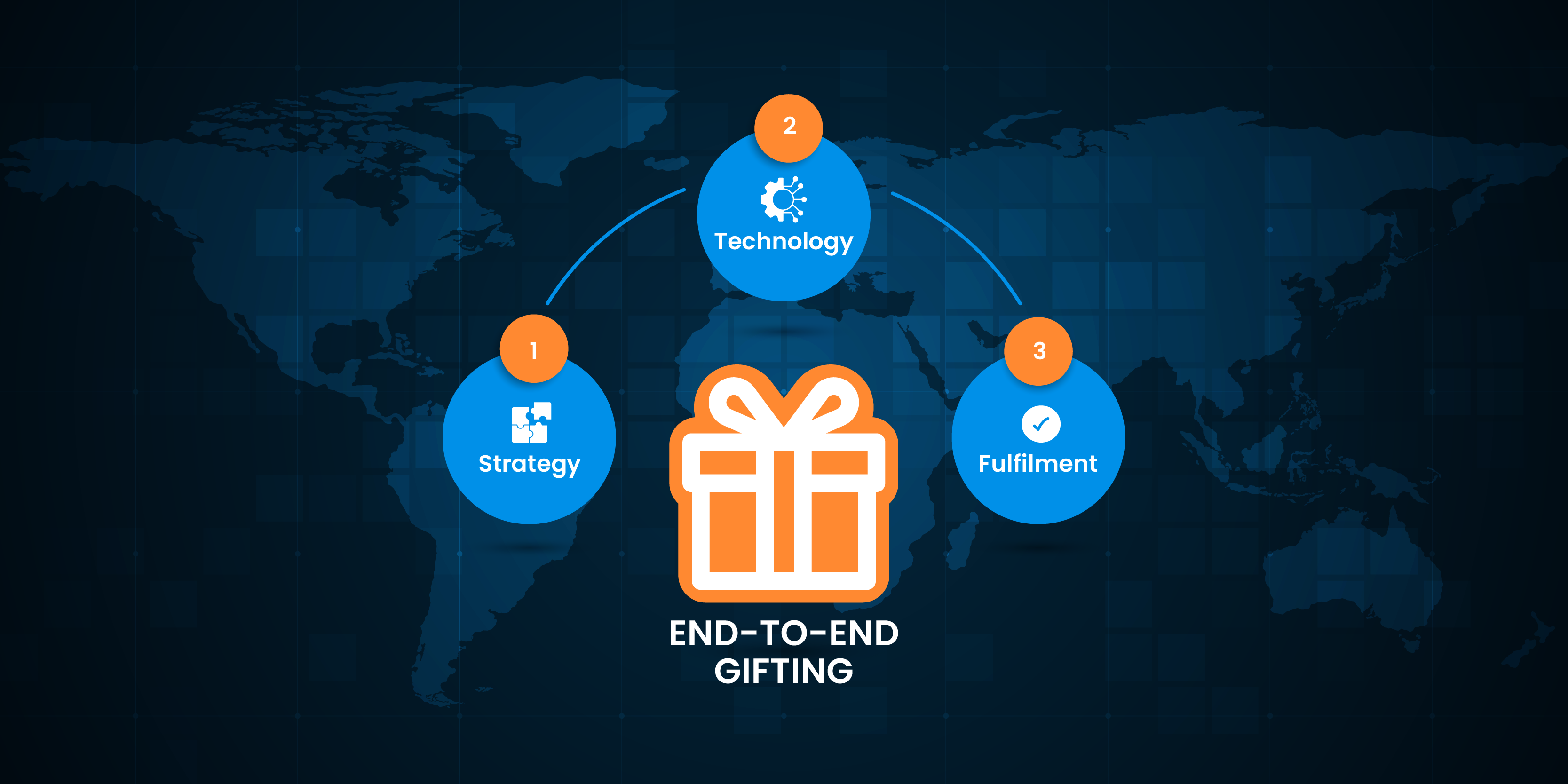
An end to end gifting partner manages the complete employee gifting lifecycle, including sourcing, personalisation, fulfilment, logistics, reporting, and customer support. This reduces operational burden while ensuring employees receive consistent, high quality experiences regardless of location.
HR Leaders should evaluate gifting partners based on their ability to support long term business objectives rather than individual campaigns. Instead of asking whether a supplier can deliver gifts, organisations should assess whether the partner can support recognition strategies, global growth, employee choice, and scalable programme management.
Selecting a strategic partner rather than a transactional supplier helps HR teams improve operational efficiency while strengthening employee engagement across the organisation.
What Services Should an End to End Corporate Gifting Partner Provide?
A comprehensive gifting partner should provide much more than product procurement. Modern HR teams require integrated services that support planning, execution, fulfilment, reporting, and employee satisfaction throughout the recognition lifecycle.
An enterprise gifting partner should provide the following capabilities:
SHRM recommends aligning employee recognition with organisational culture and business objectives. Gifting programmes therefore need sufficient flexibility to support different employee segments, budgets, recognition milestones, and regional preferences.
The strongest partners also provide access to multiple reward categories through a connected ecosystem. Rather than limiting employees to physical products, organisations can offer gift cards from more than 5,000 brands, hotel bookings, flight bookings, dining vouchers, sports experiences, merchandise, concierge services, and experiential rewards based on employee preferences.
This flexibility improves employee satisfaction while helping HR teams manage diverse workforces across countries and generations.
How Should HR Leaders Evaluate a Corporate Gifting Partner?
Selecting a gifting partner based solely on price often results in inconsistent service, higher administrative effort, and disappointing employee experiences. A structured evaluation framework allows HR Leaders to compare suppliers using objective business criteria.
The following decision framework provides a balanced approach:
According to Mercer's Global Talent Trends, employees increasingly expect personalised workplace experiences that reflect their individual preferences. This expectation extends to recognition and gifting programmes.
HR Leaders should therefore assess suppliers using questions such as:
- Can the platform support employees across multiple countries?
- Does the supplier manage both physical and digital rewards?
- Are fulfilment timelines clearly defined?
- Can employees choose preferred rewards?
- Does the platform integrate with HR systems?
- How are damaged or delayed deliveries managed?
- What reporting capabilities are available?
- Can campaigns be automated throughout the year?
Beyond functionality, organisations should evaluate governance, operational maturity, fulfilment accuracy, account management, and continuous improvement processes. An enterprise gifting partner should contribute strategic guidance, not simply process purchase orders.
A structured evaluation process helps HR teams select a long term partner capable of supporting employee engagement as organisational needs continue to evolve.
What Operational Capabilities Separate Enterprise Corporate Gifting Partners?
Not every gifting supplier can support enterprise requirements. As employee populations become more geographically distributed and recognition programmes become more frequent, operational excellence becomes just as important as the quality of the gifts themselves.
According to McKinsey, organisations that digitise operational processes improve efficiency while delivering better employee and customer experiences. The same principle applies to corporate gifting. Reliable fulfilment, consistent communication, and transparent reporting determine whether a gifting programme enhances or undermines the employee experience.
HR Leaders should evaluate operational capabilities using the following framework:
Operational maturity also includes business continuity planning, supplier governance, customs expertise for international deliveries, and proactive communication throughout the fulfilment process.
Rather than measuring success by the number of gifts shipped, HR Leaders should monitor fulfilment accuracy, delivery timelines, employee satisfaction, campaign completion, and service responsiveness. These metrics provide a more accurate picture of programme quality and long term supplier performance.
How Can Technology Improve End to End Corporate Gifting?
Manual gifting processes often create unnecessary administrative work. HR teams spend valuable time collecting employee information, managing approvals, coordinating deliveries, resolving exceptions, and tracking budgets across multiple spreadsheets.
Technology simplifies these activities through automation and centralised management.
Key capabilities include:
- Automated campaign scheduling.
- HRMS integration.
- Employee self service for address confirmation.
- Approval workflows.
- Budget management.
- Delivery tracking.
- Automated notifications.
-
- Analytics dashboards.
- Redemption reporting.
- Multi-location campaign management.
According to Forrester, organisations that connect customer and employee experiences through digital platforms improve operational consistency and engagement outcomes. Enterprise gifting platforms apply the same principle by bringing planning, fulfilment, reporting, and employee communications together in one system.
The Reward Store's Physical Gifting solution extends beyond physical products by connecting organisations to a global rewards ecosystem. HR teams can combine physical gifts with gift cards from more than 5,000 brands, hotel bookings, flight bookings, dining vouchers, sports experiences, merchandise, concierge services, and curated experiences through one integrated platform.
Technology therefore enables HR teams to spend less time managing logistics and more time designing recognition programmes that create lasting employee impact.
Why Should HR Leaders Build Long Term Corporate Gifting Partnerships?
Corporate gifting delivers the greatest value when it becomes part of a broader employee recognition strategy rather than an isolated annual activity. A long term partnership allows organisations to standardise recognition, improve operational efficiency, and continuously refine employee experiences.
Gallup consistently reports that employees who receive meaningful recognition demonstrate higher engagement and stronger organisational commitment. While recognition extends beyond gifting, well planned gifting reinforces appreciation during important employee milestones such as onboarding, work anniversaries, promotions, project success, and festive celebrations.
A strategic gifting partner should help HR teams:
- Develop annual gifting calendars.
- Recommend suitable reward categories for different employee groups.
- Optimise campaign budgets.
- Improve fulfilment performance.
- Measure programme effectiveness.
- Scale gifting across regions and business units.
A long term relationship also enables continuous innovation. As workforce preferences evolve, organisations can introduce new reward categories, improve personalisation, and automate additional recognition journeys without changing suppliers.
The strongest partnerships focus on measurable business outcomes rather than transactional order fulfilment. They help HR teams strengthen employee engagement while reducing operational complexity year after year.
Frequently Asked Questions
What is an end to end corporate gifting partner?
An end to end corporate gifting partner manages every stage of the gifting lifecycle, including sourcing, personalisation, packaging, fulfilment, logistics, reporting, customer support, and technology integration. This allows HR teams to manage employee gifting through one coordinated solution.
How should HR Leaders evaluate a corporate gifting partner?
HR Leaders should evaluate partners using criteria such as fulfilment capability, technology, personalisation, global delivery coverage, reporting, customer support, data security, scalability, and pricing transparency. A structured evaluation framework helps organisations compare suppliers objectively.
Why is technology important in enterprise corporate gifting?
Technology automates repetitive administrative tasks, improves campaign visibility, reduces manual errors, and provides reporting that helps HR teams optimise future gifting initiatives. It also enables organisations to scale programmes across multiple locations without increasing administrative effort.
Can The Reward Store support enterprise corporate gifting?
Yes. The Reward Store's Physical Gifting solution supports enterprise gifting through global fulfilment, campaign management, personalisation, and access to an integrated rewards ecosystem that includes physical gifts, gift cards, travel, dining, merchandise, concierge services, and experiences.
When should organisations review their corporate gifting strategy?
HR teams should review gifting performance at least annually while monitoring campaign metrics throughout the year. Regular reviews help organisations improve employee satisfaction, optimise budgets, and adapt recognition programmes to changing workforce expectations.
Conclusion
Choosing an end to end corporate gifting partner is no longer simply a procurement decision. It is an investment in employee experience, operational efficiency, and long term engagement. HR Leaders should evaluate partners on their ability to deliver scalable fulfilment, technology integration, personalisation, governance, and measurable service quality. As employee expectations continue to evolve, organisations that build strategic gifting partnerships will be better positioned to deliver meaningful recognition that supports both people and business outcomes.
Discover how The Reward Store's Physical Gifting solution helps HR teams manage sourcing, fulfilment, personalisation, logistics, and enterprise gifting through one integrated platform.
https://www.therewardstore.com/physical-gifting
Sign up for our newsletter for trending top content!


