
How to Build an Employee Recognition Programme for Factory and Frontline Workers (Without Corporate Email)

Sign up for our newsletter for trending top content!
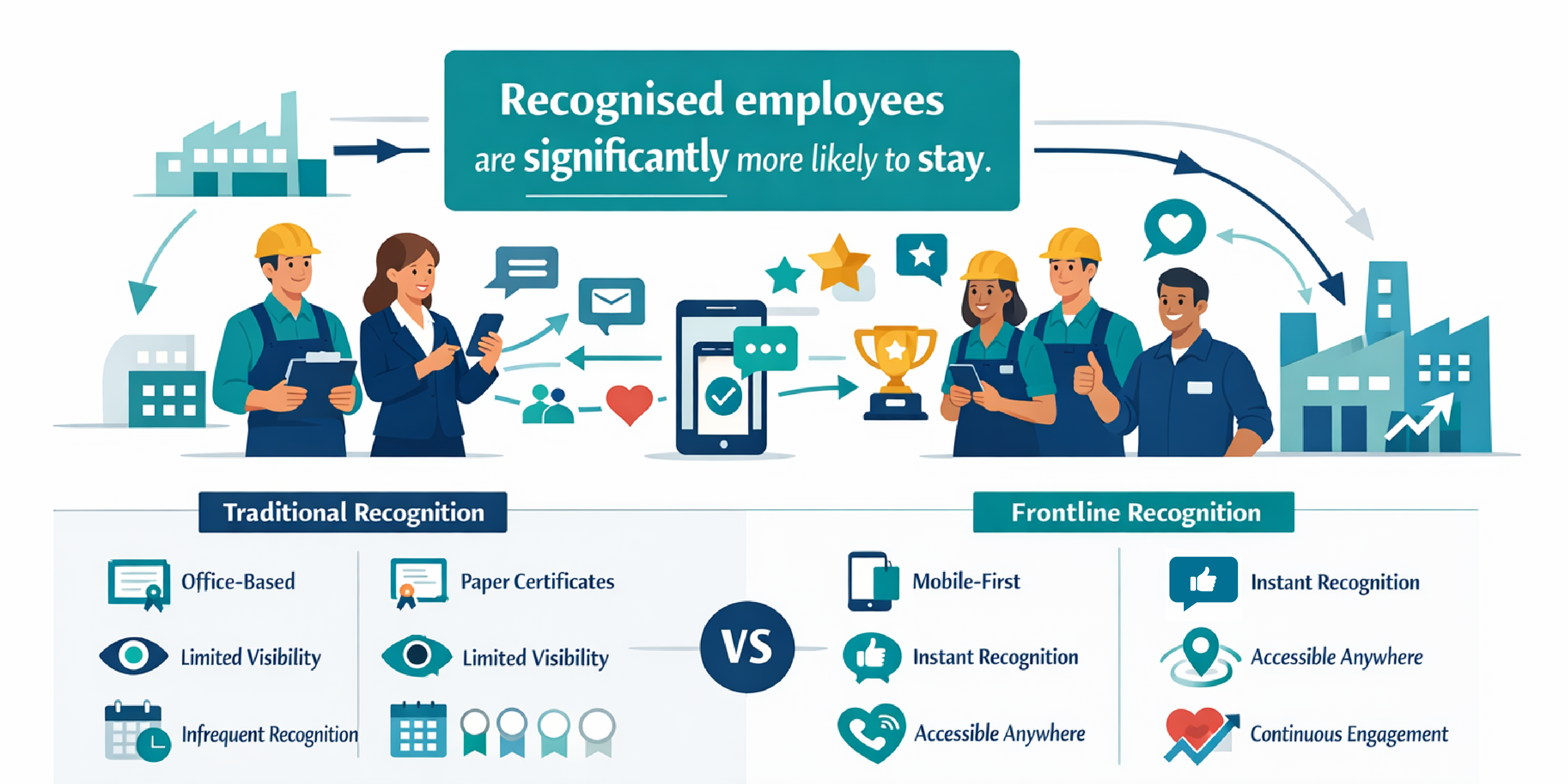
Factory and frontline employees make up the operational backbone of manufacturing and construction businesses, yet they often receive the least recognition. According to Gallup, employees who feel recognised are significantly less likely to leave their organisation, while highly engaged teams experience lower absenteeism and stronger productivity. The challenge for HR leaders is straightforward: most factory workers do not sit behind desks, use corporate email, or access traditional employee communication channels.
As labour shortages continue to affect manufacturing and construction sectors across India, retaining skilled operators, technicians, supervisors, and tradespeople has become a strategic priority.
This article explores how HR leaders can build an effective factory worker recognition programme using mobile-first communication, SMS delivery, manager-led recognition, safety reinforcement, and tenure awards that resonate with frontline teams.
Why Frontline Workers Are the Most Under-Recognised Employees in Every Organisation
Frontline employees contribute directly to production output, quality control, safety compliance, and operational continuity. Yet many recognition programmes unintentionally prioritise office-based staff because they are easier to reach through corporate communication systems.
Research from Gallup shows that employees who receive meaningful recognition are more engaged and more likely to remain with their employer. However, frontline workers frequently miss recognition opportunities because managers focus on production targets rather than employee appreciation.
The Visibility Gap
Office employees often receive recognition through:
- Internal communication platforms
- Corporate email announcements
- Virtual meetings
- Team collaboration tools
Factory workers rarely participate in these channels. As a result, achievements such as perfect attendance, safety milestones, process improvements, quality excellence, and peer support often go unnoticed.
O.C. Tanner's Global Culture Report found that employees who receive regular recognition are substantially more likely to feel connected to organisational culture and purpose. For manufacturing organisations, this connection directly influences retention and operational performance.
When skilled machine operators, technicians, and site supervisors feel invisible, organisations face higher turnover, increased recruitment costs, longer onboarding periods, and reduced productivity. Recognition is not simply an engagement initiative.
It is a workforce stability strategy.
The Delivery Problem: How to Reach Workers Who Have No Desk, No Laptop, No Corporate Email
Many recognition programmes fail because organisations focus on reward design before solving communication delivery.
A frontline workforce presents unique challenges:
- No corporate email addresses
- Shared devices on production floors
- Limited access to desktop systems
- Multiple shifts across locations
- Language diversity
- Limited time for administrative tasks
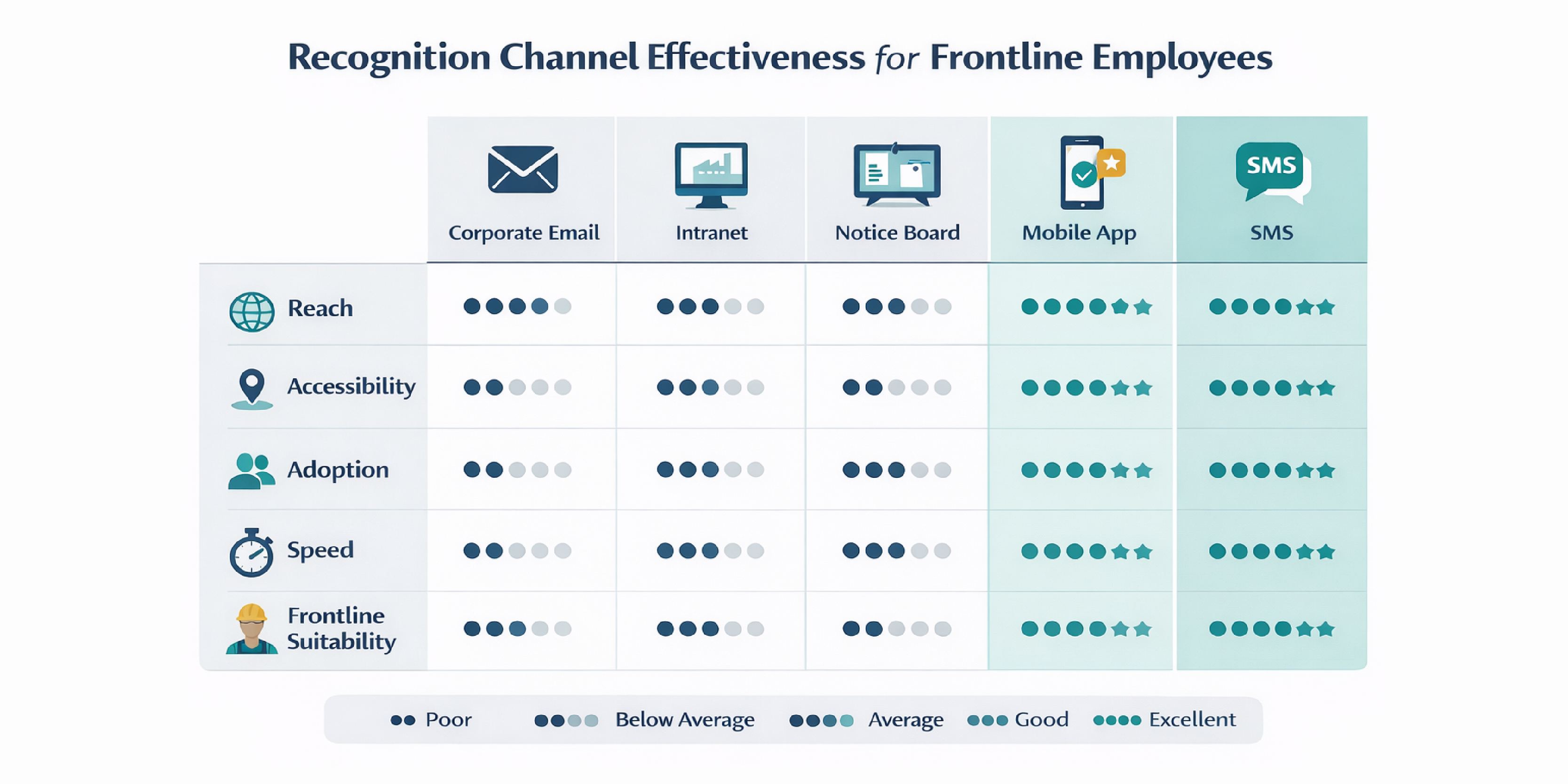
According to Deloitte, workforce communication effectiveness directly influences employee experience and organisational trust. For frontline employees, mobile communication has become the most practical channel.
Choosing the Right Recognition Delivery Method
SMS remains particularly effective because it does not require app downloads, login credentials, or corporate devices.
This is where platforms such as ApplaudIQ become valuable. Rather than relying on email-based workflows, organisations can deliver recognition directly through mobile-first experiences, ensuring that every employee receives acknowledgement regardless of location, shift pattern, or device access.
For manufacturing and construction organisations seeking workforce-specific recognition capabilities, explore:
https://www.therewardstore.com/applaudiq/solutions/manufacturing-construction
SMS and Mobile-First Recognition: What It Looks Like in Practice on a Factory Floor
The most successful factory worker recognition programmes reduce friction. Employees should receive recognition within moments of the achievement, not weeks later during annual reviews.
Example: Quality Excellence Recognition
A production supervisor notices an operator maintaining zero-defect output during a critical production run.
The supervisor submits recognition through a mobile interface.
The employee immediately receives:
- SMS notification
- Mobile recognition message
- Reward points allocation
- Public acknowledgement on a recognition wall
According to SHRM, timely recognition significantly increases the perceived value of appreciation. Delayed recognition loses emotional impact and behavioural influence.
Example: Attendance and Reliability Recognition
Manufacturing organisations often depend on attendance consistency to maintain output targets.
Recognition can automatically trigger for:
- Perfect attendance
- Shift flexibility
- Overtime support
- Cross-training participation
- Production milestones
ApplaudIQ supports automated milestone recognition, peer appreciation through Cheers, manager recognition workflows, and global reward redemption options. This reduces administrative burden while maintaining consistent recognition coverage across large frontline populations.
The key principle remains simple: recognition must reach workers where they already are. For most frontline employees, that means mobile phones rather than corporate systems.
Safety Culture Through Positive Reinforcement: Why Recognition Works Better Than Penalties
Many organisations approach workplace safety primarily through disciplinary frameworks. While compliance remains essential, behavioural science suggests positive reinforcement often drives stronger long-term behaviour change.
Research from the Incentive Research Foundation (IRF) shows that recognition and reward programmes can improve participation in desired behaviours when they are timely, visible, and meaningful.
Why Safety Recognition Works
Recognising safety behaviours encourages employees to repeat them.
Examples include:
- Hazard identification
- Near-miss reporting
- Safety suggestion submissions
- PPE compliance
- Incident-free milestones
- Participation in safety training
Employees begin associating safe behaviour with positive outcomes rather than merely avoiding punishment.
Recognition Versus Penalty Approach
McKinsey research consistently highlights the importance of positive workplace experiences in shaping employee behaviours and organisational performance.
Manufacturing and construction environments benefit particularly from recognition-based safety programmes because they reinforce daily behaviours that reduce operational risk. When managers celebrate proactive safety actions, they transform safety from a compliance requirement into a shared cultural value.
Designing Tenure Awards That Make Skilled Tradespeople Feel Valued Enough to Stay
Tenure recognition remains one of the most underutilised retention tools in manufacturing.
According to Mercer, career stability and employer appreciation rank among the strongest drivers of workforce retention, particularly for experienced employees with specialised skills.
Yet many organisations still rely on generic service certificates presented years after milestones occur.
What Effective Tenure Recognition Includes
A strong tenure programme should combine:
- Public recognition
- Personalised appreciation
- Meaningful rewards
- Leadership involvement
- Career acknowledgement
Recommended Recognition Milestones
- 1 Year: Early contribution recognition
- 3 Years: Reliability and commitment
- 5 Years: Skilled contributor recognition
-
- 10 Years: Operational expertise acknowledgement
- 15+ Years: Legacy and mentorship recognition
Experienced tradespeople often carry valuable institutional knowledge that cannot be replaced quickly. Losing them creates productivity gaps, training costs, and quality risks.
ApplaudIQ enables automated milestone tracking and reward delivery, ensuring employees receive recognition at the right moment without HR manually monitoring service anniversaries across multiple sites.
The goal is not merely celebrating tenure. It is reinforcing the value of expertise, loyalty, and operational excellence.
How Managers With 30+ Direct Reports Can Recognise Consistently Without Burning Out
Manager participation determines the success of any recognition programme. Unfortunately, frontline managers often supervise large teams while balancing production, quality, safety, and operational responsibilities.
According to Gartner, employees value manager recognition more highly than almost any other recognition source. However, managers frequently cite lack of time as the primary barrier.
Build Recognition Into Existing Workflows
Instead of creating additional administrative work, organisations should integrate recognition into existing routines:
- Daily production meetings
- Shift handovers
- Safety briefings
- Performance reviews
- Team huddles
Create Recognition Triggers
Managers should not need to decide when recognition is appropriate. Define clear triggers such as:
- Safety achievements
- Attendance milestones
- Quality improvements
- Process innovation
- Customer commendations
- Team collaboration
Use Automation Strategically
Aberdeen Group research found that organisations with structured recognition programmes report stronger engagement and retention outcomes than organisations with informal approaches.
Automation helps managers maintain consistency without increasing workload. HR leaders should focus on enabling managers with simple workflows, predefined recognition moments, and mobile-friendly tools.
For frontline environments, recognition succeeds when it becomes part of everyday operations rather than a separate HR initiative.
Frequently Asked Questions
What is a factory worker recognition programme?
A factory worker recognition programme is a structured system that acknowledges employee contributions, achievements, safety behaviours, attendance, quality performance, and service milestones. The objective is to improve engagement, retention, productivity, and workplace culture. Effective programmes use communication methods that frontline employees can easily access.
How can you recognise employees who do not have corporate email?
Mobile-first communication channels provide the most effective solution. Organisations commonly use SMS, mobile applications, digital noticeboards, supervisor-led recognition, and automated milestone alerts. These methods ensure recognition reaches employees regardless of workstation access.
Why is recognition important in manufacturing and construction?
Recognition helps organisations retain skilled workers, strengthen safety culture, improve morale, and reduce turnover. Gallup research consistently links recognition with higher engagement and lower attrition. In industries facing labour shortages, recognition becomes a competitive workforce strategy.
How often should frontline workers receive recognition?
O.C. Tanner research suggests recognition should occur regularly and close to the achievement being recognised. Monthly recognition opportunities, milestone awards, peer recognition, and real-time manager appreciation help maintain visibility and impact.
Can ApplaudIQ support frontline and factory worker recognition?
Yes. ApplaudIQ is designed to support organisations with distributed workforces through mobile-first recognition experiences, automated milestone rewards, peer-to-peer appreciation, manager recognition workflows, and global reward redemption capabilities. This helps HR teams recognise employees consistently without relying on corporate email systems.
Conclusion
Factory and frontline employees drive operational success, yet many organisations still struggle to recognise them effectively because traditional programmes rely on desk-based communication channels. Mobile-first recognition, SMS delivery, manager-led appreciation, safety reinforcement, and meaningful tenure awards create a stronger connection between employees and organisational culture.
As manufacturing and construction workforces become increasingly distributed, recognition technology will continue shifting towards real-time, mobile-enabled experiences. Organisations that adapt early will strengthen retention, engagement, and workforce stability.
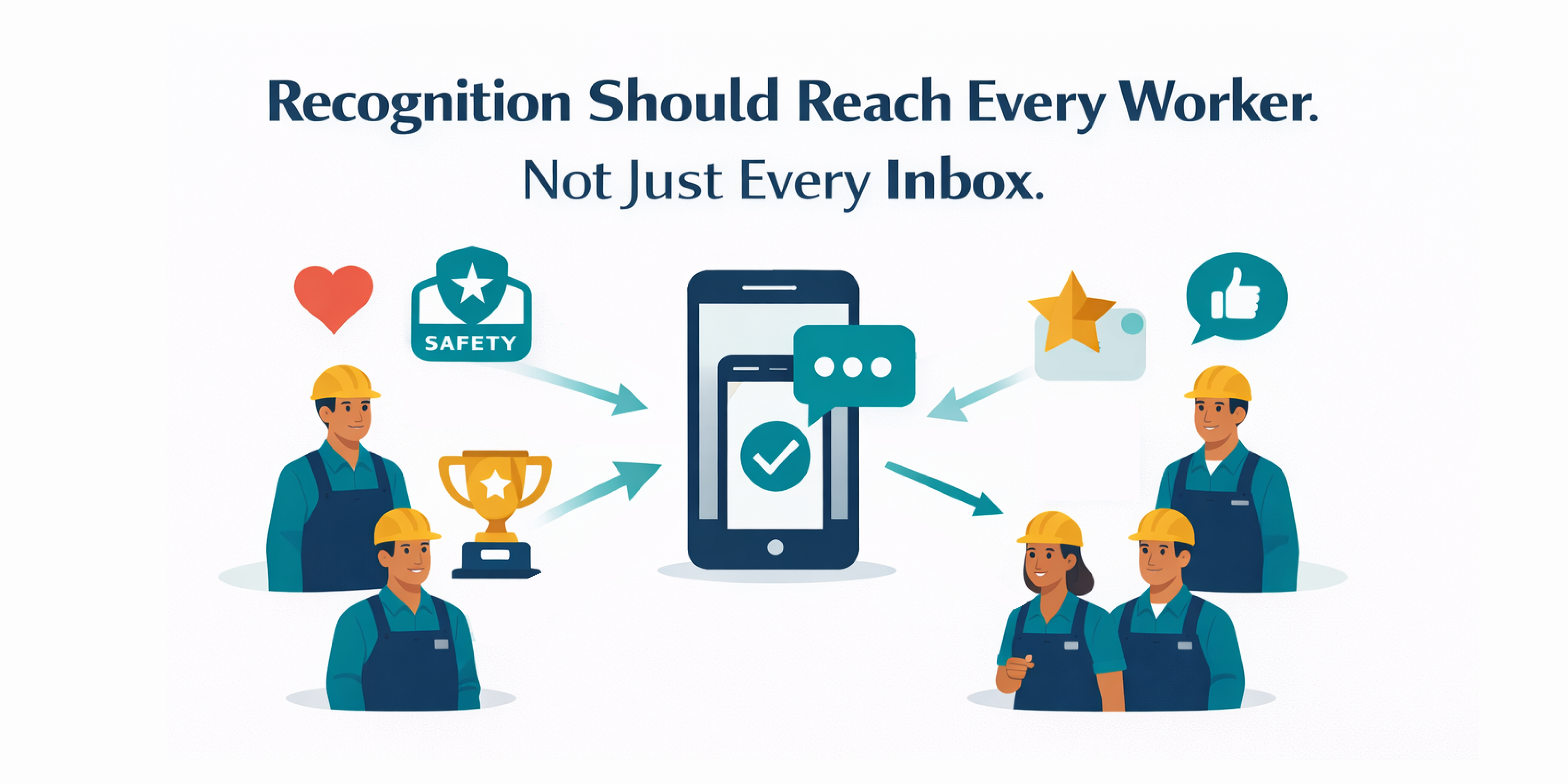
See how ApplaudIQ reaches factory floor and frontline workers through mobile-first recognition, automated milestones, and scalable rewards for manufacturing teams.
https://www.therewardstore.com/applaudiq/solutions/manufacturing-construction
Sign up for our newsletter for trending top content!


