
How D2C Brands Can Build Loyalty Programmes That Drive Repeat Purchases Without Burning Their CAC Budget

Sign up for our newsletter for trending top content!
Introduction
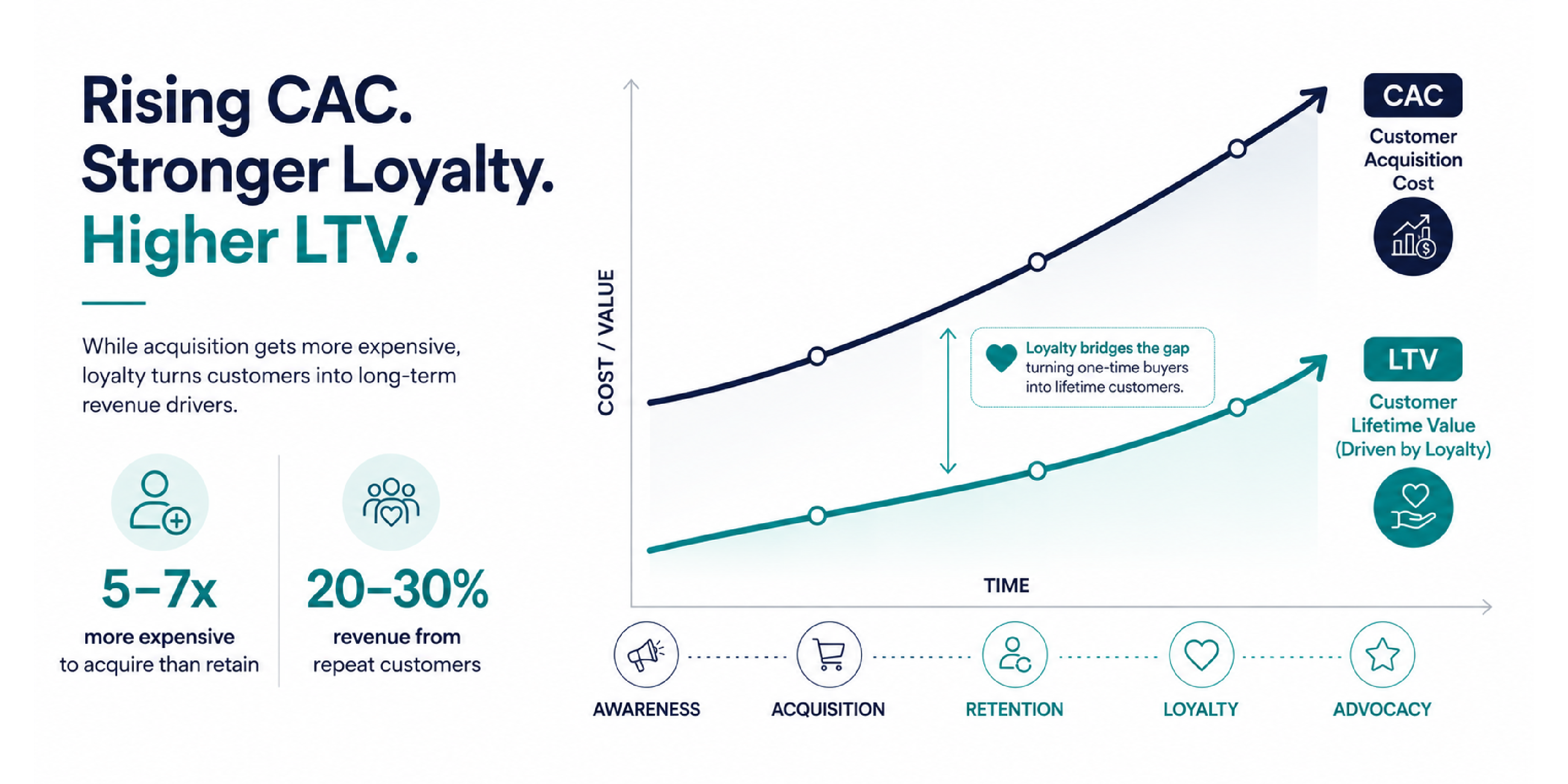
Customer acquisition costs continue to rise across digital channels. Bain & Company reports that acquiring a new customer can cost five to seven times more than retaining an existing one. Meanwhile, McKinsey estimates that repeat customers contribute between 20% and 30% of revenue for many consumer brands. Yet many D2C businesses still prioritise acquisition over retention investments.
For marketing leaders, this creates a difficult balancing act. Increased ad costs, tighter margins, and reduced attribution visibility make sustainable growth harder to achieve. Loyalty programmes offer a practical way to improve retention, increase lifetime value, and reduce dependence on continuous customer acquisition.
This article explores how D2C brands can design loyalty programmes that encourage repeat purchases, strengthen customer relationships, and improve marketing efficiency without eroding profitability.
The D2C Retention Paradox: Why Brands Spend More on Acquisition Than on Keeping the Customers They Already Have
Digital commerce has made customer acquisition more expensive than ever. Deloitte reports that customer acquisition costs have increased significantly over the past five years as privacy changes, rising media costs, and fragmented customer journeys reduce advertising efficiency.
At the same time, existing customers remain the most valuable growth segment. Bain & Company found that increasing customer retention by just 5% can increase profits by between 25% and 95%.
Despite these findings, many D2C brands still allocate the majority of their budgets towards attracting new customers.
Why retention remains underfunded
Several factors contribute to this imbalance:
- Acquisition campaigns deliver immediate performance signals.
- Retention outcomes take longer to materialise.
-
- Many brands lack structured post-purchase engagement strategies.
- Customer data often remains siloed across marketing channels.
- Loyalty initiatives frequently become discount mechanisms instead of relationship-building programmes.
Harvard Business Review estimates that existing customers account for approximately 65% of business revenue for many organisations. Yet retention strategies rarely receive equivalent investment.
For marketing leaders, the question is no longer whether loyalty matters. It is whether brands can afford not to prioritise it.
A well-designed loyalty programme creates an owned growth channel that reduces reliance on paid acquisition and builds sustainable revenue over time.
How a Loyalty Programme Changes the CAC-to-LTV Equation for D2C Brands
Customer acquisition cost only becomes sustainable when customer lifetime value increases faster than spending.
Loyalty programmes help brands influence this equation by encouraging repeat purchases, increasing average order values, and extending customer relationships.
Gallup research shows that emotionally connected customers are more profitable, purchase more frequently, and demonstrate stronger brand advocacy.
McKinsey also found that loyalty initiatives can drive meaningful increases in customer lifetime value when they move beyond transactional discounts.
Impact of loyalty on key business metrics
Modern loyalty platforms enable marketers to automate these experiences at scale. Solutions such as Rekyndl combine customer segmentation, journey orchestration, personalised rewards, and redemption capabilities within a single ecosystem.
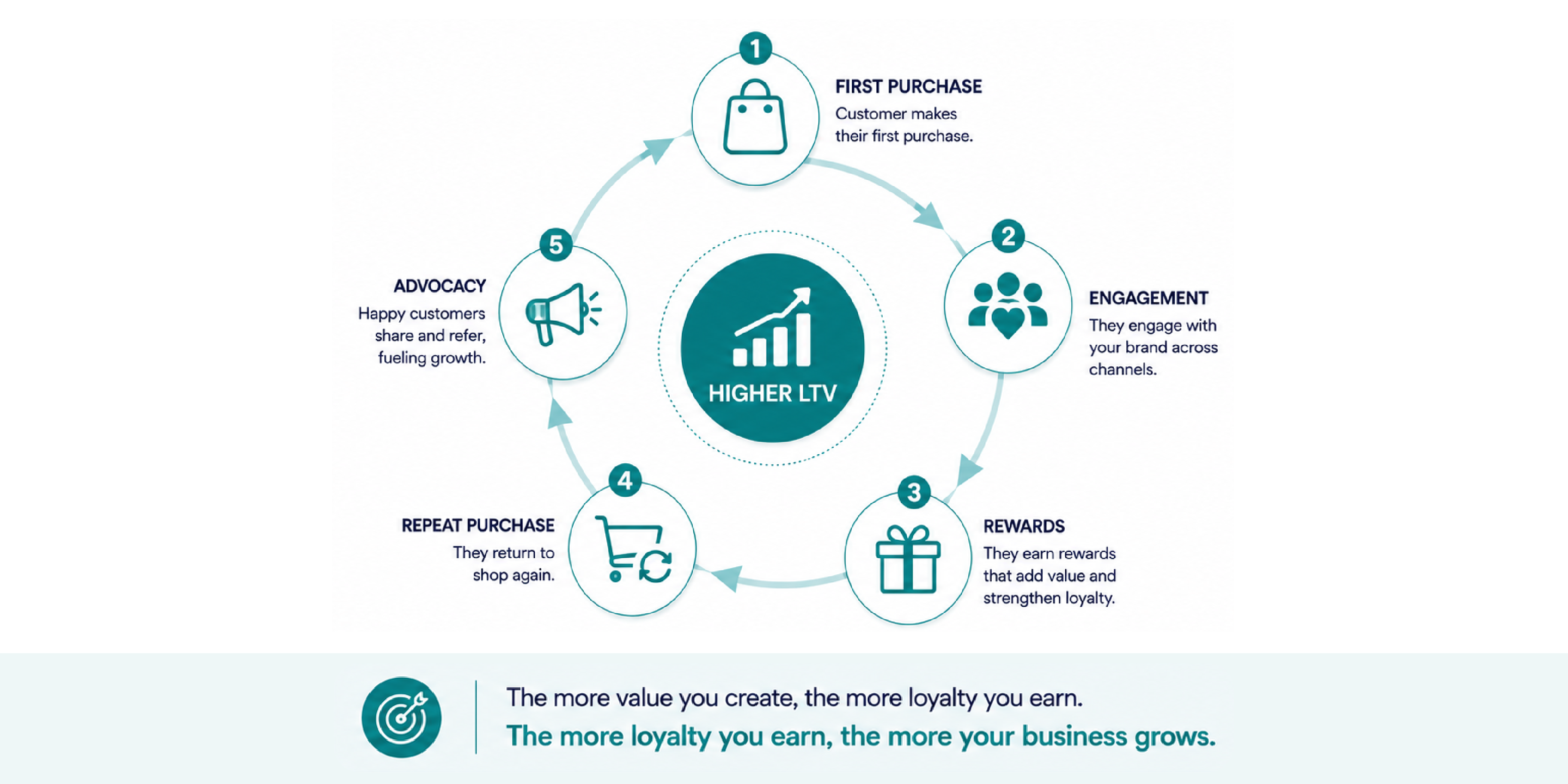
This creates a feedback loop where loyalty supports both customer retention and acquisition efficiency.
Rather than continually increasing advertising spend, brands can strengthen customer value and generate incremental growth from existing audiences.
Designing First-Purchase Loyalty Triggers That Convert One-Time Buyers Into Repeat Customers
The period immediately following a customer's first order represents one of the most important opportunities in the loyalty journey.
Forrester research suggests that early engagement significantly influences long-term retention outcomes. Customers who receive relevant communication shortly after purchase are more likely to return.
High-performing first-purchase loyalty triggers
Welcome rewards
Rewarding customers immediately after their first purchase creates positive reinforcement. These rewards do not need to rely on discounts. Access to exclusive experiences, bonus points, or personalised offers can be equally effective.
Tier progression incentives
Customers respond strongly when brands make progression visible.
Examples include:
- Complete one more purchase to unlock premium benefits.
- Earn additional points after the second order.
- Access exclusive collections after achieving milestones.
Behavioural research from Gartner highlights that visible progress indicators increase participation rates and encourage repeat actions.
Product education journeys
Many D2C categories require customer education.
Brands selling wellness, beauty, lifestyle, or speciality products can build loyalty through educational content, usage guides, and tailored recommendations.
Personalised replenishment reminders
Predictive communications based on expected usage patterns help brands remain relevant while increasing purchase frequency.
Platforms such as Rekyndl allow marketing teams to automate these journeys using customer segmentation, lifecycle triggers, and reward logic.
The objective is simple: make the second purchase feel easier, faster, and more rewarding than the first.
Gamification for D2C: How QR Codes, Spin the Wheel, and Badges Change Post-Purchase Engagement
Loyalty programmes increasingly depend on engagement mechanics rather than points alone.
Gartner predicts that gamification will continue growing as brands seek new ways to increase participation and customer interaction.
Gamification introduces an element of achievement, discovery, and anticipation into the post-purchase experience.
Effective gamification tactics for D2C brands
QR code interactions
QR codes can connect offline packaging experiences with digital loyalty journeys.
Customers can:
- Unlock bonus rewards.
- Access exclusive content.
- Participate in challenges.
- Collect points through product interactions.
Spin the Wheel experiences
Interactive reward mechanics introduce excitement while encouraging repeat visits.
Brands often use these experiences to reward:
- First purchases.
- Birthday milestones.
- Seasonal campaigns.
- Product launches.
Achievement badges
Badges create recognition without relying solely on monetary incentives.
Examples include:
- Early adopter status.
- Product explorer achievements.
- Community participation milestones.
- Referral accomplishments.
Forrester research indicates that engagement-focused loyalty experiences improve participation rates and strengthen emotional connections with brands.
Consumers increasingly expect loyalty to feel personalised and entertaining rather than purely transactional.
Gamification supports this expectation by transforming routine purchasing behaviour into an ongoing relationship.
Subscription Loyalty vs Points Loyalty: Which Model Works Better for D2C Products
No single loyalty model suits every D2C brand.
Product category, purchase frequency, customer expectations, and margins all influence programme design decisions.
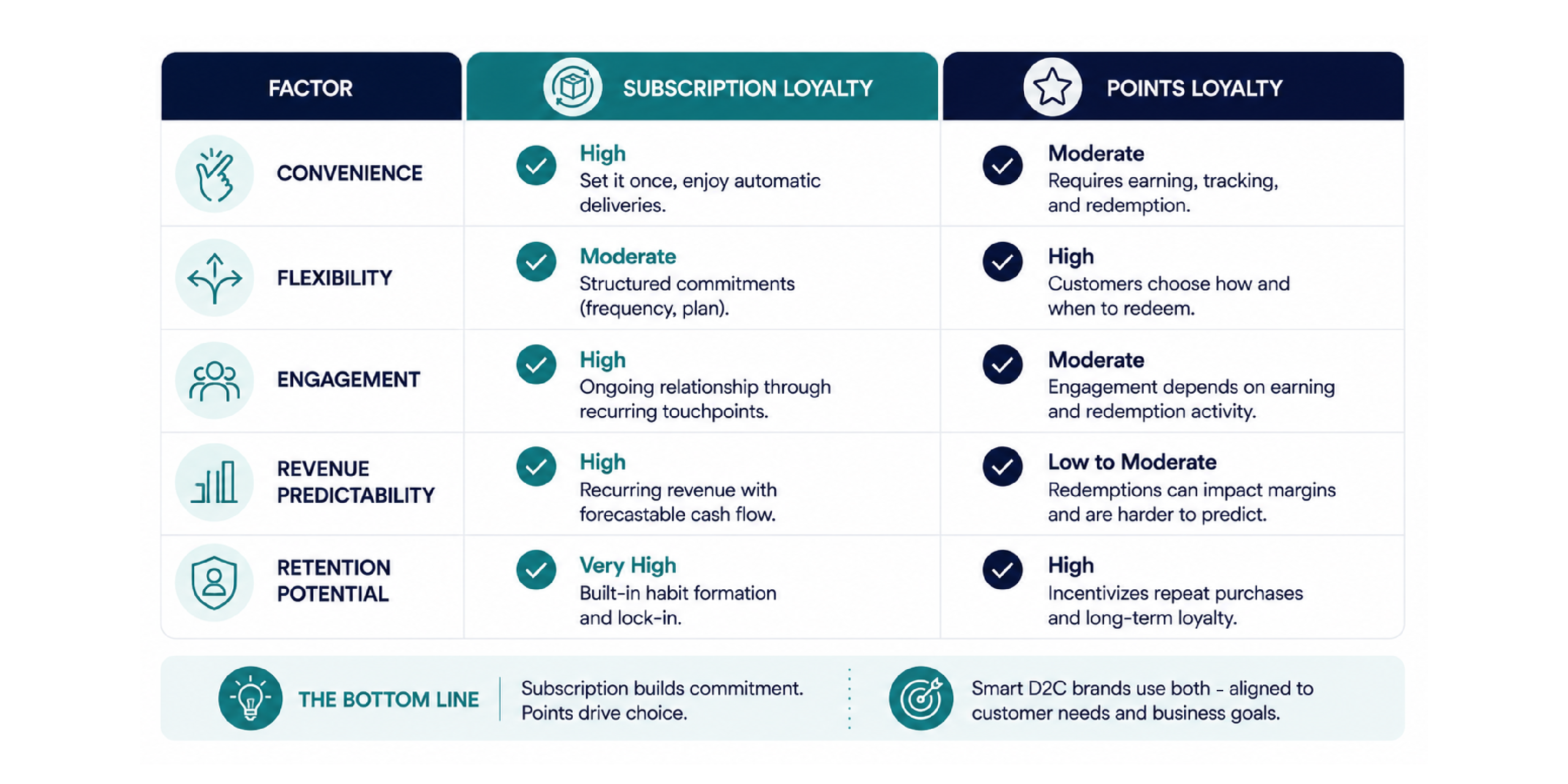
Deloitte research suggests subscription models work particularly well for replenishment-based products, while points programmes perform strongly where customers value flexibility and choice.
Comparing subscription and points loyalty
When subscription loyalty works best
Subscription models suit brands with predictable purchasing cycles.
Benefits often include:
- Exclusive access.
- Faster delivery.
- Member-only experiences.
- Convenience-driven retention.
Examples from broader markets include Amazon Prime and membership-based ecosystems.
When points programmes perform better
Points-based programmes work well when brands seek broader participation and greater reward flexibility.
Customers can engage with multiple activities, including:
- Purchases.
- Referrals.
-
- Reviews.
- Social interactions.
- Event participation.
Many leading D2C brands increasingly combine both models to maximise customer engagement.
How to Measure D2C Loyalty ROI Beyond Repeat Purchase: Basket Size, Referral Rate, and LTV Growth
Repeat purchases represent only one component of loyalty performance.
Leading organisations evaluate broader indicators to understand programme effectiveness.
Aberdeen Group research found that companies using structured loyalty measurement frameworks achieve stronger returns on customer retention initiatives.
Loyalty metrics marketing leaders should track
Average Order Value
Loyal customers typically spend more per transaction.
Tracking basket size improvements provides insight into programme influence on purchasing behaviour.
Referral Rate
Satisfied customers often become acquisition channels themselves.
Monitoring referral participation helps quantify the contribution loyalty makes towards reducing customer acquisition costs.
Customer Lifetime Value
LTV remains one of the most important indicators for long-term profitability.
Brands should compare loyalty participants against non-participants to understand incremental value creation.
Participation Rate
Programme adoption influences overall business impact.
Low participation often indicates friction within the customer experience.
Redemption Behaviour
Redemption rates reveal whether rewards remain relevant and appealing.
Strong redemption activity generally correlates with higher engagement levels.
According to Bain & Company, businesses that actively manage retention outperform competitors on profitability metrics over time.
For marketing leaders, loyalty should not function as a cost centre.
It should operate as a measurable growth engine that strengthens margins, improves customer economics, and creates sustainable competitive advantage.
Frequently Asked Questions
What is a D2C loyalty programme?
A D2C loyalty programme rewards customers for continued engagement with a brand. It encourages repeat purchases, referrals, and advocacy through incentives, recognition, and personalised experiences. Effective programmes improve customer lifetime value while reducing dependence on paid acquisition.
How does a loyalty programme reduce customer acquisition costs?
Loyalty increases repeat purchases and extends customer relationships, which improves lifetime value. Customers who return frequently generate more revenue without additional acquisition spending. Many also become advocates who refer new customers organically.
Which loyalty model works best for D2C brands?
The answer depends on product category and purchasing behaviour. Subscription models often suit replenishment products, while points-based programmes offer greater flexibility. Many D2C organisations adopt hybrid approaches to maximise engagement.
How long does it take for a loyalty programme to deliver results?
Most brands begin seeing measurable improvements in engagement and repeat purchases within three to six months. Larger gains in lifetime value often emerge over longer periods as participation increases and customer relationships mature.
Can Rekyndl support loyalty journeys for D2C brands?
Yes. Rekyndl enables D2C businesses to design loyalty programmes, automate customer journeys, segment audiences, introduce gamification, and provide integrated reward redemption experiences. This allows marketing teams to scale retention initiatives efficiently.
Conclusion
D2C growth cannot rely indefinitely on increasing acquisition budgets. Rising media costs and changing consumer expectations make customer retention an essential business priority.
Loyalty programmes help brands increase repeat purchases, improve customer lifetime value, and reduce dependency on paid channels. As loyalty becomes more personalised, automated, and experience driven, organisations that invest early will build stronger customer relationships and more resilient growth models.
See how Rekyndl helps D2C brands build loyalty that reduces CAC dependency and drives repeat purchases through automation, gamification, and personalised customer journeys.
Sign up for our newsletter for trending top content!


