
How Corporate Gifting Fits Into a Broader Employee Experience Strategy and Why Most Companies Get It Wrong

Sign up for our newsletter for trending top content!
Introduction
Yet many organisations still treat corporate gifting as an isolated activity. They send identical hampers during festive periods, distribute anniversary gifts without context, or purchase items purely to fulfil a budget line. HR leaders then question why employee satisfaction scores remain unchanged.
The issue is not gifting itself. It is placement.
Corporate gifting employee experience employee satisfaction outcomes improve when gifting supports employee moments that already carry emotional weight. Done well, gifting becomes part of an employee experience strategy. Done poorly, it becomes inventory with ribbons.
This guide explains where gifting fits, which occasions matter most, and how HR teams can build programmes that employees actually remember.
The Employee Experience Stack: Where Gifting Sits and Why Its Placement Matters
Employee experience does not start with engagement surveys. Deloitte defines employee experience as the combination of culture, workplace environment, growth opportunities, recognition, and everyday interactions that shape how employees feel about work.
Corporate gifting belongs inside the recognition and belonging layer of this stack.
When organisations isolate gifting from employee experience, they reduce it to a transactional reward. Employees receive an item, but not a meaningful signal.
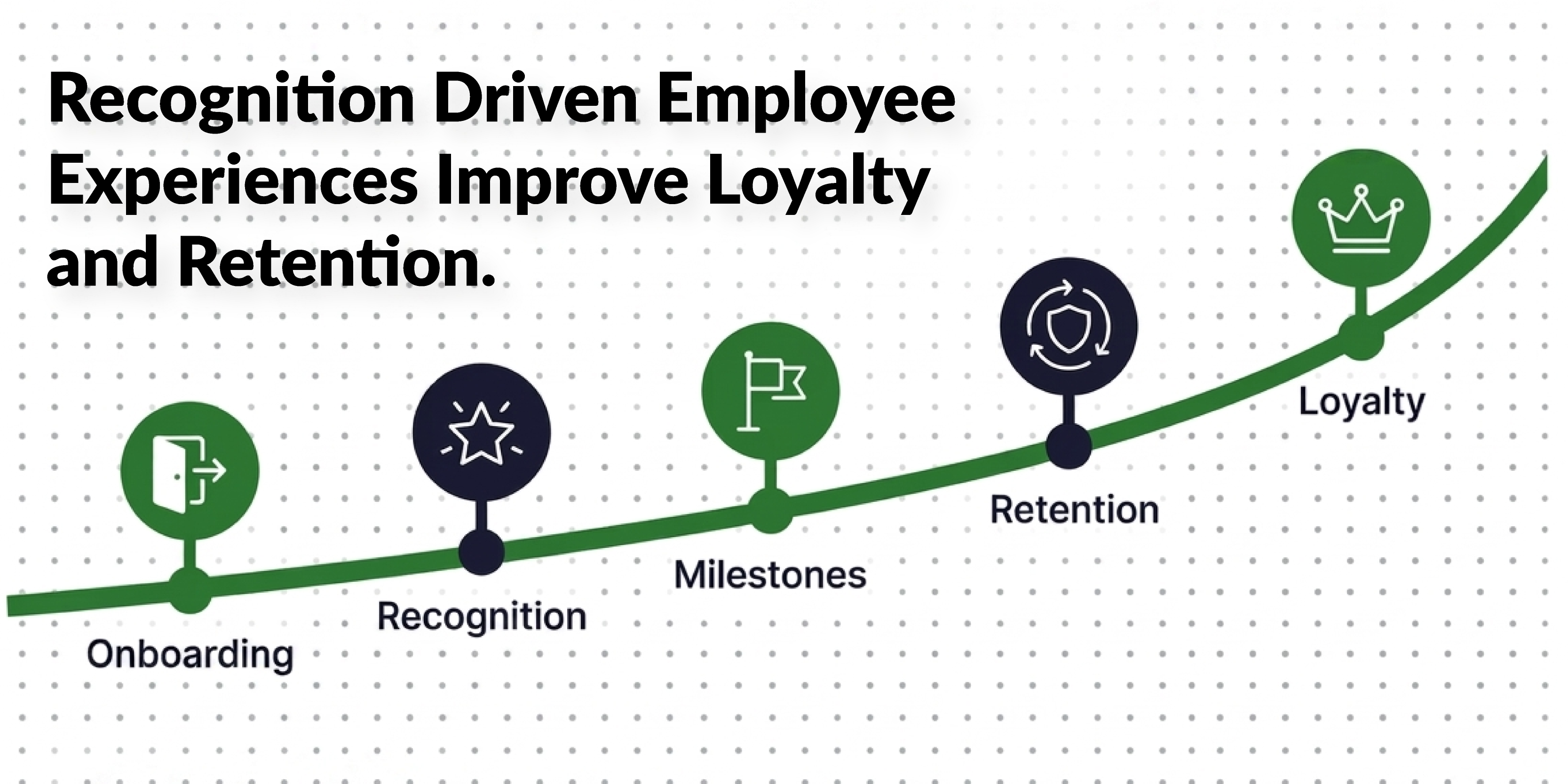
Employee Experience Stack and Gifting Placement
Gallup consistently links recognition with stronger engagement and lower turnover. O.C. Tanner also found that employees who receive meaningful recognition report higher belonging and loyalty.
This is where gifting becomes strategic.
For example, The Reward Store's Physical Gifting service allows organisations to build customised onboarding kits, branded hampers, employee milestone gifts, handwritten notes, QR linked video messages, and themed inserts around specific employee moments rather than generic events.
The result is not simply gift delivery. It is experience design.
Why Gifting That Feels Transactional Backfires and the Research Behind It
Employees rarely remember the monetary value of a gift. They remember how the organisation made them feel.
O.C. Tanner research found that symbolic recognition creates stronger emotional impact than purely financial rewards because employees interpret the gesture as evidence of appreciation rather than obligation.
Transactional gifting creates the opposite effect.
Examples include:
- Identical festive gifts sent to every employee regardless of tenure.
- Anniversary gifts with no personal message.
- Mass produced items disconnected from company culture.
- Delayed recognition after achievements.
The Incentive Research Foundation found that personalised recognition improves emotional connection and perceived value compared with generic reward distribution.
Why Transactional Gifting Fails
No context: Employees do not understand why they received the gift.
No emotional signal: Uniform gifting removes meaning.
No personalisation: Gifts fail to reflect employee identity or achievement.
No timing strategy: Recognition arrives too late.
Edelman Trust research also highlights that employees increasingly expect organisations to demonstrate authentic care rather than performative gestures.
HR leaders should therefore ask one question before every gifting decision:
What behaviour, milestone, or experience are we reinforcing?
If no clear answer exists, the gift risks becoming forgettable.
A curated wellness hamper after a difficult project delivery or a personalised onboarding experience creates stronger emotional recall than a larger but impersonal reward.
The Occasions That Produce the Highest Emotional Impact Per Gift Rupee Spent
Not every gifting occasion produces equal employee satisfaction returns.
SHRM research shows that recognition tied to meaningful moments drives stronger engagement outcomes than broad annual recognition programmes.
HR leaders therefore need occasion prioritisation.
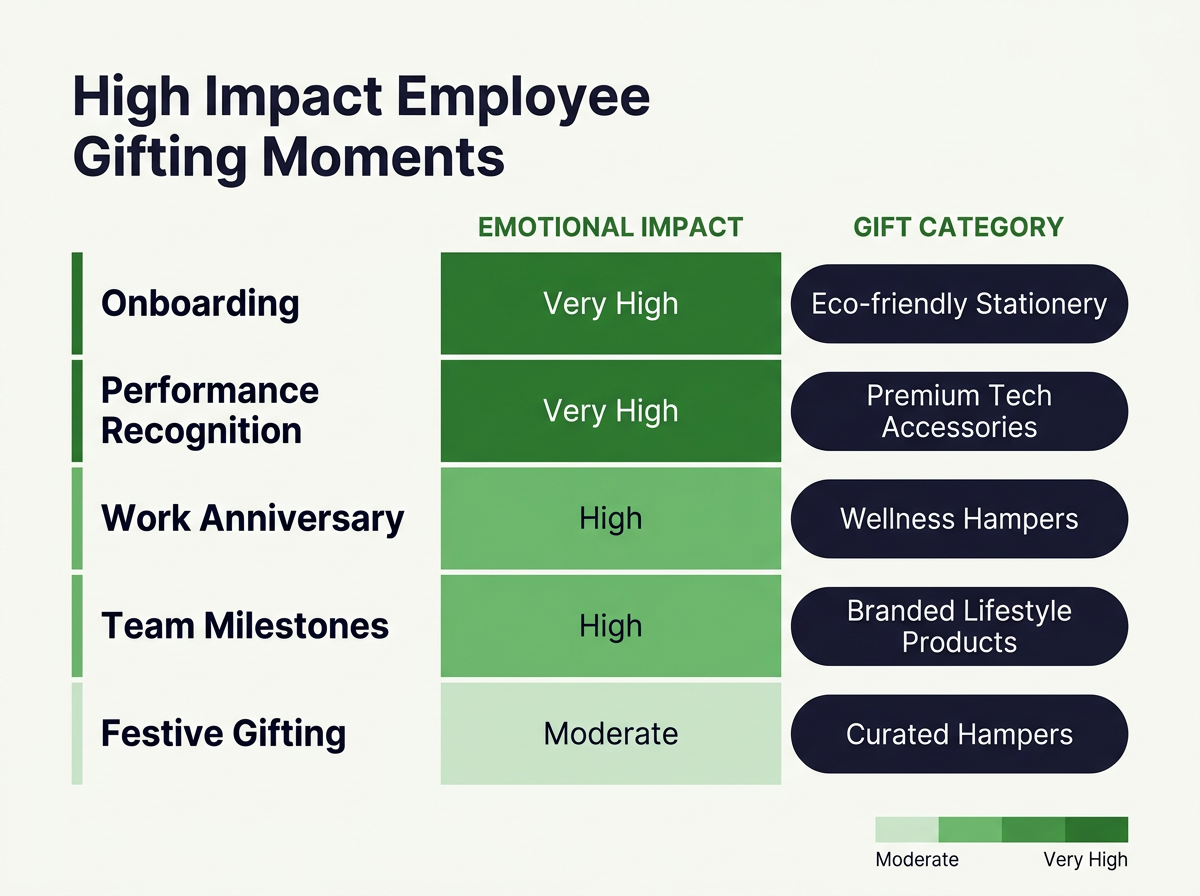
High Impact Employee Gifting Moments
Aberdeen Group research found that structured onboarding improves retention and productivity outcomes. Employees form lasting perceptions during their first weeks.
A customised onboarding hamper containing branded essentials, welcome messaging, eco-friendly products, and personalised inserts reinforces belonging immediately.
The Reward Store's Physical Gifting service supports this through customised branded gift hampers, themed inserts, handwritten notes, QR enabled personalised messages, and same day delivery in Bangalore for urgent onboarding requirements.
HR teams should also prioritise work anniversaries and recognition moments because they celebrate contribution rather than tenure alone.
Gift rupees create greater impact when attached to memory rich occasions.
Personalisation vs Uniformity: When to Give Everyone the Same Gift and When Not To
Many HR teams struggle with one question:
Should employee gifting stay equal or personalised?
The answer depends on purpose.
Gartner research shows employees value fairness, but fairness does not always mean identical treatment.
Use Uniform Gifting When:
- Reinforcing company culture.
- Running festive campaigns.
- Supporting large events.
- Creating organisational identity.
Examples include:
- Branded lifestyle products.
- Eco-friendly stationery collections.
- Festival hampers.
Uniformity creates shared experience.
Use Personalised Gifting When:
- Celebrating milestones.
- Recognising achievement.
- Supporting onboarding.
- Marking retirement or life transitions.
Personalisation signals individual value.
Decision Framework for HR Leaders
Question 1: Is this event collective or individual?
Collective = standardised gifting.
Individual = personalised experience.
Question 2: Is emotional impact the objective?
If yes, add:
- Custom notes.
- Personal messages.
- QR linked videos.
- Themed inserts.
Question 3: Does the gift represent company identity?
If yes, include customised branding and colour integration.
Research from O.C. Tanner indicates employees respond strongly when recognition reflects individual contribution rather than generic acknowledgement.
Uniform gifting builds community.
Personalised gifting builds memory.
Strong employee experience programmes use both.
How to Align Your Gifting Calendar With Your Employee Lifecycle Touchpoints
Most gifting calendars revolve around festivals.
Employee experience calendars should revolve around employee journeys.
Deloitte employee experience frameworks emphasise lifecycle design across attraction, onboarding, growth, recognition, retention, and exit stages.
Employee Lifecycle Gifting Calendar
Entry Stage
- Offer customised onboarding hampers.
- Include welcome notes.
- Add eco-friendly stationery and branded products.
Growth Stage
- Celebrate certifications.
- Recognise project completions.
- Reward innovation milestones.
Recognition Stage
- Work anniversaries.
- Performance achievements.
- Team success celebrations.
Retention Stage
- Career progression moments.
- Leadership promotions.
- Long service milestones.
Transition Stage
- Retirement gifting.
- Farewell recognition.
- Alumni appreciation.
This structure prevents random gifting behaviour.
It also improves budget allocation because HR teams align spend with employee value moments.
The Reward Store supports this lifecycle approach through customised physical gifting programmes covering onboarding, birthdays, work anniversaries, festive campaigns, recognition initiatives, client appreciation, and milestone events.
Instead of one annual campaign, HR leaders create multiple targeted experience moments.
That shift changes employee perception.
The Difference Between Gifting That Retains and Gifting That Is Simply Forgotten
Retention focused gifting creates emotional residue.
Forgotten gifting creates inventory movement.
Gallup research consistently links recognition with stronger retention outcomes, while O.C. Tanner found that meaningful appreciation increases employees' intent to stay.
The difference often comes down to five factors.
Retention Gifting Checklist
✔ Timed around meaningful milestones.
✔ Includes personal context.
✔ Aligns with company culture.
✔ Matches employee preferences.
✔ Creates memory.
Forgotten gifting usually looks different:
✘ Annual bulk distribution.
✘ No personalisation.
✘ Generic messaging.
✘ No lifecycle connection.
✘ No follow up.
Nielsen behavioural research also shows experiences generate stronger recall than material value alone.
HR leaders should therefore treat gifting as an experience asset.
A thoughtfully designed wellness hamper after a demanding quarter, a branded onboarding experience, or a milestone recognition package creates emotional association with the organisation.
Employees remember moments.
They rarely remember inventory.
The strongest employee experience strategies understand that distinction.
Frequently Asked Questions
What role does corporate gifting play in employee experience strategy?
Corporate gifting supports recognition, belonging, and emotional connection. It strengthens employee experience when organisations align gifting with onboarding, milestones, anniversaries, and achievements rather than treating it as seasonal distribution.
How does corporate gifting improve employee satisfaction?
Meaningful gifting reinforces appreciation and recognition. Gallup and O.C. Tanner research both associate recognition with stronger engagement, belonging, and retention outcomes. Timing and relevance determine impact.
When should HR leaders personalise employee gifts?
HR leaders should personalise gifts during individual milestones such as onboarding, work anniversaries, performance recognition, retirement, and promotions. Personalisation creates stronger emotional recall.
Can physical gifting support onboarding programmes?
Yes. Custom onboarding kits help employees feel welcomed and connected from day one. The Reward Store's Physical Gifting service supports onboarding through customised hampers, branded packaging, handwritten notes, QR video messages, and themed inserts.
Does festive gifting improve retention?
Festive gifting supports culture and shared experience, but alone it rarely drives retention. Organisations achieve stronger results when they combine festive gifting with milestone and recognition programmes.
Conclusion
Corporate gifting works best when HR leaders position it inside employee experience rather than outside it.
Recognition timing, personalisation, lifecycle alignment, and emotional relevance determine whether gifting improves employee satisfaction or disappears into routine activity.
As employee expectations continue to evolve, organisations that design gifting around meaningful moments will strengthen belonging, loyalty, and retention more effectively.
Explore how structured physical gifting can support your employee experience strategy.
Design an employee gifting strategy that builds genuine loyalty. Talk to The Reward Store.
Physical Gifting: The Reward Store Physical Gifting
Sign up for our newsletter for trending top content!


