
How to Design Corporate Event and Conference Gifts That Attendees Actually Take Home and Remember

Sign up for our newsletter for trending top content!
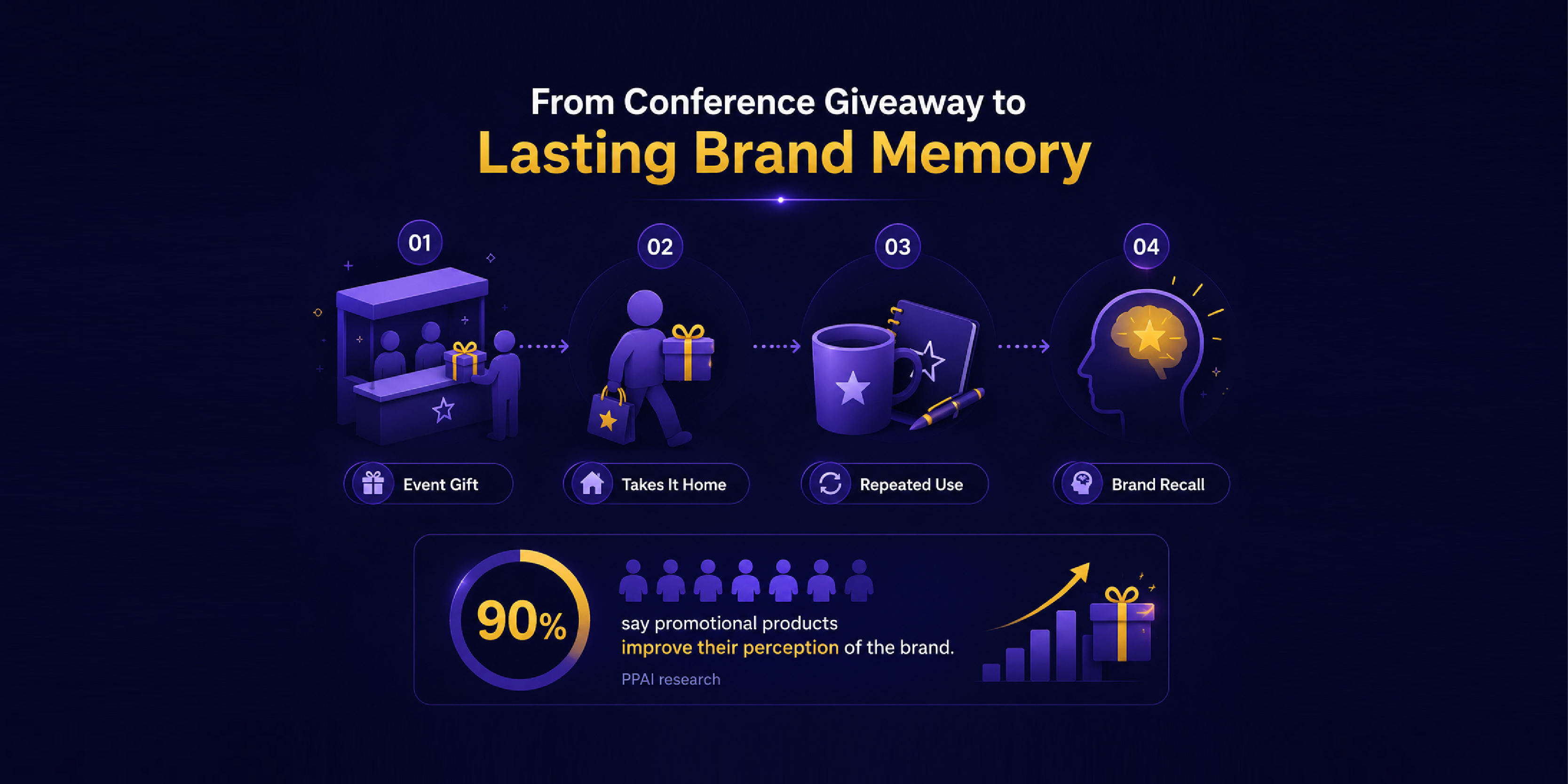
Promotional products can deliver exceptional brand recall when people genuinely value them. PPAI research found that nine in ten consumers could recall the brand on a promotional product they had received. More recent PPAI research also found that 90% of consumers agreed that receiving branded merchandise improved their perception of the brand.
For Marketing Leaders, that creates both an opportunity and a risk. A useful, well-designed conference gift can extend an event experience for months. A generic giveaway can consume budget, create waste and communicate very little about the organisation behind it.
The challenge is therefore not simply choosing merchandise. Effective corporate event gifting requires marketers to balance utility, brand relevance, personalisation, logistics, attendee segmentation and sustainability.
This guide explains how to make those decisions for events ranging from focused leadership gatherings to conferences with thousands of attendees.
Why Most Conference Gifts End Up in a Hotel Bin, and How to Avoid That
Conference gifts fail when the decision starts with the question, "What can we put our logo on?" rather than, "What will this attendee genuinely want to keep?"
The evidence strongly supports a recipient-first approach. ASI's 2026 Ad Impressions Study identifies usefulness as a primary driver of promotional product retention, with practical items more likely to remain in use for longer periods. PPAI's research similarly shows that consumers value promotional products when they offer meaningful utility and relevance.
For Marketing Leaders, this means evaluating every proposed gift against three criteria:
- Is it useful? The recipient should have a clear reason to use it after the event.
- Is it relevant? The item should suit the attendee profile, event context and likely journey home.
- Does it represent the brand appropriately? Materials, packaging and design should reinforce the desired brand perception.
Premium tech accessories may suit a technology conference, while eco-friendly stationery can support a sustainability-led event. Wellness hampers may work better for an executive retreat, while branded lifestyle products can create broader appeal at large conferences.
Size and portability matter too. An impressive gift that is difficult to carry onto a flight creates an immediate practical problem.
The strongest corporate event gifting strategy treats the gift as part of the attendee experience, not leftover promotional inventory. When usefulness, context and brand meaning align, attendees have a reason to take the gift home and keep the brand visible.
The Utility Test: How to Choose Event Gifts That People Actually Use After the Event
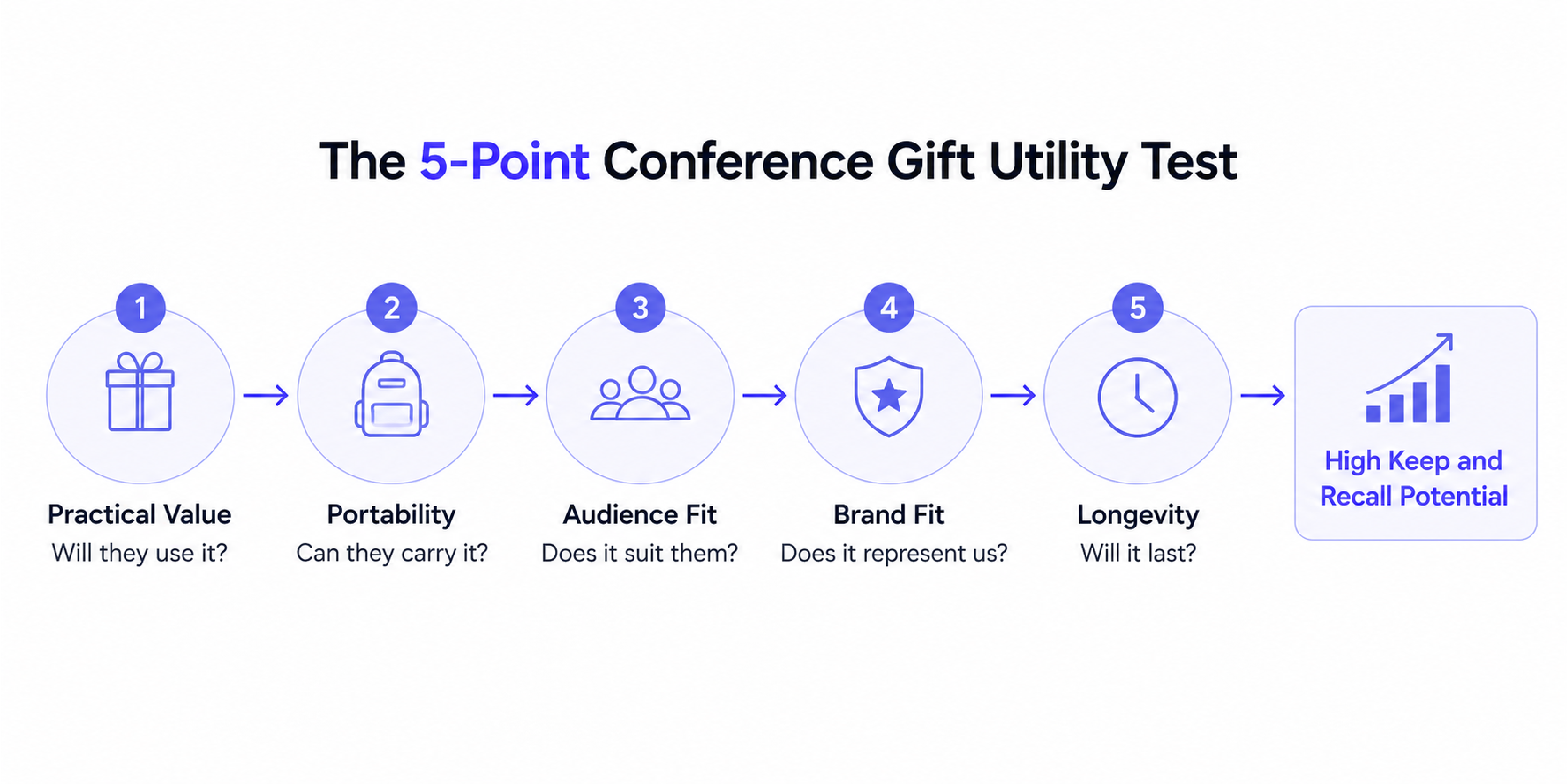
A conference gift creates long-term marketing value only if it survives beyond the venue. The simplest way to improve that probability is to apply a structured utility test before approving any item.
ASI's research indicates that usefulness plays a central role in whether recipients retain promotional products. PPAI research also found that 67% of people wanted promotional products from brands they already knew and liked, demonstrating that the recipient's existing relationship and perception can influence the value attached to the gift.
Marketing teams can use this five-point decision framework:
A premium tech accessory that supports daily work, for example, may generate more repeated brand exposure than a decorative item with no clear function.
Customisation should support utility rather than overwhelm it. A restrained logo, carefully chosen brand colours and thoughtful packaging often create a more premium impression than excessive branding.
For large or strategically important events, The Reward Store's Physical Gifting service can help businesses curate customised hampers across categories including premium tech accessories, wellness products, eco-friendly stationery and branded lifestyle products. The objective should remain consistent: give attendees something worth carrying home.
Branded Event Gifts vs Experience Add-Ons: What Creates Better Post-Event Brand Recall
Marketing Leaders often face a choice between investing in a tangible branded gift and adding a memorable experience to the event. The strongest answer is rarely one or the other. Each serves a different stage of memory.
Experiences can create an immediate emotional peak. Tangible gifts can extend that memory after attendees leave. PPAI research found that 90% of consumers believed promotional products improved their perception of the giving brand, while 72% associated branded merchandise with positive emotions including pride, belonging and gratitude.
A useful event gift therefore acts as a physical reminder of an experience that would otherwise become increasingly distant.
Marketing teams can strengthen that connection through thoughtful add-ons. A custom greeting card can explain why the gift was selected. A QR code can direct recipients to a personalised video message, event highlights or exclusive post-event content. The physical gift provides longevity, while the digital layer continues the conversation.
The key principle is integration. A generic gift placed in every delegate bag has limited storytelling power. A relevant gift connected to the event theme, session content or campaign message creates a stronger memory cue.
Marketers should therefore ask two separate questions: "What should attendees feel during the event?" and "What should remind them of that feeling afterwards?"
The most effective event gifting strategy connects those answers. It turns merchandise from a giveaway into a deliberate extension of the event narrative.
How to Manage Gift Logistics for Events With 200 to 2,000 Attendees
At 200 attendees, gifting can still feel manageable through manual coordination. At 2,000 attendees, small planning errors become expensive operational problems.
The solution is to treat gifting as an event workstream with its own quantities, production deadlines, recipient data and contingency planning.
Freeman's event guidance consistently emphasises designing attendee experiences intentionally and coordinating event elements around audience needs rather than treating them as isolated additions.
A practical process includes:
- Confirm attendee segments early. Separate general attendees, speakers, VIPs, sponsors and internal stakeholders before ordering.
- Lock the gift specification. Finalise items, branding, packaging, inserts and personalisation before production begins.
- Set quantity buffers deliberately. Account for late registrations, damaged units and unexpected VIP additions.
- Plan distribution by attendee journey. Decide whether gifts belong at registration, hotel rooms, reserved sessions, closing ceremonies or post-event delivery.
- Track inventory by tier. Different gift categories require clear labelling and controlled handover.
- Prepare an exception process. Define what happens when a recipient misses collection or an item requires replacement.
The Reward Store's Physical Gifting service supports customised corporate hampers, branded packaging and thoughtful additions such as handwritten notes, greeting cards and QR-linked personalised messages. For time-sensitive events in Bengaluru, same-day delivery can also support urgent requirements, subject to order feasibility and availability.
For Marketing Leaders, the operational objective is simple: attendees should experience a thoughtful gift, not the complexity required to deliver it.
Tiering Event Gifts by Attendee Type: Speakers, VIPs, Sponsors, and General Attendees
Giving every attendee exactly the same gift may appear equitable, but it can ignore the different roles people play in creating event value.
A speaker who has invested time in preparing a keynote has a different relationship with the event from a general attendee. A strategic client or VIP may warrant greater personalisation. Sponsors may need a gesture that acknowledges the commercial partnership without creating awkward conflicts with their own branding.
Research from PPAI shows that personalisation carries particular value for younger audiences. Its 2023 Holiday Gifting Survey found that 85% of Gen Z respondents valued personalisation, compared with 39% of consumers overall. While conference audiences vary, the finding supports a broader principle: relevance can make a gift feel selected rather than distributed.
A practical tiering model could include:
General attendees: Useful, portable items such as eco-friendly stationery or practical branded lifestyle products.
Speakers: Premium hampers with a personalised thank-you message acknowledging their contribution.
VIPs and strategic clients: Higher-value curated combinations such as premium tech accessories, wellness products or sophisticated lifestyle gifts.
Sponsors and partners: Carefully branded gifts that focus on the relationship and shared event experience.
Tiering should not mean making the general attendee gift feel cheap. Every tier should meet the same standards for quality, presentation and relevance. The difference should come through curation, personalisation and value, not through visibly inferior treatment.
This approach also helps Marketing Leaders allocate budgets according to relationship value while maintaining a coherent gifting experience across the event.
Sustainable Event Gifting: How Eco-Friendly Options Improve Brand Perception at Corporate Events
Sustainability has moved from an optional event theme to a visible test of whether brand behaviour matches brand communication.
Deloitte's sustainability research shows sustained consumer interest in environmentally responsible products and packaging. Separate Deloitte research reported that 82% of surveyed consumers said they were willing to pay more for sustainable packaging, although the study focused on European consumers and should not be treated as a direct measure of Indian conference attendees.
For event marketers, the principle remains relevant: unnecessary packaging and disposable merchandise can contradict a brand's sustainability claims.
Sustainable gifting should therefore focus on substance rather than superficial environmental language. Consider responsibly sourced materials, reusable products, recyclable or reduced packaging, eco-friendly stationery and gifts designed for a long useful life. Deloitte also highlights actions such as reducing single-use plastics, using recyclable materials and making environmental benefits clear to consumers.
Marketing teams should also avoid overclaiming. If a gift contains sustainable materials, communicate exactly what makes it more responsible rather than applying vague labels.
The broader event environment matters too. Freeman has highlighted practices such as recycled materials, water-refilling stations and reduced printed signage as practical components of more sustainable event experiences.
A sustainable corporate event gift works best when it reflects the wider event strategy. When the gift, packaging and event operations tell the same story, sustainability becomes credible brand behaviour rather than a decorative message.
Frequently Asked Questions
What are the best corporate event gifts for conference attendees in India?
The best corporate event gifts combine utility, portability, audience relevance and strong presentation. Categories such as premium tech accessories, eco-friendly stationery, wellness products and branded lifestyle products can work well when matched to the attendee profile. ASI research identifies usefulness as a major factor in promotional product retention, so practical value should guide the selection process.
How do you choose memorable gifts for conference attendees?
Start with the recipient rather than the merchandise catalogue. Assess what attendees will use after the event, whether the gift travels easily and whether it reinforces the event's core message. PPAI research indicates that branded merchandise can improve brand perception and create positive emotional associations, making relevance and quality important selection criteria.
Can corporate event gifts be customised for different attendee groups?
Yes. Marketing teams can create separate gifting tiers for general attendees, speakers, VIPs, clients, sponsors and partners. The Reward Store's Physical Gifting service supports customised hampers, branded packaging, greeting cards, handwritten notes and personalised digital additions, allowing organisations to create differentiated experiences within one coordinated gifting programme.
Does sustainable corporate gifting improve brand perception?
Sustainable gifting can strengthen brand perception when the choices are credible and consistent with the organisation's wider values. Deloitte's consumer research shows strong interest in sustainable products and packaging, while also warning organisations about the reputational risks of unclear or misleading sustainability claims. Choose genuinely useful products, reduce unnecessary packaging and communicate environmental attributes precisely.
How far in advance should Marketing Leaders plan conference gifts?
Planning should begin as soon as attendee estimates, event dates and gifting tiers become reasonably clear. Custom branding, packaging, personalisation and large quantities require more production time than standard items. For major conferences, marketers should build gifting into the main event timeline rather than treating it as a final procurement task.
Conclusion
Memorable corporate event gifting starts with a simple principle: attendees keep what they find useful, relevant and worth carrying home. Marketing Leaders who combine practical value with thoughtful branding, audience tiering, disciplined logistics and credible sustainability can turn a physical gift into a lasting extension of the event experience.
As events become more personalised and experience-led, generic giveaways will become increasingly difficult to justify. The next opportunity is to design gifting with the same strategic discipline as every other customer touchpoint.

Make your next corporate event gift genuinely memorable. Talk to The Reward Store.
Sign up for our newsletter for trending top content!


