
How to Choose Client Appreciation Gifts That Strengthen Business Relationships Without Looking Generic

Sign up for our newsletter for trending top content!
Introduction
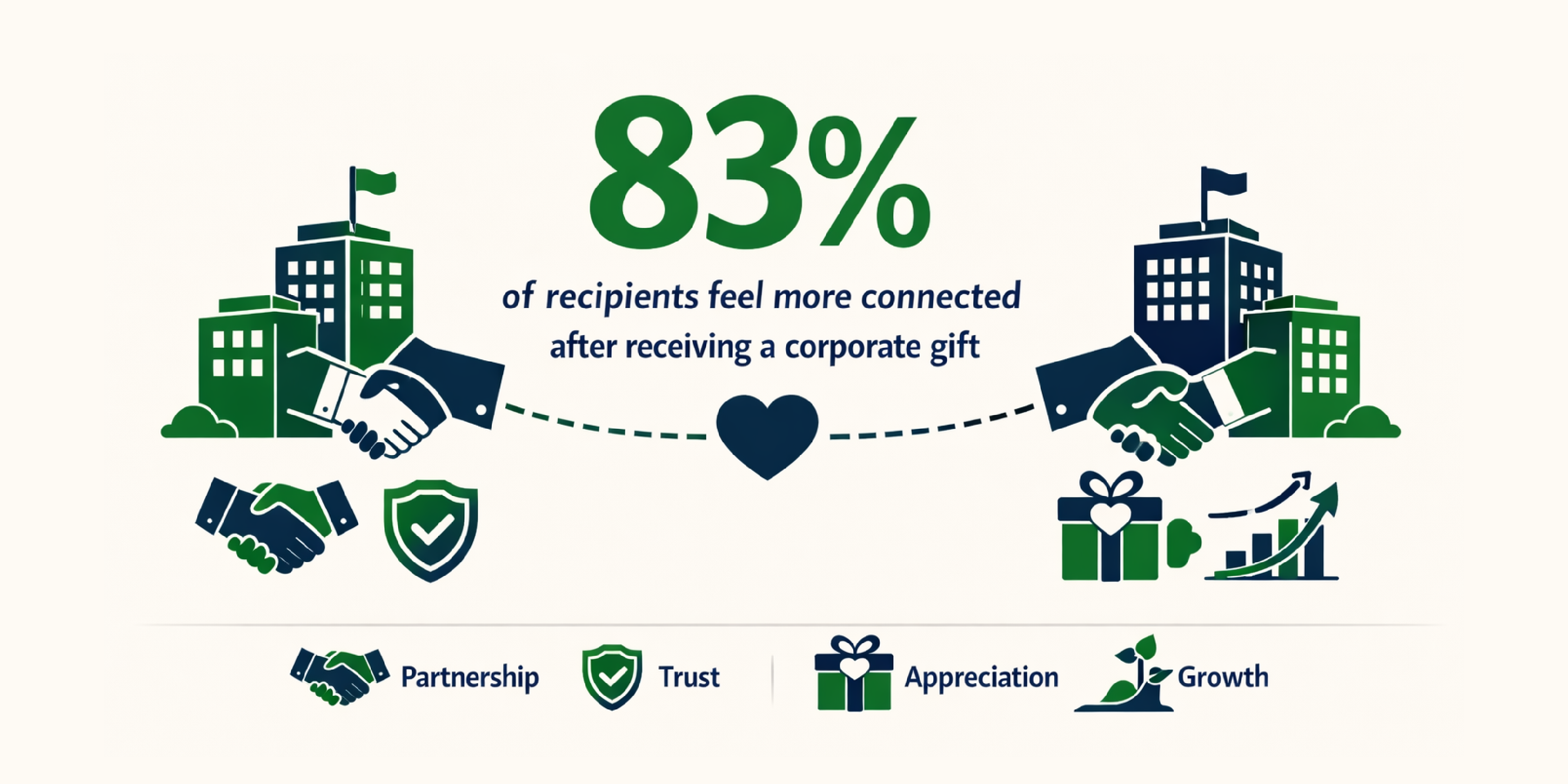
Research from Sendoso found that 83% of recipients felt more connected to a company after receiving a corporate gift, while Coresight Research reported that 80% of organisations saw improved relationships through gifting programmes. These findings highlight a simple reality: client appreciation gifts influence how clients perceive and remember your business.
Yet many organisations still rely on generic merchandise, standard festive giveaways, or one size fits all gifting campaigns that fail to reflect the value of the relationship. For HR leaders, client success teams, and business leaders, poorly chosen gifts can undermine brand perception, reduce the emotional impact of appreciation efforts, and make valuable clients feel like they are part of a mass mailing exercise.
This guide explains how to choose client appreciation gifts that feel meaningful, reinforce professional relationships, and create lasting business value without appearing generic or transactional.
Why Generic Corporate Gifts Do More Relationship Damage Than No Gift at All
Corporate gifting succeeds when recipients perceive genuine appreciation. When gifts appear rushed, impersonal, or purely promotional, they often create the opposite effect.
According to O.C. Tanner, gifts should match the importance of the occasion and help recognition feel sincere rather than transactional. When organisations fail to align the gift with the relationship, recipients are less likely to view the gesture as meaningful.
Generic gifts often communicate three unintended messages:
- The recipient was selected as part of a bulk campaign.
- The organisation prioritised convenience over thoughtfulness.
- The relationship is viewed as a transaction rather than a partnership.
This matters because business relationships increasingly depend on trust and emotional connection. Research cited by Coresight Research found that 80% of organisations reported stronger relationships through gifting programmes, demonstrating that the quality of the experience matters as much as the gift itself.
A premium wellness hamper, eco-friendly stationery collection, or curated branded lifestyle product set communicates significantly more care than a generic item distributed to every client regardless of industry, role, or history.
For organisations managing hundreds of client relationships, scalability matters. However, scale should not come at the expense of relevance. The most effective client gifting programmes balance consistency with personalisation, ensuring every recipient feels recognised rather than processed.
The Psychology of Client Gifting: What Makes a Gift Feel Like Appreciation vs Obligation
Appreciation Creates Emotional Reciprocity
Gift giving works because it activates social principles of gratitude, reciprocity, and relationship reinforcement. A well chosen gift signals recognition, respect, and investment in the relationship.
Research highlighted by the Incentive Research Foundation consistently shows that recognition programmes perform best when recipients perceive fairness, sincerity, and personal relevance. Recognition that feels authentic generates stronger engagement than recognition delivered as a routine process.
What Makes a Gift Feel Genuine?
Clients typically interpret gifts positively when they demonstrate:
- Relevance to their professional interests.
- Appropriate value for the relationship.
- High quality presentation.
- Thoughtful timing.
- Personalised messaging.
By contrast, gifts feel obligatory when they:
- Arrive with obvious sales intent.
- Feature excessive branding.
- Ignore the recipient's preferences.
- Appear identical across all recipients.
Research associated with the Incentive Research Foundation found that 85% of gift recipients reported a more positive perception of the organisation after receiving a thoughtful corporate gift.
The lesson for HR leaders and relationship managers is clear. The emotional experience surrounding the gift often matters more than the monetary value. Presentation, relevance, and context determine whether the recipient feels appreciated or targeted.
How to Tier Your Client Gifting Approach by Account Value and Relationship Depth
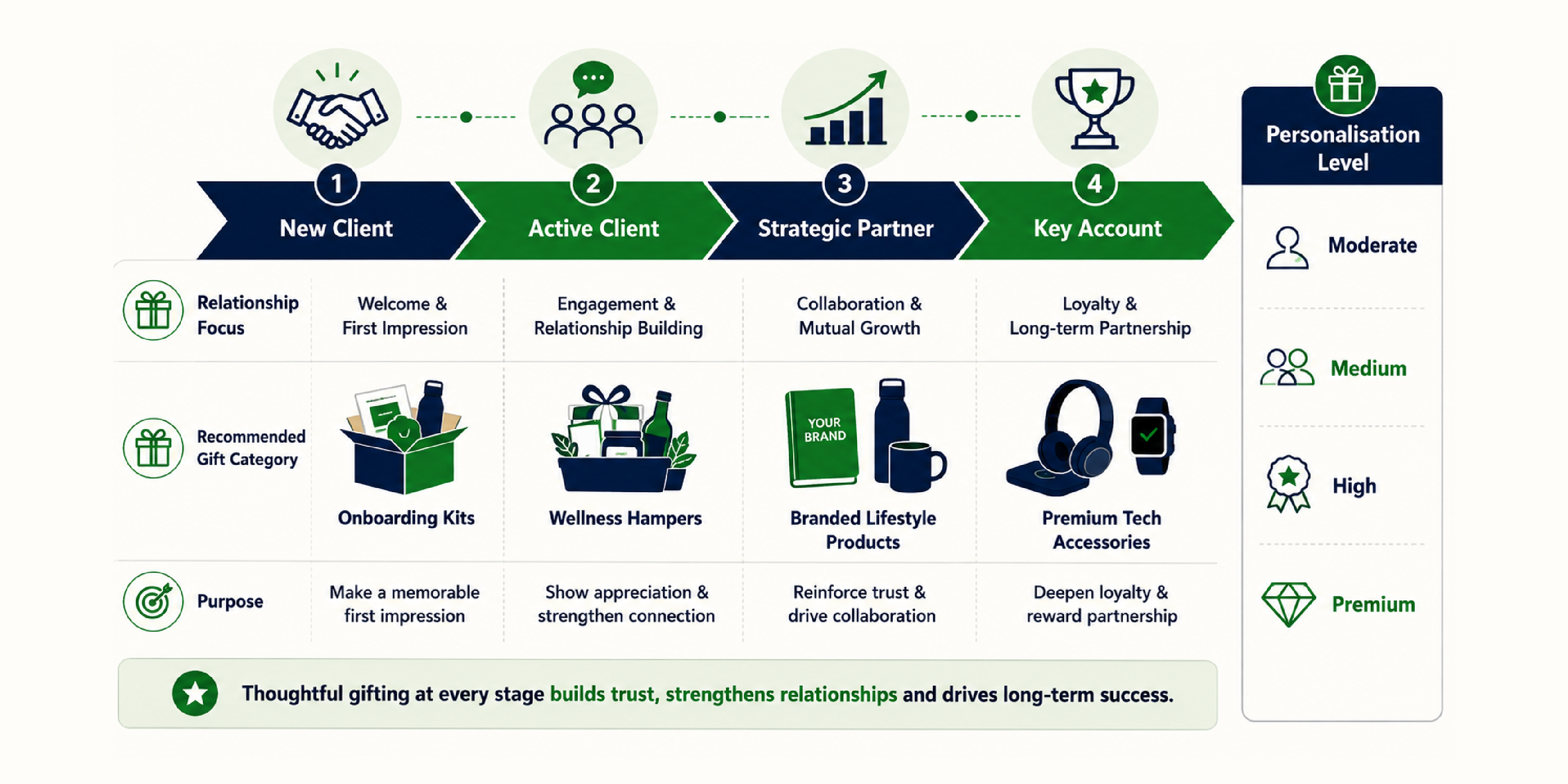
Not every client relationship requires the same gifting investment. A structured tiering model allows organisations to allocate budgets strategically while maintaining consistency.
Client Gifting Framework
Research from Gartner consistently highlights that retaining and expanding existing customer relationships remains significantly more cost effective than acquiring new business. Relationship-building initiatives therefore deserve deliberate investment. While gifting alone does not drive retention, it reinforces the broader client experience strategy.
For organisations seeking operational consistency, The Reward Store's Physical Gifting service supports tiered gifting programmes through customised gift hampers, premium packaging, branded inserts, personalised messaging, and scalable delivery capabilities across India and globally.
The objective is not equal spending across all clients. The objective is ensuring that the perceived value aligns with the business relationship.
What Client Appreciation Gifts Work Best at Each Stage of the Client Relationship
Different stages of the client journey require different gifting approaches.
New Client Onboarding
The first months of a relationship shape future expectations.
Effective gift categories include:
- Welcome hampers.
- Premium stationery collections.
- Branded lifestyle products.
- Personalised onboarding kits.
These gifts reinforce professionalism and help establish a positive first impression.
Active Engagement Phase
During ongoing collaboration, gifts should reinforce partnership rather than celebrate transactions.
Suitable options include:
- Wellness hampers.
- Eco-friendly office essentials.
- Professional productivity accessories.
- Custom branded gift boxes.
Milestone Celebrations
Major achievements create ideal gifting opportunities.
Examples include:
- Contract anniversaries.
- Partnership milestones.
- Project completions.
- Business expansion initiatives.
Premium tech accessories and customised appreciation hampers often perform well because they reflect the significance of the achievement.
Long-Term Strategic Relationships
Research shows that recognition creates stronger emotional connections when it feels personal and timely. Strategic clients therefore benefit from highly customised gifting experiences that demonstrate genuine understanding of the relationship.
At this stage, presentation becomes particularly important. The Reward Store's Physical Gifting service enables organisations to combine customised packaging, branded elements, handwritten notes, personalised greeting cards, and QR-enabled video messages that create memorable experiences beyond the physical gift itself.
Personalisation Without Intrusiveness: How to Make a Client Gift Feel Thoughtful
Many organisations avoid personalisation because they fear crossing professional boundaries. The solution is to personalise around professional context rather than personal data.
Use This Checklist
Before selecting a gift, ask:
✓ Does this reflect the client's role?
✓ Does it align with their industry?
✓ Does it acknowledge a specific milestone?
✓ Does the message reference a genuine business achievement?
✓ Does the packaging reflect your brand standards?
Professional personalisation works best when it focuses on shared business experiences.
For example:
- Referencing a successful project launch.
- Recognising a partnership anniversary.
- Celebrating a growth milestone.
- Acknowledging collaboration during a major initiative.
Research on workplace appreciation systems demonstrates that recognition generates stronger outcomes when recipients perceive it as specific and meaningful rather than generic praise.
Thoughtful additions often create the greatest impact:
- Handwritten notes.
- Custom greeting cards.
- Themed inserts.
- Personalised video messages accessed through QR codes.
These elements require relatively small investments but significantly increase the perceived authenticity of the gesture.
The goal is simple: demonstrate attention without creating discomfort.
Timing and Occasion Selection: When to Give a Client Gift for Maximum Relationship Impact
Many organisations concentrate gifting around festive seasons. While festive gifting remains effective, strategic timing often produces greater relationship value.
High Impact Client Gifting Moments
- Client onboarding completion.
- First successful project delivery.
- Partnership anniversaries.
- Business milestones.
- Contract renewals.
- Industry awards or achievements.
- Festival celebrations.
- Year-end appreciation.
Research from O.C. Tanner suggests that recognition is most effective when connected to meaningful moments rather than routine schedules. Gifts tied to genuine achievements feel more authentic and memorable.
Timing Comparison
Unexpected recognition often creates stronger emotional responses because recipients do not anticipate it. A carefully timed appreciation gift delivered after a successful collaboration can create significantly greater impact than a standard holiday hamper.
For HR leaders overseeing employer branding, customer experience, and executive engagement initiatives, timing should form part of the gifting strategy rather than an afterthought.
Frequently Asked Questions
What are the best client appreciation gifts for B2B relationships?
The most effective client appreciation gifts combine relevance, quality, and thoughtful presentation. Popular options include premium tech accessories, wellness hampers, eco-friendly stationery, gourmet food hampers, and branded lifestyle products. The best choice depends on the client's role, relationship stage, and business context.
How much should a company spend on client appreciation gifts?
There is no universal amount. Organisations should align gifting budgets with account value, relationship depth, and business objectives. A tiered gifting strategy often delivers better results than applying the same budget across every client.
Why do personalised client gifts perform better than generic gifts?
Personalised gifts demonstrate attention and appreciation. Research from the Incentive Research Foundation indicates that recipients respond more positively when recognition feels authentic and relevant. Personalisation increases emotional impact without necessarily increasing spend.
Can client appreciation gifts improve retention?
Yes. Research from Coresight Research found that organisations reported stronger relationships and increased loyalty through gifting programmes. While gifting does not replace strong service delivery, it reinforces trust and relationship quality.
Does The Reward Store offer customised client appreciation gifts?
Yes. The Reward Store's Physical Gifting service provides fully customised corporate gift hampers with branded packaging, curated gift selections, personalised notes, custom greeting cards, QR-enabled video messages, sustainable gifting options, and delivery across India and internationally.
Conclusion
The most effective client appreciation gifts do not focus on products. They focus on relationships. When organisations align gift quality, personalisation, timing, and presentation with the value of the partnership, gifting becomes a strategic relationship-building tool rather than a routine expense.
As client expectations continue to rise, organisations that invest in thoughtful and personalised appreciation experiences will strengthen loyalty, improve retention, and create stronger long-term partnerships. The right gift is not simply remembered. It reinforces why the relationship matters.
Create client gifts that strengthen partnerships. Talk to The Reward Store's gifting team.
Sign up for our newsletter for trending top content!


