
How to Manage Channel Partner Exits and Offboarding Without Losing Pending Incentive Disputes

Sign up for our newsletter for trending top content!
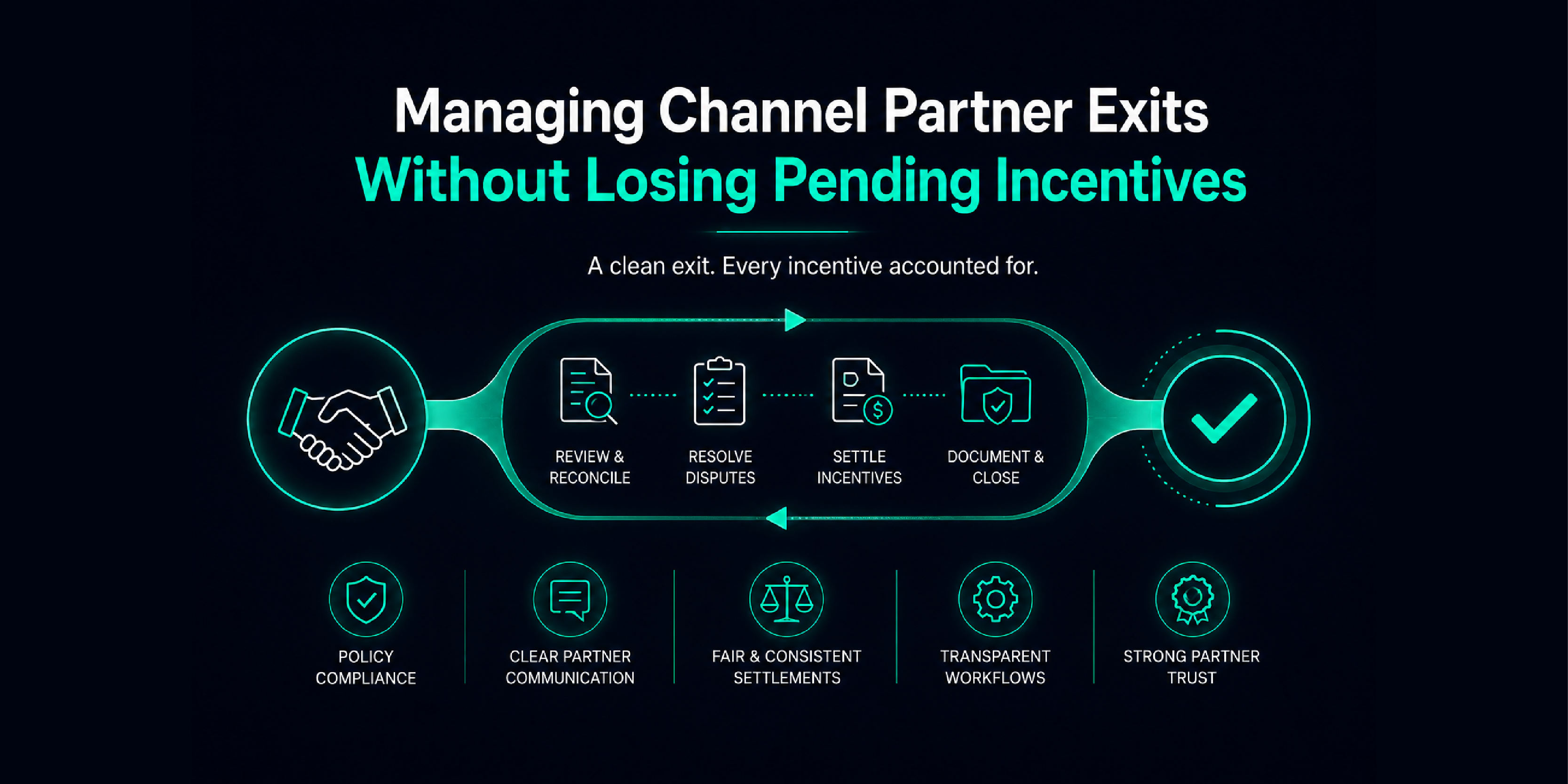
A channel partner exit rarely fails at the point of separation. It fails weeks later, when a disputed commission calculation, an unclaimed payout, or an undocumented clawback resurfaces and turns a routine offboarding into a commercial and, occasionally, a legal problem. Sales leaders spend considerable effort designing onboarding journeys for new partners and comparatively little on the reverse process.
This is the gap this article addresses: how to close out a partner relationship so that no incentive obligation, dispute, or reputational risk is left open. For a sales leader accountable for channel revenue and partner trust, getting this wrong is expensive in both cash and credibility.
Why Channel Partner Offboarding Creates More Legal and Financial Risk Than Onboarding
Onboarding is structured, sequential, and contractually front-loaded. Offboarding is neither. It is frequently triggered by a partner's own decision, a performance shortfall, or a strategic realignment, and it happens on a timeline the incentive programme was not designed around. Incentive accruals, tiered bonus thresholds, and clawback clauses are typically written with an active, ongoing relationship in mind, not an exit in progress.
This creates three distinct risk categories. First, financial exposure from payouts that were earned but not yet processed at the point of exit. Second, legal exposure where contractual clawback terms are ambiguous about what happens mid-cycle, leaving both parties open to a differing interpretation. Third, reputational exposure, since channel ecosystems are small and a poorly handled exit is discussed among remaining partners.
The practical implication for a sales leader is that offboarding needs its own governed process, distinct from onboarding, with its own checklist, its own sign-off points, and its own audit trail. Treating it as onboarding in reverse is where most disputes originate.
The Pending Incentive Problem: How to Handle Unclaimed Payouts, Disputed Calculations, and Outstanding Clawbacks
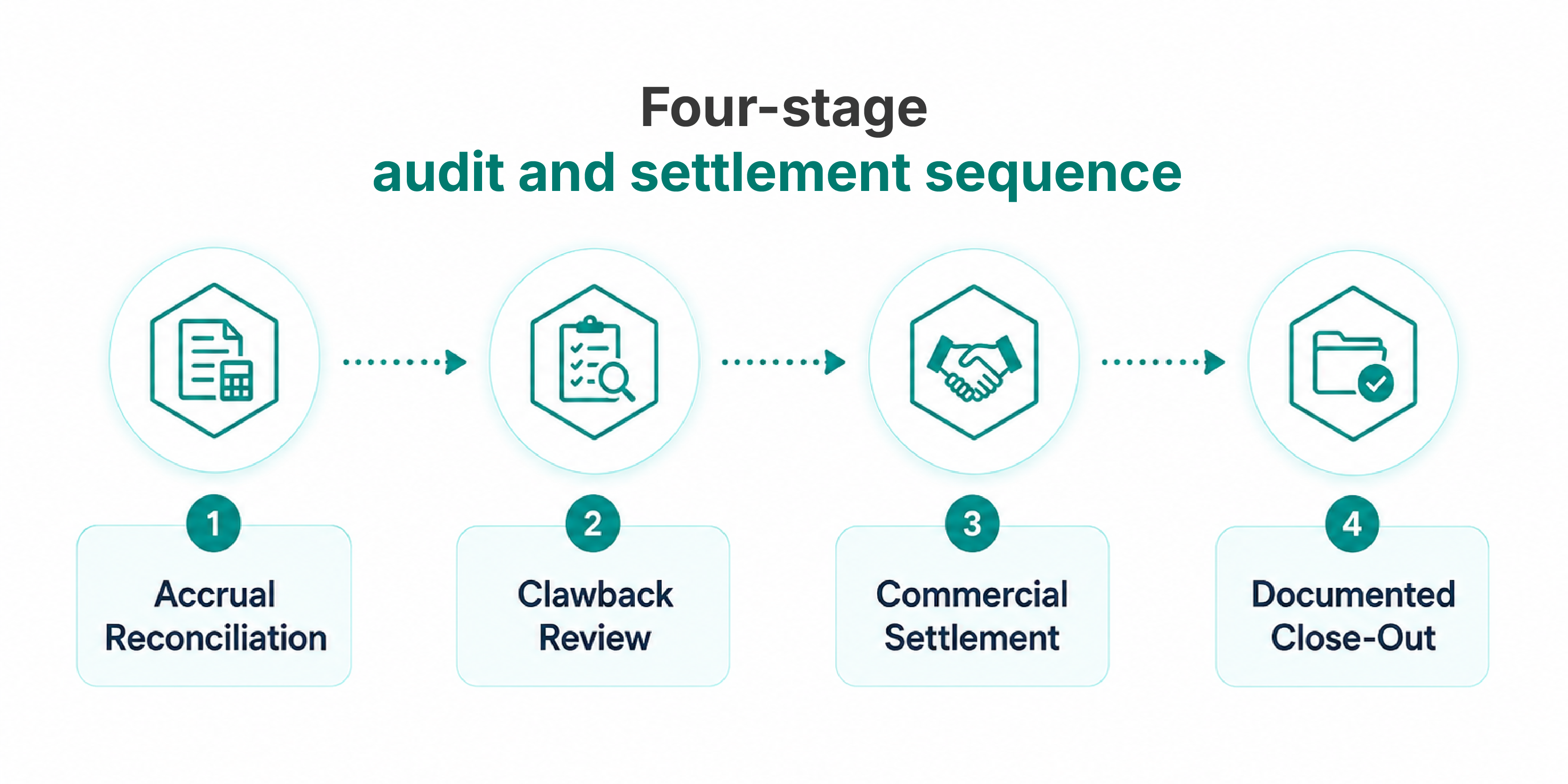
Three categories of pending incentive typically surface at exit, and each requires a different resolution path.
Unclaimed payouts are amounts a partner has earned under the programme terms but has not yet withdrawn or been paid. These should be settled in full at exit unless the contract specifies otherwise, and the settlement should be documented independently of the partner's own records.
Disputed calculations arise when the partner's understanding of what they are owed differs from the platform's calculation, often because of manual tracking, spreadsheet reconciliation, or a tiering structure that changed mid-programme without clear partner communication. This is the category most likely to escalate, because both sides are arguing from different data.
Outstanding clawbacks cover incentives paid against sales that were later cancelled, returned, or found non-compliant with programme terms. At exit, the organisation needs a clear, contractually grounded position on whether these are recoverable and how.
A platform such as Paytives addresses the second category directly, since real-time, system-calculated incentive tracking removes the ambiguity that manual reconciliation introduces, and gives both parties a single, auditable source of truth on what was earned, when, and under which rule. That single source of truth is what converts a potential dispute into a straightforward settlement conversation.
How to Conduct a Clean Incentive Audit Before a Partner Exit Is Confirmed
An incentive audit should happen before an exit is finalised, not after, so that any discrepancy is identified while the relationship still allows for a constructive conversation.
The most common failure point is the last row. Where incentive tracking sits partly in spreadsheets and partly in a platform, reconciling the two at exit is where discrepancies are discovered, usually at the least convenient moment. An audit that surfaces this gap early gives the organisation time to correct it before the partner raises it as a dispute.
The Commercial Settlement Process: What Channel Leaders Need to Document to Avoid Post-Exit Disputes
A clean settlement rests on documentation, not goodwill. Three documents matter most.
The final statement of account should itemise every incentive category, the calculation basis for each, and the net amount agreed, signed by both parties where possible. The settlement agreement should state explicitly that the payment constitutes full and final settlement of all incentive obligations, closing the door on later claims. The audit trail export, pulled directly from the incentive platform rather than reconstructed manually, should be retained for the period specified in the organisation's record retention policy, since a dispute raised months after exit is far easier to resolve with a system record than with memory or email threads.
Sales leaders should treat this documentation as standard practice for every exit, not as an exception reserved for difficult partners. The partners who exit cleanly rarely generate disputes, but the ones who do not are the ones without a paper trail, and by then it is too late to create one.
Protecting Your Remaining Partner Relationships During a High-Profile Exit
How an organisation handles one partner's exit is watched closely by every partner who remains. A dispute that becomes public within the channel ecosystem, through informal partner networks or industry forums, can affect recruitment and retention well beyond the individual relationship.
The practical safeguards are straightforward. Keep the settlement terms confidential between the parties, since publicising figures or disputes invites comparison and further disagreement. Communicate proactively but narrowly with remaining top-tier partners if the exit is likely to be noticed, framing it factually rather than defensively.
Maintain consistency, since a settlement that appears more generous or more punitive than precedent, without clear justification, is itself a source of distrust among the remaining partner base.
The underlying principle is that a channel programme's credibility rests as much on how it ends relationships as on how it builds them.
How to Design Your Incentive Programme Terms and Conditions to Simplify Future Exits
The exits that generate the fewest disputes are the ones where the programme terms and conditions anticipated exit from the outset, rather than treating it as an edge case.
Specific clauses worth reviewing now, before the next exit occurs, include a defined settlement timeline stating exactly how many days after exit confirmation final payment is due, an explicit clawback window specifying how far back the organisation can reclaim incentives tied to cancelled or non-compliant sales, and a clear statement on tier protection, addressing whether a partner exiting mid-cycle is settled at their current tier or a prorated one.
Building these terms into the programme from the start, and enforcing them through a platform that applies the rules consistently rather than through manual case-by-case judgement, is where Paytives fits directly into this problem. Consistent, system-enforced terms remove the negotiation that otherwise happens partner by partner at the point of exit, which is precisely where disputes are created.
Frequently Asked Questions
What happens to unpaid channel partner incentives when a partner exits?
Unpaid incentives that were genuinely earned under the programme terms should be calculated, documented, and settled as part of the exit process, independent of any negotiation. The settlement should be based on system-recorded accruals rather than the partner's own tracking, and confirmed in a signed final statement of account.
How far back can a company claw back incentives after a partner leaves?
This depends entirely on the clawback window written into the original partner agreement. Organisations without a clearly defined window are exposed to disputes about what counts as recoverable, which is why the clause should specify an exact timeframe rather than leaving it open to interpretation.
Why do incentive disputes happen more often during offboarding than during the active partnership?
Disputes surface at exit because that is when both parties are forced to reconcile their understanding of what is owed, often for the first time. During an active partnership, minor discrepancies are frequently left unresolved because the relationship continues regardless. At exit, they must be resolved.
Can a channel incentive platform reduce the risk of post-exit disputes?
Yes. A platform such as Paytives removes the ambiguity that manual or spreadsheet-based tracking introduces by calculating incentives against a consistent, system-enforced rule set and maintaining an auditable record of every accrual. This gives both the organisation and the exiting partner a shared, verifiable source of truth rather than competing versions of events.
When should an incentive audit begin relative to a confirmed exit date?
The audit should begin as soon as an exit becomes likely, not once it is confirmed. Starting early gives the organisation time to correct any discrepancy in accruals, clawbacks, or documentation while the relationship still allows for a straightforward conversation rather than a defensive one.
Channel partner exits are not the end of the incentive relationship. They are its final test, and the organisations that pass it are the ones that treated settlement, documentation, and audit as part of the programme design rather than an afterthought. As channel structures grow more complex, this discipline will separate programmes that scale cleanly from those that accumulate unresolved disputes with every departure.
See how Paytives maintains a consistent, auditable incentive record through partner exits. Book a Demo
Sign up for our newsletter for trending top content!


