
How Branded Corporate Gifts Become a Silent Marketing Channel for Your Employer and Client Brand

Sign up for our newsletter for trending top content!
Introduction
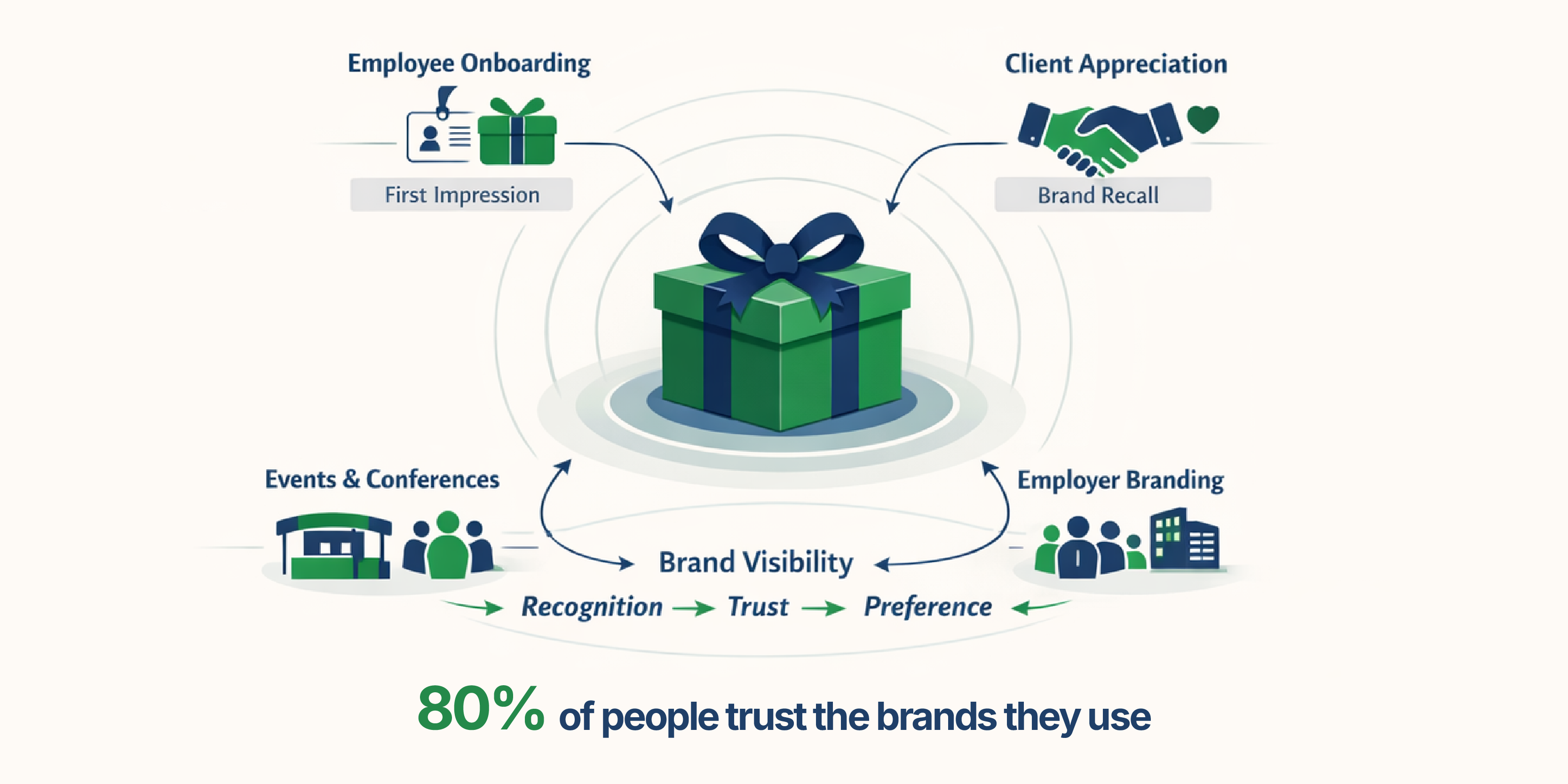
Marketing leaders spend significant budgets on digital campaigns, sponsorships and content programmes, yet one of the most persistent brand touchpoints often receives far less strategic attention. According to Edelman's 2025 Brand Trust research, 80% of people trust the brands they use, highlighting how repeated positive interactions shape long-term brand perception. Physical brand experiences play an important role in building that trust.
The challenge is that many corporate gifts fail to create lasting value. Generic items disappear into drawers, low-quality packaging weakens brand perception, and poorly selected gifts become a wasted marketing expense. For marketing leaders responsible for employer brand, customer engagement and brand visibility, every gift represents a brand impression that can either strengthen or dilute reputation.
This article explores how branded corporate gifting can function as a silent marketing channel that continues working long after an event, onboarding programme or client meeting has ended.
The Brand Impression a Physical Gift Makes That a Digital Message Cannot
Digital communication dominates modern marketing, but its lifespan is remarkably short. Emails disappear into crowded inboxes and social posts compete for seconds of attention. Physical gifts operate differently because they occupy space in the recipient's environment and create a tangible brand experience.
Research into brand awareness consistently shows that recognition and recall improve when people encounter repeated visual cues over time. Brand awareness relies on both recognition and recall, making physical visibility a valuable marketing asset.
A thoughtfully designed corporate gift introduces three advantages that digital channels often struggle to replicate:
- Physical presence in the recipient's daily environment.
- Extended exposure to logos, colours and brand messaging.
- Emotional association with appreciation, recognition or celebration.
For marketing leaders, this creates an important distinction. A promotional campaign may generate impressions. A well-chosen branded gift generates impressions while also creating a positive emotional memory.
The psychology behind gifting matters. When recipients connect a gift with a meaningful moment such as an achievement, onboarding milestone or client partnership, the brand becomes linked to that experience. Employer branding research consistently shows that positive employee experiences influence how people perceive and advocate for organisations.
This is why physical gifting should not sit solely within procurement. It belongs within the broader marketing and employer brand strategy.
What Makes a Corporate Gift Memorable Enough to Stay on a Desk for a Year
.png)
Not all gifts generate lasting visibility. The most effective branded gifts combine utility, relevance and design quality.
Marketing leaders should evaluate gifts using a simple visibility framework:
The gifts that remain visible for months are rarely the cheapest options. They are the products recipients genuinely use. Categories such as premium tech accessories, eco-friendly stationery, branded lifestyle products and wellness hampers tend to deliver stronger long-term exposure because they become part of everyday routines.
Research into promotional merchandise and brand awareness has long demonstrated that branded items help reinforce recognition and support recall when recipients repeatedly encounter them.
A Practical Selection Checklist
Before approving any corporate gift, ask:
- Will the recipient use it weekly?
- Will others see it?
- Does it reflect our brand positioning?
- Does it feel premium enough to create a positive impression?
- Does it connect to a meaningful occasion?
If the answer to several of these questions is no, the gift is unlikely to function as an effective marketing channel.
Memorable gifting is not about spending more. It is about selecting items that maintain brand presence naturally and consistently.
Branded Packaging as a Brand Experience: How Unboxing Becomes a Shareable Moment
The gift itself matters, but the packaging often determines the first impression.
Modern consumers and employees increasingly evaluate organisations based on the quality of experiences they create. Every touchpoint contributes to brand perception, including packaging, presentation and personalisation.
A well-designed unboxing experience can include:
- Custom branded packaging.
- Consistent brand colours and messaging.
- Personalised greeting cards.
- Handwritten notes.
- QR codes linking to personalised video messages.
- Occasion-specific inserts.
These elements turn a simple gift into a branded experience.
Trust research from Edelman shows that trust grows through authentic, human-centred interactions rather than purely promotional messaging. Thoughtful packaging helps create exactly that type of interaction.
The Reward Store's Physical Gifting service supports this approach through fully customised gift hampers that incorporate branding, personalised messaging and premium presentation. Rather than delivering a product alone, organisations can create a complete brand experience aligned with employer branding and client engagement goals.
Why Shareability Matters
When recipients voluntarily share a gift on internal channels, social platforms or team communications, the brand gains additional visibility without additional media spend.
The most shareable experiences typically combine:
- Personal relevance.
- Strong visual presentation.
- Premium packaging.
- Clear brand consistency.
The result is a multiplier effect where one gifting interaction creates additional brand impressions across broader audiences.
How to Choose Gift Items That Keep Your Brand Visible Long After the Occasion
Corporate gifting works best when marketing objectives guide product selection.
Too often organisations choose gifts based solely on budget. A more effective approach starts with brand visibility goals.
Step 1: Define the Audience
Different audiences value different gift categories.
Step 2: Prioritise Usage Frequency
The more frequently recipients use a product, the greater the cumulative brand exposure.
Step 3: Align With Brand Values
Brands that promote sustainability should incorporate eco-friendly gifting options. Organisations focused on innovation may choose premium tech accessories. Consistency reinforces credibility.
Step 4: Design the Entire Experience
Brand visibility extends beyond the product itself. Packaging, messaging and presentation all influence recall.
The Reward Store's Physical Gifting service helps marketing teams curate branded gift hampers that align gift selection, packaging and messaging into a unified brand experience. This approach ensures gifting supports broader brand objectives rather than operating as a standalone activity.
Brand awareness research consistently demonstrates that repeated recognition strengthens memory and improves future recall. The right gift selection strategy therefore creates ongoing visibility long after the original occasion.
The Employer Brand Signal That Premium Onboarding Gifts Send to New Joiners
Employer branding begins before a new employee contributes their first day of work.
First impressions strongly influence perceptions of organisational culture, professionalism and employee value. Employer branding research defines employer brand as the perception of an organisation's employment experience and value proposition.
A premium onboarding gift communicates several messages immediately:
- We planned for your arrival.
- We value your contribution.
- We invest in employee experience.
- We take our culture seriously.
These signals matter because trust remains one of the most important drivers of employee engagement and advocacy. According to Edelman's Trust at Work research, employers continue to rank among the most trusted institutions for employees globally.
When organisations provide thoughtfully curated onboarding gifts, they reinforce their employer value proposition through action rather than words.
Effective onboarding gifts may include:
- Branded lifestyle products.
- Eco-friendly stationery.
- Wellness-focused welcome kits.
- Customised welcome messages.
- Physical gift cards presented in premium packaging.
For employer branding teams, onboarding gifts provide a visible demonstration of organisational values and culture. They create a positive emotional anchor at a critical stage of the employee journey.
Measuring Brand Impact From Gifting: The Proxies That Show It Is Working
Unlike digital advertising, gifting rarely produces direct attribution metrics. That does not mean marketing leaders cannot measure impact.
Instead, successful organisations monitor a combination of brand and engagement indicators.
Brand Impact Measurement Framework
Employer branding specialists increasingly use qualitative and behavioural metrics alongside traditional campaign data to evaluate brand perception and employee advocacy.
Marketing leaders should also examine:
- Internal social engagement.
- Employee referral activity.
- Event attendance participation.
- Client satisfaction trends.
- Feedback collected after gifting campaigns.
While gifting should not replace broader marketing investments, it can enhance multiple objectives simultaneously, including employer brand visibility, client relationship building and audience engagement.
The most effective programmes treat gifting as a measurable brand channel rather than an operational expense.
Frequently Asked Questions
What makes branded corporate gifting effective for employer brand marketing?
Branded corporate gifting creates physical, memorable interactions that employees associate with your organisation. Unlike digital communications, gifts remain visible over time and reinforce brand identity through repeated exposure. When organisations connect gifts to meaningful moments such as onboarding or recognition, they strengthen employer brand perception.
How do corporate gifts improve client brand visibility?
Useful gifts remain in the recipient's environment for weeks or months. Every interaction with the item creates another brand impression. This repeated exposure supports recognition and recall while strengthening relationships through positive experiences.
Which gift categories generate the best long-term brand exposure?
Premium tech accessories, eco-friendly stationery, branded lifestyle products and wellness hampers often perform well because recipients use them regularly. Frequent usage increases visibility and helps maintain brand presence beyond the original gifting occasion.
Can branded packaging influence brand perception?
Yes. Packaging shapes the recipient's first impression and contributes significantly to perceived quality. Custom branding, personalised messages and thoughtful presentation create a stronger emotional connection and make gifts more memorable.
How does The Reward Store's Physical Gifting service support employer branding?
The Reward Store's Physical Gifting service helps organisations create customised branded gifting experiences through curated gift hampers, personalised packaging, branded merchandise, premium presentation and thoughtful add-ons. This enables marketing and HR teams to reinforce employer brand values at key employee and client touchpoints.
Conclusion
The most effective corporate gifts do more than celebrate a moment. They create ongoing brand visibility, reinforce trust and strengthen relationships long after delivery. When marketing leaders approach gifting as a strategic brand channel rather than a procurement activity, every package becomes an opportunity to influence perception.
As employer branding and customer experience continue to converge, organisations that create memorable physical experiences will stand apart from competitors and build stronger emotional connections with employees and clients alike.
Build gifts that make your brand unforgettable. Talk to The Reward Store's gifting specialists.
Sign up for our newsletter for trending top content!


