
How BFSI Companies Can Retain Relationship Managers When Competitors Are Making Counter-Offers

Sign up for our newsletter for trending top content!
Introduction
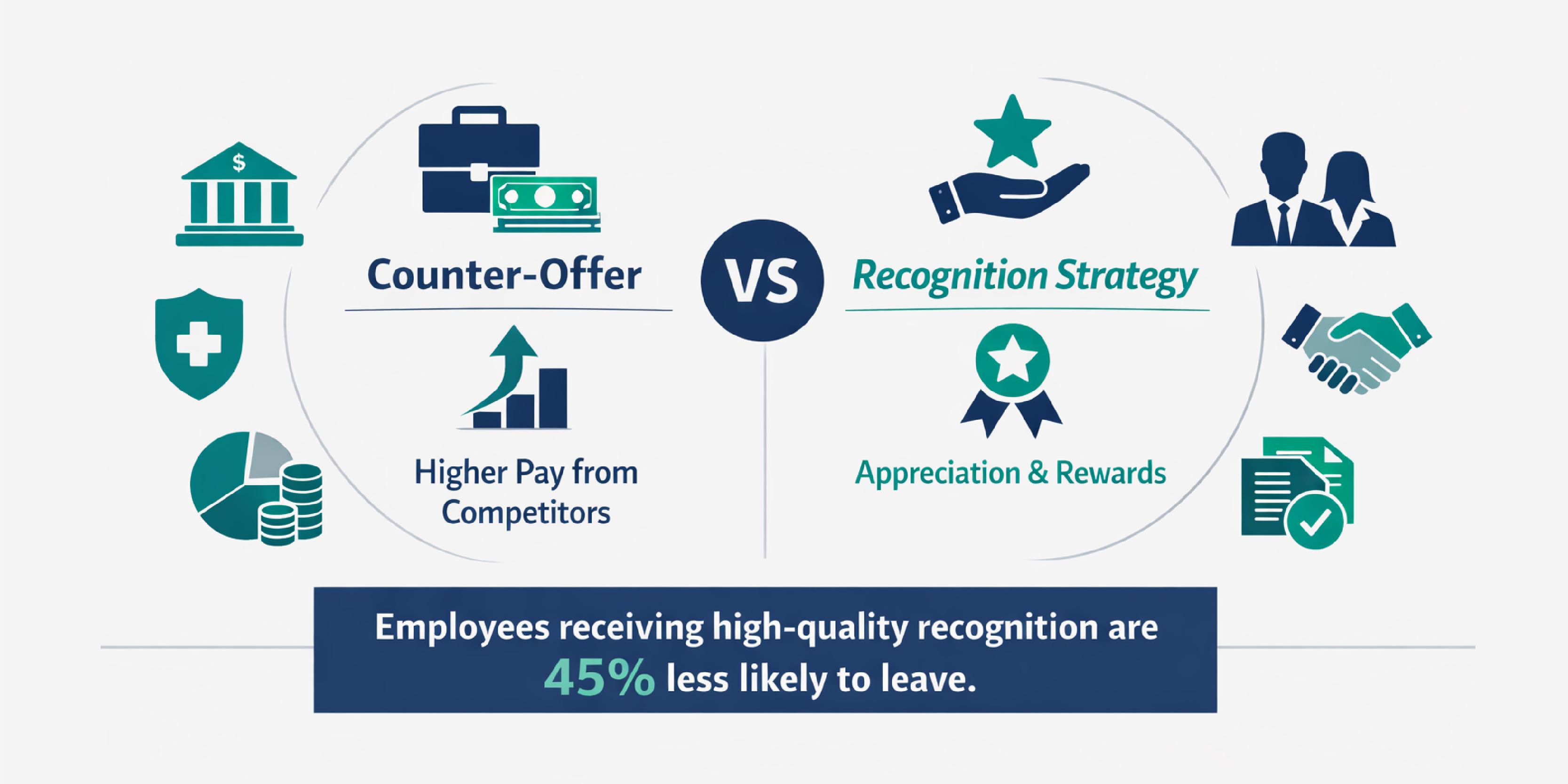
Replacing a high-performing relationship manager can cost significantly more than their annual salary once recruitment, onboarding, lost client relationships, and productivity gaps are included. Gallup research shows that employees who receive high-quality recognition are 45% less likely to leave their organisation over a two-year period. This finding has major implications for BFSI employers facing aggressive hiring activity and escalating counter-offers.
For HR leaders in banking, insurance, wealth management, fintech, and financial services, salary increases alone rarely solve retention challenges. Relationship managers often leave because they feel undervalued, invisible, or disconnected from future growth opportunities.
This article explores why counter-offers frequently fail, what truly influences retention decisions, and how structured recognition programmes can help BFSI organisations retain revenue-generating talent. It also outlines practical approaches to performance recognition, long-service awards, compliance-friendly programme design, and recognition strategies that align with business outcomes.
Why Salary Counter-Offers in BFSI Are a Losing Retention Strategy
When a relationship manager receives an external offer, the immediate response is often a salary increase or retention bonus. While this approach may delay resignation, it rarely addresses the underlying reasons employees consider leaving.
Gallup research shows that employees who do not feel adequately recognised are significantly more likely to consider changing employers. Employees receiving high-quality recognition are substantially less likely to seek new opportunities. This suggests that retention is influenced by workplace experience as much as compensation.
Counter-offers also create several organisational risks:
- They establish a precedent that employees must threaten resignation before receiving recognition.
- They can create internal pay disparities.
- They reward exit intent rather than consistent performance.
- They fail to strengthen engagement or belonging.
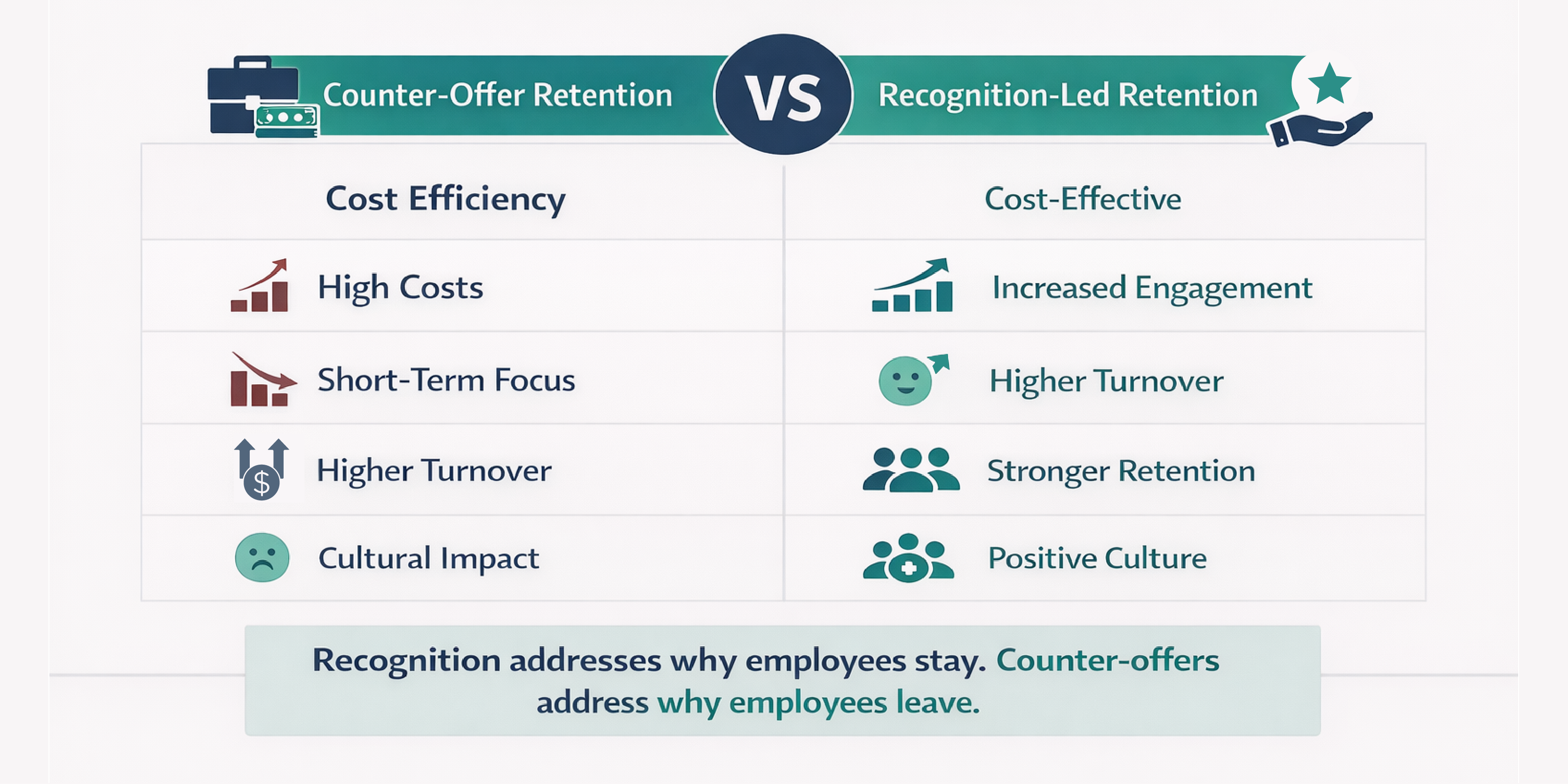
Counter-Offer vs Recognition-Led Retention
According to O.C. Tanner research, employees who feel appreciated are significantly more likely to stay with their employer, while lack of appreciation remains one of the most cited reasons for voluntary departure.
For BFSI organisations competing for experienced client-facing talent, recognition delivers a more sustainable retention strategy than reactive compensation increases.
What Actually Makes a Relationship Manager Choose to Stay
Relationship managers operate in highly competitive environments. They manage revenue targets, client portfolios, regulatory requirements, and customer expectations simultaneously.
Research from Gallup consistently shows that recognition, manager relationships, growth opportunities, and a sense of purpose strongly influence retention decisions.
The Retention Drivers That Matter Most
Feeling Valued
Relationship managers want visible acknowledgement when they acquire new business, retain key accounts, improve customer satisfaction scores, or exceed revenue goals.
Career Progression
Many employees leave not because they dislike their current role, but because they cannot see a future within the organisation.
Recognition From Leaders
Gallup research found that recognition from managers and senior leaders has the strongest impact on employee engagement and loyalty.
Peer Recognition
High-performing sales environments often focus exclusively on rankings and incentives. Peer recognition adds an important cultural dimension by highlighting collaboration, mentoring, and team success.
This is where platforms such as ApplaudIQ can help. By combining peer-to-peer recognition, manager awards, milestone celebrations, and performance-linked rewards within a single platform, organisations can create frequent recognition moments rather than relying on annual reward cycles.
For BFSI employers facing frequent hiring pressure, retention improves when employees feel recognised continuously, not only when they submit a resignation letter.
Performance-Based Recognition in BFSI: How to Tie Rewards to AUM, Policy Issuance, and Disbursement
Recognition programmes generate the greatest impact when they reinforce measurable business outcomes.
According to O.C. Tanner research, recognition tied directly to organisational goals and values produces stronger business results than generic appreciation programmes.
For BFSI organisations, this means linking recognition to metrics that relationship managers influence every day.
Example Recognition Framework
The objective is not simply to reward outcomes. Recognition should reinforce behaviours that contribute to sustainable performance.
For example:
- Acquiring high-value clients.
- Retaining strategic accounts.
- Achieving compliance benchmarks.
- Supporting team performance.
- Delivering exceptional customer experiences.
ApplaudIQ enables organisations to automate milestone-based recognition while integrating with HRMS and communication platforms. This helps managers recognise achievements in real time rather than waiting for annual performance reviews.
Research consistently shows that timely recognition drives stronger behavioural reinforcement than delayed acknowledgement.
Public Recognition in a Sales Culture: Why Leaderboards Work Differently for Financial Services
Sales recognition works differently in BFSI than in many other sectors.
Financial services organisations operate within regulated environments where risk management, customer trust, and compliance matter as much as revenue generation.
This creates an important distinction: leaderboards should reward balanced performance rather than pure sales volume.
What Effective BFSI Leaderboards Measure
- Revenue growth
- Customer retention
- Cross-selling effectiveness
- Portfolio quality
- Compliance performance
- Customer satisfaction metrics
Gallup research highlights that public recognition remains one of the most memorable forms of employee appreciation because it signals organisational value and achievement.
When designed correctly, leaderboards create several benefits:
- Increased visibility for top performers.
- Healthy competition.
- Stronger peer learning.
- Greater engagement.
- Clear performance expectations.
However, HR leaders should avoid rewarding only the highest revenue performers.
A more balanced model recognises multiple achievement categories, ensuring that employees with different strengths receive visibility.
ApplaudIQ supports this approach through leaderboards, Wall of Appreciation features, tiered recognition programmes, and peer-driven recognition mechanisms that help organisations celebrate both performance and culture-building behaviours.
In financial services environments, this balance helps sustain motivation while maintaining compliance and customer-focused outcomes.
Long-Service Awards for BFSI: Why Tenure Recognition Has Disproportionate Retention Impact
Long-tenured relationship managers hold significant institutional knowledge, customer relationships, and market expertise.
Yet many organisations underestimate the retention impact of tenure recognition.
According to O.C. Tanner research, consistent recognition can extend employee tenure and significantly improve loyalty.² Gallup also reports that recognition strengthens emotional connection to employers, reducing turnover risk.
Why Tenure Recognition Matters More in BFSI
Client Relationships Compound Over Time
Experienced relationship managers often maintain trusted customer relationships built over years.
Institutional Knowledge Is Difficult to Replace
Regulatory expertise, product knowledge, and relationship networks develop gradually.
Recognition Reinforces Identity
Milestone awards communicate that the organisation values long-term contribution, not just quarterly results.
Effective long-service programmes often recognise:
- 3-year milestones.
- 5-year milestones.
- 10-year milestones.
- Career achievement milestones.
- Leadership contributions.
- Mentorship achievements.
The most effective programmes combine symbolic recognition with meaningful rewards, personalised messages from leadership, and public acknowledgement.
For BFSI employers facing talent shortages, recognising tenure can significantly improve retention outcomes while strengthening organisational culture.
How to Build a Recognition Programme That Compliance Will Approve
Compliance concerns often slow recognition initiatives within BFSI organisations.
However, a well-designed programme can support both employee engagement and governance requirements.
Principles for Compliance-Friendly Recognition
Define Clear Eligibility Rules
Establish transparent criteria linked to performance, behaviours, values, and milestones.
Create Audit Trails
Every recognition activity should be documented and traceable.
Separate Recognition from Compensation
Recognition programmes should complement compensation structures rather than replace them.
Standardise Reward Values
Consistent reward bands help avoid fairness concerns.
Align Recognition With Business Objectives
Recognition should support customer outcomes, compliance standards, performance goals, and organisational values.
A modern recognition platform simplifies these requirements through automated workflows, approval controls, reporting, and policy governance.
HR leaders should involve compliance, finance, and business stakeholders during programme design to ensure alignment from the outset.
The result is a recognition framework that motivates employees while meeting governance expectations.
Frequently Asked Questions
What is the biggest reason relationship managers leave despite receiving counter-offers?
Most relationship managers leave because of a combination of career growth concerns, lack of recognition, leadership issues, and engagement challenges. Compensation influences decisions, but it is rarely the only factor. Counter-offers often address symptoms rather than root causes.
How does employee recognition improve relationship manager retention?
Recognition helps employees feel valued, visible, and connected to organisational goals. Gallup research shows that employees receiving high-quality recognition are substantially less likely to leave their employer. Regular recognition strengthens engagement and commitment.
How often should BFSI organisations recognise top performers?
Recognition should occur throughout the year rather than only during annual award ceremonies. Gallup recommends frequent and timely recognition to maximise engagement and behavioural reinforcement. Weekly and monthly recognition moments often outperform annual-only programmes.
Can ApplaudIQ support recognition for geographically distributed BFSI teams?
Yes. ApplaudIQ supports peer-to-peer recognition, milestone awards, automated celebrations, leaderboards, HRMS integrations, and collaboration platform integrations. This allows organisations to deliver consistent recognition across branches, regions, and countries.
Why are long-service awards important for financial services organisations?
Long-service awards reinforce loyalty, recognise institutional knowledge, and acknowledge customer relationship expertise. They also strengthen emotional commitment to the organisation and help reduce voluntary turnover among experienced employees.
Conclusion
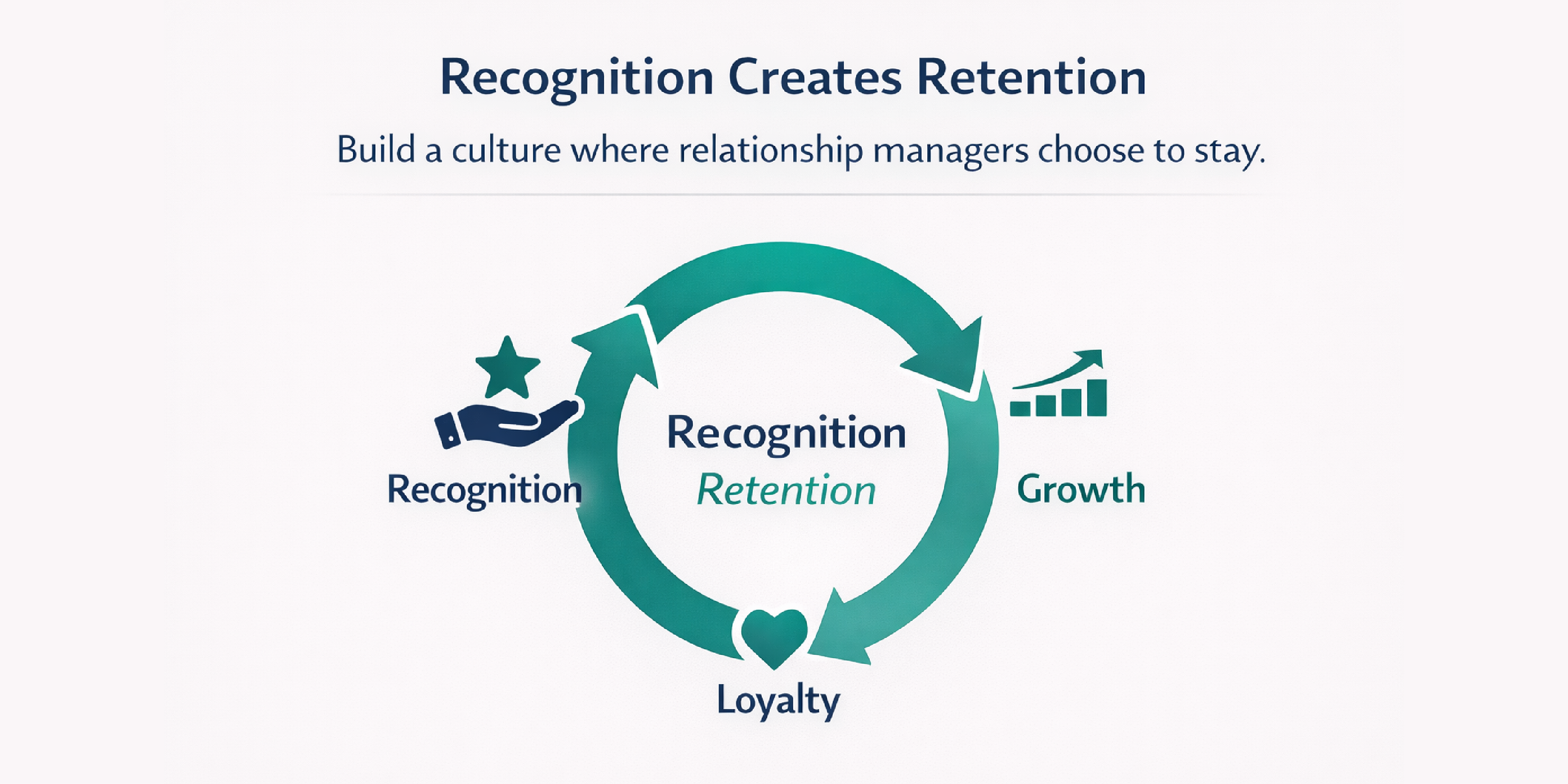
Counter-offers may delay resignations, but they rarely create lasting commitment. Relationship managers stay when organisations recognise their contribution, celebrate achievements, support growth, and reinforce a sense of value.
As competition for BFSI talent continues to intensify, recognition will become an increasingly important retention strategy. Organisations that build structured, measurable, and compliance-friendly recognition programmes will be better positioned to retain revenue-critical employees and strengthen long-term performance.
See how ApplaudIQ helps BFSI companies retain revenue-critical relationship managers through meaningful recognition, milestone rewards, and performance-driven engagement.
Sign up for our newsletter for trending top content!


