
How Automotive Brands Can Use Loyalty Programmes to Turn Vehicle Owners Into Lifelong Service Customers

Sign up for our newsletter for trending top content!
Introduction
Vehicle sales create the customer relationship. Aftersales service determines how valuable that relationship becomes.
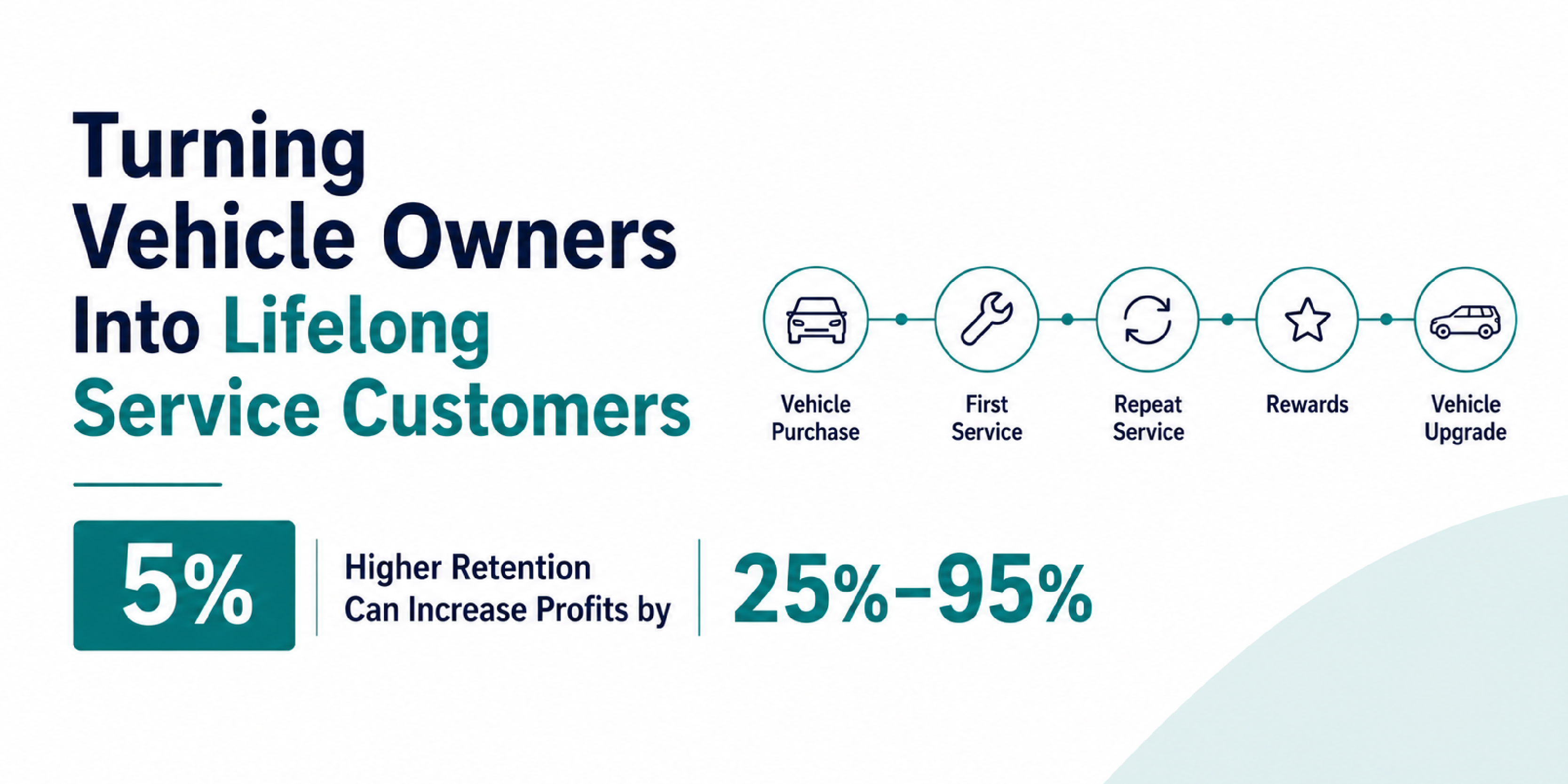
According to Bain & Company, increasing customer retention by just 5% can increase profits by between 25% and 95%. For automotive brands, that statistic highlights a major opportunity. Most marketing budgets focus heavily on acquisition and vehicle sales, while service retention receives far less attention. Yet recurring servicing, maintenance, accessories, upgrades, and eventual vehicle replacement purchases often generate significantly greater lifetime value than the original transaction.
The challenge is simple. Once a customer drives away from the dealership, engagement often drops sharply. Independent workshops, competing dealerships, and changing ownership behaviours create multiple opportunities for customer churn.
This article explores how automotive brands can use loyalty programmes to increase authorised service centre revisits, strengthen customer relationships throughout ownership, and improve long term customer lifetime value. Marketing leaders will learn how to structure loyalty mechanics, measure success, and build engagement strategies that keep customers returning year after year.
The Post-Sale Engagement Gap: Why Most Automotive Brands Lose Customers After Delivery
Many automotive organisations still operate as though the customer journey ends at vehicle delivery. In reality, delivery marks the beginning of the most profitable phase of the relationship.
McKinsey research highlights that personalised customer engagement can increase conversion rates by approximately 20%, while stronger aftersales experiences directly improve customer retention and lifetime value. Automotive dealers that proactively engage customers around maintenance and servicing create significantly more opportunities for repeat revenue.
The problem is that post-sale communication often becomes reactive rather than proactive. Customers hear from the brand only when a service reminder becomes overdue.
Several factors contribute to service attrition:
- Lack of ongoing engagement after delivery
- No rewards for service visits
- Poor visibility into maintenance milestones
- Limited differentiation between authorised and independent service providers
- Generic communications that ignore ownership behaviour
Research published in automotive service loyalty studies consistently shows that service quality, customer satisfaction, and loyalty remain strongly connected within automotive servicing environments.
A well-designed loyalty programme closes this engagement gap by creating reasons for customers to interact regularly with the brand. Instead of contacting customers only when maintenance becomes necessary, brands can build ongoing participation through rewards, status progression, challenges, and personalised offers.
This transforms service visits from transactional necessities into relationship-building moments.
How to Structure Loyalty Rewards Across the Full Vehicle Ownership Lifecycle
The most successful automotive loyalty programmes recognise that customer needs evolve throughout ownership.
A first-year vehicle owner behaves very differently from a customer entering year five of ownership. Loyalty design should reflect those changing motivations.
Stage 1: Onboarding and Early Ownership
The first 12 months should focus on habit formation.
Reward opportunities may include:
- First service completion
- Digital profile completion
- App registration
- Referral participation
- Vehicle health check attendance
Stage 2: Active Ownership
Customers in years two to five typically generate recurring service revenue.
Reward opportunities include:
- Scheduled maintenance visits
- Parts purchases
- Accessory purchases
- Vehicle inspections
- Service package renewals
Stage 3: Renewal and Replacement
As ownership matures, loyalty should support vehicle upgrade consideration.
Examples include:
- Trade-in consultations
- Test drive participation
- Vehicle exchange evaluations
- Extended warranty renewals
McKinsey research found that top-performing loyalty programmes can increase annual customer revenue by 15% to 25% among active programme participants.
This is where platforms such as Rekyndl become particularly valuable. Marketing teams can automate lifecycle journeys, create segmented campaigns based on ownership stage, and trigger rewards automatically when customers complete defined milestones.
Instead of managing dozens of disconnected campaigns, brands can build a structured ownership journey that evolves alongside the customer.
Service Loyalty vs Accessories Loyalty: Designing Earning Rules for Each Revenue Stream
Not all automotive revenue streams require identical loyalty mechanics.
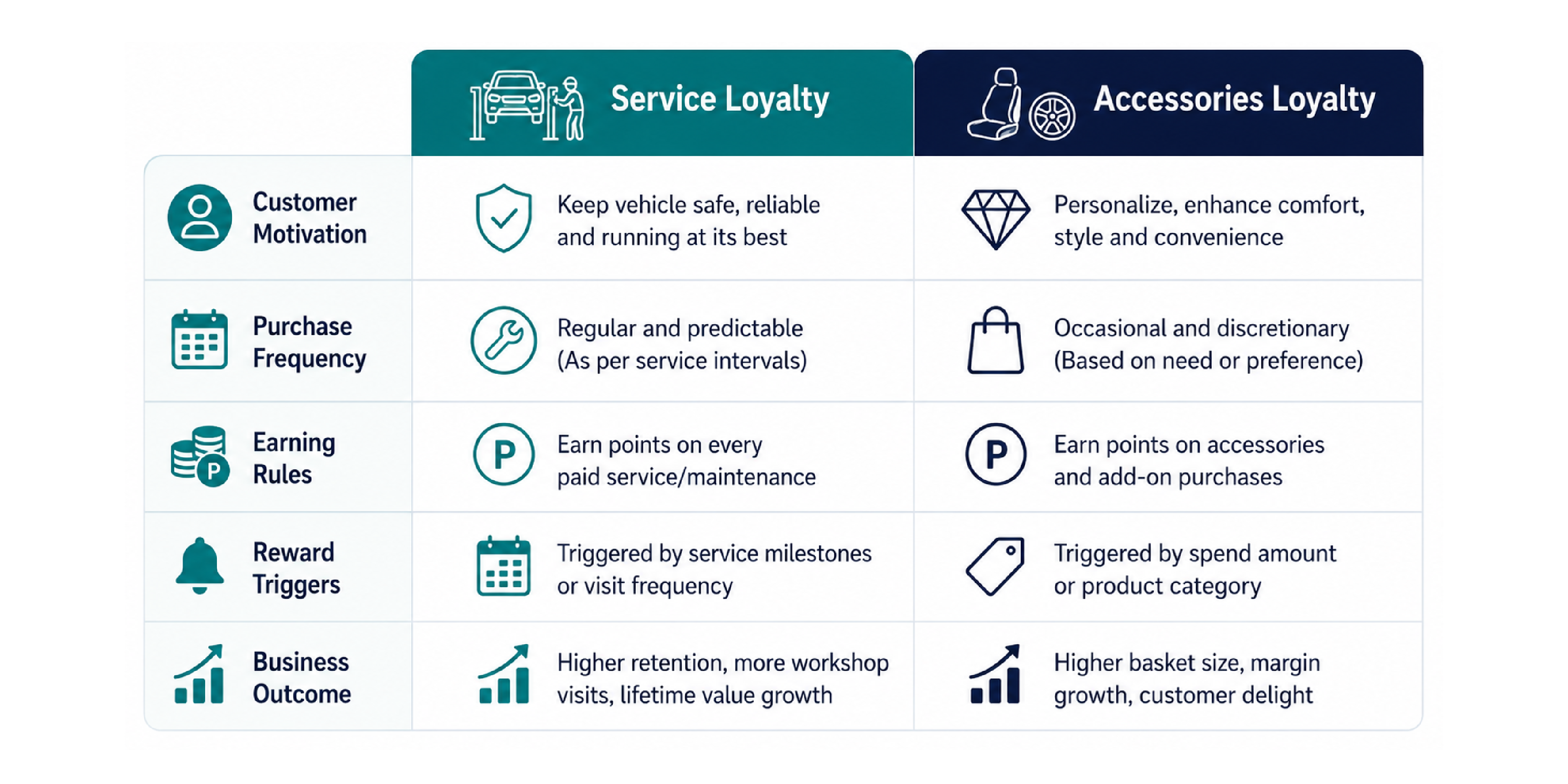
Service revenue and accessory revenue involve different purchase behaviours, purchase frequencies, and customer motivations.
The loyalty structure should reflect those differences.
Service Loyalty Framework
Service loyalty should prioritise consistency.
Reward:
- On-time service visits
- Consecutive maintenance appointments
- Multi-year service retention
- Service package renewals
Accessories Loyalty Framework
Accessories purchasing responds better to promotional campaigns.
Reward:
- Seasonal purchases
- Category exploration
- Bundle purchases
- Limited-time campaigns
According to Bain & Company, even modest improvements in retention generate substantial profitability gains over time. A carefully structured earning model encourages customers to remain within the authorised ecosystem rather than shifting spending elsewhere.
Marketing leaders should avoid a one-size-fits-all rewards structure. Different revenue streams require different behavioural incentives.
Gamification in Automotive Loyalty: How QR Codes and Milestone Badges Change Service Revisit Rates
Customers rarely think about vehicle servicing as an engaging activity.
Gamification changes that perception.
Rather than relying solely on points accumulation, brands can introduce achievement-based participation that encourages repeat interaction.
Popular automotive gamification mechanics include:
- Service streak badges
- Vehicle health milestones
- Seasonal maintenance challenges
- QR code check-ins
- Referral achievements
- Tier progression systems
Behavioural research from Gartner consistently shows that gamification increases participation by making progress visible and measurable. When customers can track achievements, they become more likely to continue participating in the experience.
For automotive brands, QR code engagement creates a particularly effective opportunity. Customers can scan codes during service visits, inspections, events, or showroom experiences to unlock rewards and badges.
Rekyndl supports this type of engagement through QR-based activities, badges, automated journeys, and loyalty progression mechanics. Rather than treating servicing as a routine obligation, brands can create a sense of advancement throughout ownership.
McKinsey's customer experience research highlights that organisations which personalise engagement and create customer-centric experiences improve retention outcomes and strengthen loyalty.
The objective is not entertainment.
The objective is behavioural reinforcement.
Every completed milestone creates another reason for the customer to return.
How to Re-engage Customers Who Have Not Visited Your Authorised Service Centre in 12 Months
A customer who has not visited an authorised service centre in 12 months presents a high churn risk.
Many automotive brands treat these customers as lost. High-performing loyalty programmes treat them as reactivation opportunities.
Step 1: Identify Lapsed Behaviour
Segment customers based on:
- Last service date
- Vehicle age
- Service history
- Ownership tenure
- Loyalty activity
Step 2: Create Targeted Win-Back Journeys
Avoid generic reminders.
Instead, personalise communication around:
- Vehicle maintenance needs
- Upcoming ownership milestones
- Loyalty status preservation
- Expiring benefits
Step 3: Introduce Limited-Time Incentives
Examples include:
- Double points campaigns
- Bonus status credits
- Complimentary inspections
- Exclusive member events
Step 4: Automate Follow-Up Sequences
Customers often require multiple interactions before re-engaging.
Automated journeys ensure consistent communication without increasing marketing workload.
McKinsey research on automotive customer experience shows that digital aftersales engagement can increase participation in service-related activities and improve customer responsiveness.
The key principle is timing.
The longer a customer remains disengaged, the lower the probability of recovery. Loyalty data allows marketing teams to intervene before churn becomes permanent.
Measuring Loyalty ROI for Automotive: RevPAV, Repeat Service Rate, and Next-Vehicle Purchase Probability
Marketing leaders need measurable business outcomes, not loyalty activity metrics.
The strongest automotive loyalty programmes focus on revenue and retention indicators.
Core Loyalty KPIs
1. RevPAV (Revenue Per Active Vehicle)
Measures average revenue generated from actively engaged vehicles.
Formula:
Revenue ÷ Active Loyalty Vehicles
2. Repeat Service Rate
Percentage of customers returning for scheduled maintenance.
Formula:
Returning Service Customers ÷ Total Service Customers
3. Service Retention Rate
Tracks the percentage of customers remaining within authorised servicing channels.
4. Loyalty Participation Rate
Percentage of owners actively earning or redeeming rewards.
5. Next-Vehicle Purchase Probability
Measures the likelihood that existing owners will purchase another vehicle from the same brand.
According to Bain & Company, retention improvements compound over time because loyal customers spend more, purchase more frequently, and remain engaged longer.
McKinsey research further shows that effective loyalty programmes can increase customer revenue by 15% to 25% annually among engaged members.
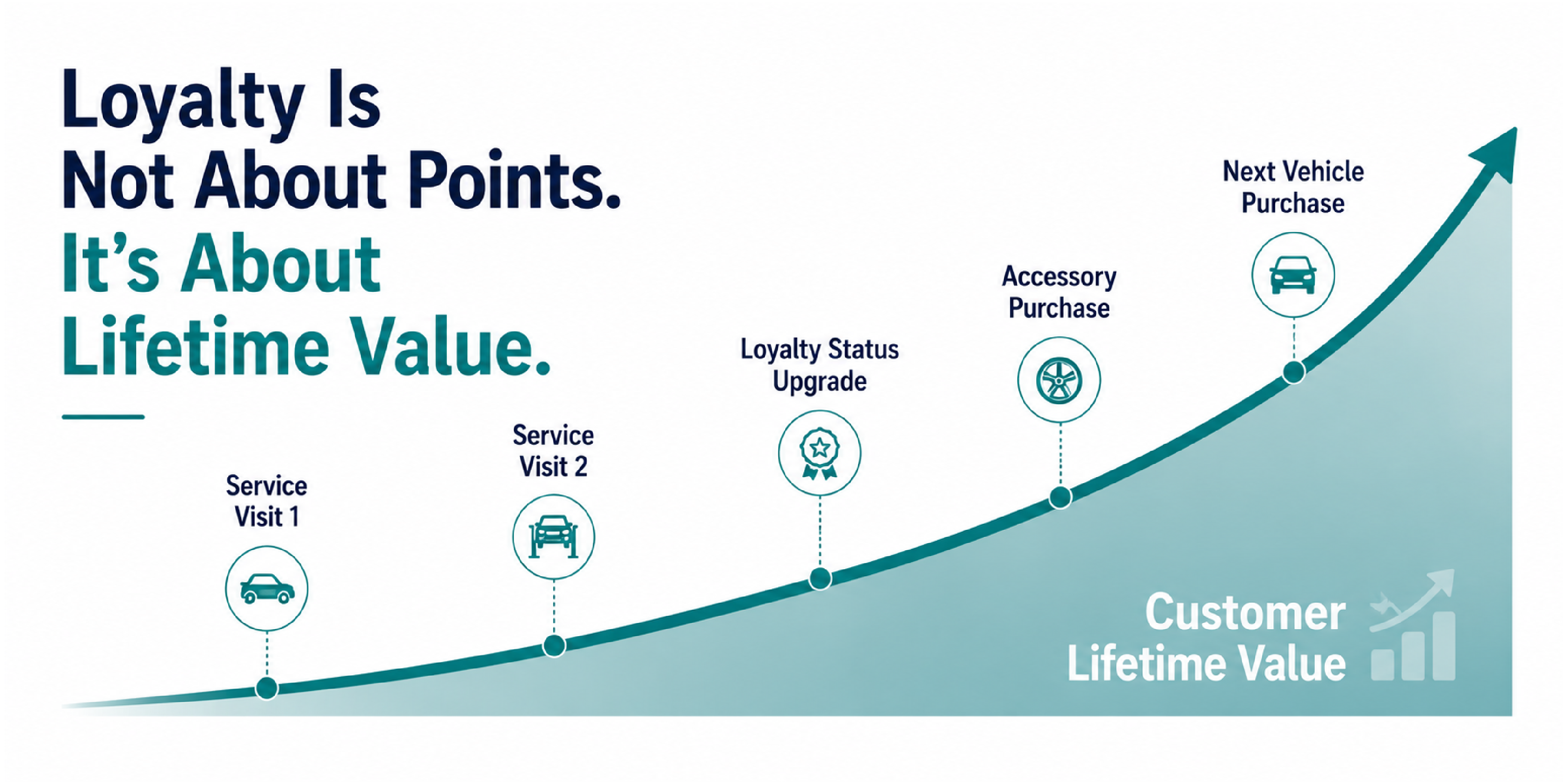
For marketing leaders, these metrics provide a direct connection between loyalty activity and commercial outcomes. Loyalty should never be measured solely by points issued or rewards redeemed. It should be measured by increased customer lifetime value.
Frequently Asked Questions
What is an automotive customer loyalty programme?
An automotive customer loyalty programme rewards customers for behaviours that strengthen their relationship with the brand. These behaviours may include service visits, accessory purchases, referrals, maintenance compliance, and engagement with brand experiences. The objective is to increase retention, service revenue, and customer lifetime value.
How do loyalty programmes increase service revisit rates?
Loyalty programmes create additional reasons for customers to return to authorised service centres. Points, status levels, milestone rewards, and personalised offers reinforce desired behaviours and encourage customers to maintain an ongoing relationship with the brand.
Why are service customers more valuable than one-time vehicle buyers?
Vehicle ownership creates multiple recurring revenue opportunities. Scheduled maintenance, repairs, accessories, service packages, warranties, and eventual vehicle replacement purchases all contribute to long term customer value. Retaining service customers therefore increases overall profitability.
How does Rekyndl support automotive loyalty programmes?
Rekyndl helps automotive brands design and automate loyalty programmes across the ownership lifecycle. It includes customer segmentation, automated customer journeys, gamification features, QR code engagement, reward management, and redemption capabilities that support both service retention and long term loyalty growth.
When should automotive brands launch a loyalty programme?
The ideal time is immediately after vehicle delivery. Early engagement helps establish service habits and strengthens brand relationships before customers begin exploring alternative service providers.
Conclusion
The most valuable automotive customers are not necessarily those who buy the most vehicles. They are the customers who remain engaged throughout the entire ownership journey.
A well-designed loyalty programme creates structured reasons for customers to return for servicing, accessories, upgrades, and future purchases. As customer expectations become increasingly personalised and data driven, loyalty programmes will play an even greater role in automotive growth strategies.
Brands that invest in post-sale engagement today will be better positioned to maximise customer lifetime value tomorrow.
See how Rekyndl builds post-sale loyalty for automotive brands and increases authorised service centre revisits.
Sign up for our newsletter for trending top content!


