
How Incentive Platforms Handle Complex Multi Variable Calculations at Scale

Sign up for our newsletter for trending top content!
Modern incentive programmes are no longer based on a single target or flat reward structure.
Businesses now reward performance across multiple variables such as sales volume, transaction value, product mix, customer retention, partner engagement and regional growth. Managing these calculations manually becomes difficult, time consuming and error prone at scale.
This is where incentive platforms play a critical role. They automate complex calculations, apply layered business rules instantly and ensure every participant receives accurate rewards based on performance.
What Are Multi Variable Incentive Structures?
A multi variable incentive structure rewards users based on more than one performance factor. Instead of rewarding only sales quantity, organisations combine several metrics to drive strategic business outcomes.
Common variables include:
- Sales volume
- Revenue value
- Product category mix
- Profit margins
- Customer acquisition
- Renewal rates
- Regional targets
- Seasonal campaigns
- Channel partner performance
- Behavioural engagement
These variables work together to create smarter incentive programmes that encourage the right business behaviour.
Why Businesses Use Multi Variable Incentives
Single metric incentives often create imbalance. For example, rewarding only high sales volume may encourage discounting or low margin selling.
Multi variable structures help businesses:
- Increase profitability
- Promote premium products
- Improve customer loyalty
- Encourage balanced sales behaviour
- Support strategic product launches
- Reward long term engagement
- Drive channel performance fairly
This creates a more sustainable and measurable rewards ecosystem.
Example of a Simple Incentive Structure
A company may reward sales representatives using the following structure:
In this structure, incentives depend on multiple conditions being achieved together.
Understanding Layered Incentive Calculations
Layered incentives are more advanced because they apply multiple calculation rules simultaneously.
For example:
A distributor incentive programme may include:
- Base reward for achieving monthly volume target.
- Additional multiplier for selling high margin products.
- Accelerator bonus for exceeding quarterly targets.
- Regional growth incentives.
- Seasonal campaign rewards.
- Penalties for delayed reporting compliance.
Each layer affects the final reward outcome.
Without automation, calculating these incentives across thousands of participants becomes extremely complex.
Real World Example of Multi Variable Incentive Logic
Consider a technology brand running a channel partner incentive programme.
The programme includes:
- 5 points per laptop sold.
- Double points for premium models.
- Extra bonus after 100 units sold monthly.
- Additional rewards for selling accessories alongside devices.
- Quarterly multiplier for partners in emerging markets.
A partner selling:
- 120 premium laptops
- 80 accessories
- Operating in a high growth region
would receive:
- Base points
- Product mix bonus
- Volume accelerator
- Regional multiplier
- Bundle selling reward
All calculations must happen instantly and accurately.
An advanced incentive platform processes these calculations automatically without manual intervention.
Challenges of Manual Incentive Calculations
Managing complex incentives manually creates several operational risks.
Calculation Errors
Spreadsheet based systems often lead to incorrect payouts and disputes.
Delayed Reward Distribution
Manual validation slows down incentive fulfilment and impacts motivation.
Lack of Transparency
Participants struggle to understand how rewards are calculated.
Scalability Issues
As programmes expand across products, regions and partners, calculations become unmanageable.
Compliance Risks
Inconsistent calculations create financial and audit concerns.
How Incentive Platforms Simplify Complex Incentive Logic
Modern incentive platforms automate every stage of the incentive lifecycle.
Rule Based Automation
Platforms allow businesses to configure rules using predefined logic engines.
Examples include:
- If sales exceed target, apply bonus multiplier.
- If premium product mix exceeds threshold, add extra points.
- If customer retention falls below benchmark, reduce payout.
The system executes these rules instantly.
Real Time Calculation Engines
Advanced platforms calculate incentives dynamically as transactions occur.
This enables:
- Live dashboards
- Instant reward visibility
- Faster engagement
- Improved participant trust
Scalable Data Processing
Enterprise incentive platforms process millions of transactions simultaneously.
They integrate with:
- CRM systems
- ERP platforms
- Sales databases
- Loyalty engines
- Payment systems
This ensures accurate and centralised reward management.
Flexible Incentive Configuration
Businesses can easily launch new campaigns without rebuilding the entire programme.
Teams can configure:
- Tiered rewards
- Product specific bonuses
- Seasonal multipliers
- Geographic incentives
- Behaviour based campaigns
This flexibility supports evolving business strategies.
Transparent Reporting
Participants gain access to clear dashboards showing:
- Earned rewards
- Performance metrics
- Target progress
- Bonus eligibility
- Historical transactions
Transparency improves trust and programme participation.
Why Automation Matters at Scale
Large organisations often manage:
- Thousands of employees
- Multiple channel partners
- Millions of transactions
- Hundreds of product categories
- Global reward programmes
Manual calculations simply cannot support this level of operational complexity.
Automated incentive platforms provide:
- Faster processing
- Reduced administrative workload
- Accurate reward distribution
- Better audit readiness
- Improved programme performance
This allows businesses to focus on growth rather than operational bottlenecks.
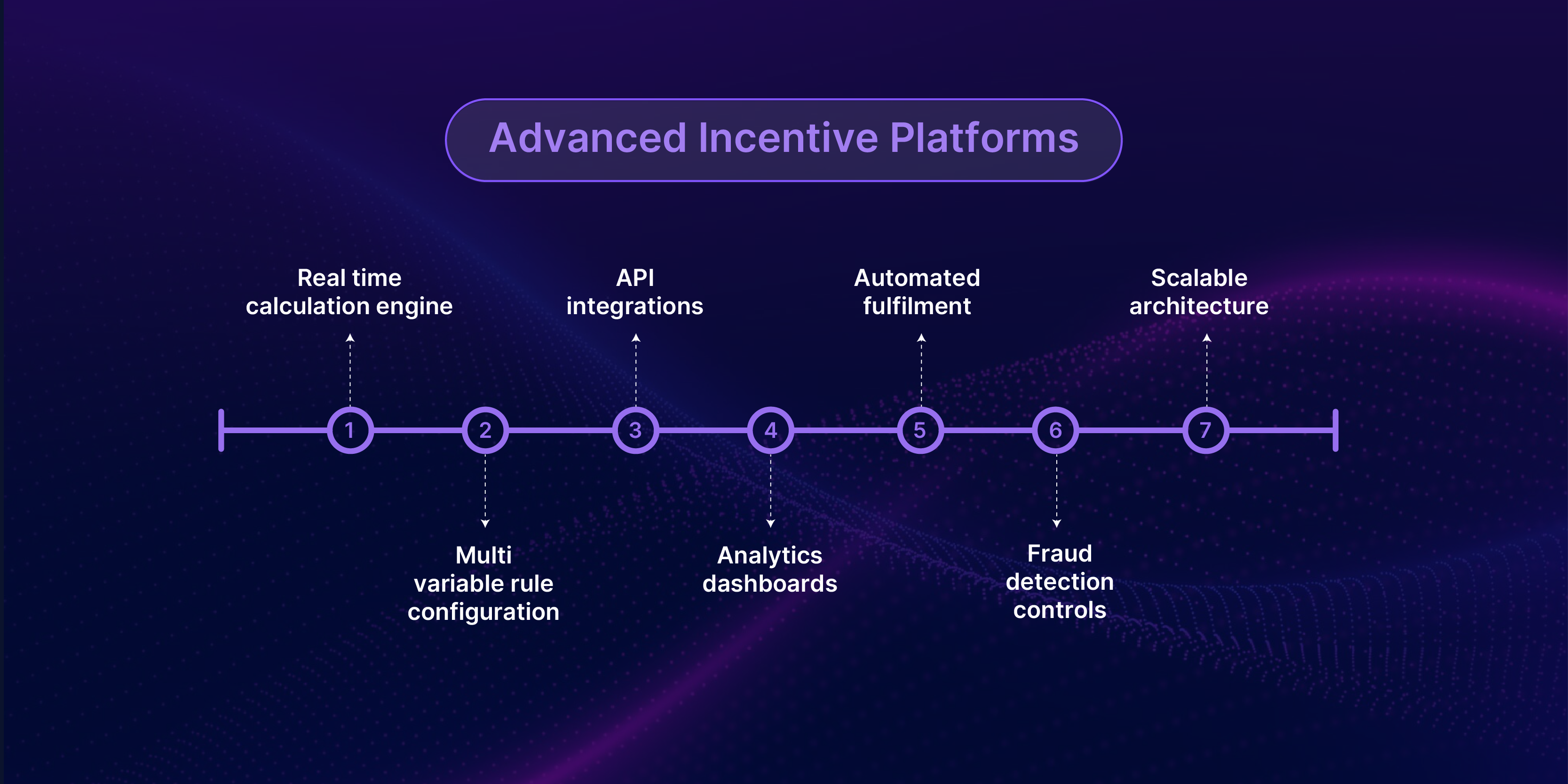
Key Features of Advanced Incentive Platforms
Businesses evaluating incentive technology should look for:
The Future of Incentive Calculation Platforms
Modern platforms are increasingly using artificial intelligence and predictive analytics to optimise incentive structures.
Future capabilities may include:
- Predictive reward recommendations
- Behaviour driven incentive adjustments
- Automated campaign optimisation
- Personalised reward experiences
- Real time engagement scoring
As incentive ecosystems become more data driven, intelligent automation will become essential.
Final Thoughts
Complex incentive programmes are now central to modern sales, channel and loyalty strategies. Businesses need to reward not only volume, but also profitability, product mix, engagement quality and long term performance.
Managing these variables manually creates inefficiency and risk.
Modern incentive platforms simplify this complexity through automation, real time calculations and scalable rule engines. They enable organisations to design smarter reward programmes, improve participant trust and drive measurable business outcomes at scale.
For businesses looking to build high performing incentive ecosystems, automation is no longer optional. It is a strategic necessity.
Frequently Asked Questions
What is a multi variable incentive programme?
A multi variable incentive programme rewards participants based on multiple performance factors such as sales volume, revenue, product mix and customer retention.
Why are layered incentive calculations important?
Layered calculations help businesses reward strategic behaviour rather than focusing on a single performance metric.
How do incentive platforms automate calculations?
Incentive platforms use rule based engines and real time data processing to calculate rewards automatically across multiple variables.
What are the benefits of automated incentive platforms?
Benefits include improved accuracy, scalability, transparency, faster reward processing and reduced administrative workload.
Which industries use complex incentive platforms?
Industries including retail, banking, technology, telecommunications, manufacturing and automotive commonly use advanced incentive platforms.
Sign up for our newsletter for trending top content!


