
How Loyalty Programmes Use Identity Resolution to Track Customers Across Channels

Sign up for our newsletter for trending top content!
Identity Resolution Helps Loyalty Programmes Understand Customers Better
Modern customers interact with brands through websites, mobile apps, physical stores, emails, social media, and customer support channels. Loyalty programmes must recognise the same customer across all these touchpoints to deliver accurate rewards, personalised experiences, and consistent engagement.
This process is called identity resolution.
Identity resolution connects customer data from multiple sources and creates one unified customer profile. It helps brands understand who the customer is, how they interact with the business, and what actions they take across different devices and channels.
For loyalty programmes, identity resolution is essential because it improves customer tracking, increases engagement accuracy, and supports better reward delivery.
What Is Identity Resolution in Loyalty Programmes?
Identity resolution is the process of matching and merging customer information from multiple systems into a single identity profile.
A loyalty programme may collect data from:
- Mobile applications
- Websites
- In store purchases
- Credit card transactions
- Email campaigns
- Customer service interactions
- QR code scans
- Social media engagement
Without identity resolution, these interactions remain disconnected. A business may treat the same person as multiple customers because they used different devices, email addresses, or shopping channels.
Identity resolution solves this issue by linking those activities together.
Simple Definition
Identity resolution helps loyalty programmes recognise the same customer across channels, devices, and platforms.
Why Identity Resolution Matters in Loyalty Programmes
Modern loyalty ecosystems depend on accurate customer understanding. Customers expect brands to remember preferences, track rewards correctly, and provide seamless experiences.
Identity resolution helps businesses achieve this.
Key Benefits of Identity Resolution
1. Unified Customer View
Brands gain a complete understanding of customer behaviour.
Instead of separate records from different systems, businesses create one central profile containing:
- Purchase history
- Reward activity
- Preferred channels
- Device usage
- Engagement frequency
- Redemption behaviour
This improves decision making and campaign targeting.
2. Better Reward Tracking
Customers often interact across multiple channels before completing a transaction.
For example:
- A customer views an offer on a mobile app.
- Later, they purchase through a desktop website.
- They redeem loyalty points in a physical store.
Identity resolution connects all these actions to one customer account. This ensures rewards are tracked accurately.
3. Personalised Customer Experiences
Unified identity allows loyalty programmes to personalise communication and offers.
Businesses can recommend:
- Relevant rewards
- Preferred redemption options
- Location based offers
- Product suggestions
- Financial products based on behaviour
This increases engagement and customer satisfaction.
4. Improved Fraud Detection
In BFSI and financial loyalty programmes, identity resolution helps identify suspicious activity across channels.
For example:
- Multiple accounts linked to one device
- Unusual redemption patterns
- Duplicate reward claims
- Cross channel transaction inconsistencies
This strengthens programme security and reduces fraud risks.
How Identity Resolution Works
Identity resolution combines customer information using identifiers.
These identifiers may include:
The system analyses these identifiers and determines whether activities belong to the same person.
Two Common Identity Resolution Methods
Deterministic Matching
This method uses exact matches.
For example:
- Same email address
- Same phone number
- Same loyalty ID
This approach is highly accurate.
Probabilistic Matching
This method uses behavioural and contextual signals.
For example:
- Similar browsing patterns
- Shared devices
- Location data
- Purchase timing
Artificial intelligence and machine learning often support probabilistic matching.
How Loyalty Programmes Track Customers Across Channels
Website to Mobile App Tracking
A customer may browse products on a website and later complete a purchase through a mobile app.
Identity resolution connects these activities to:
- Maintain reward continuity
- Track customer preferences
- Trigger personalised offers
This prevents fragmented customer records.
Online to Offline Tracking
Many loyalty programmes connect digital and physical experiences.
For example:
- A customer receives a digital coupon by email.
- They redeem it in a retail store.
- The purchase updates loyalty points instantly.
Identity resolution links the in store transaction with the digital campaign.
Device Based Tracking
Customers often switch between devices during the buying journey.
A user may:
- Research products on a laptop
- Compare prices on a smartphone
- Complete payment through a banking app
Identity resolution ensures these interactions remain connected under one profile.
Identity Resolution in BFSI Loyalty Programmes
The BFSI sector relies heavily on unified identity systems because customers interact across many financial channels.
Banking Loyalty Example
A bank customer may:
- Use internet banking
- Make card payments
- Access a mobile banking app
- Redeem credit card reward points
- Visit a branch office
Identity resolution connects all these interactions into one customer profile.
This helps banks:
- Offer relevant financial products
- Track reward eligibility accurately
- Improve fraud prevention
- Deliver personalised communication
Credit Card Rewards Ecosystems
Credit card loyalty programmes use identity resolution to track:
- Spending categories
- Merchant partnerships
- Travel bookings
- Cashback usage
- Reward redemptions
For example, a customer may earn points through:
- Airline bookings
- Fuel purchases
- E commerce transactions
- Dining partnerships
Unified identity ensures all rewards are credited correctly regardless of channel.
Identity Resolution in Digital Platforms
Digital platforms use identity resolution extensively to improve customer engagement and retention.
Streaming Platforms
Streaming services track users across:
- Smart televisions
- Mobile devices
- Tablets
- Web browsers
Identity resolution helps these platforms:
- Continue viewing history
- Recommend content
- Track subscriptions
- Personalise offers
E Commerce Platforms
E commerce loyalty programmes monitor:
- Browsing behaviour
- Cart activity
- Purchase history
- App engagement
- Coupon redemption
Unified identity allows platforms to create targeted loyalty campaigns based on complete customer behaviour.
Challenges in Identity Resolution
Although identity resolution improves loyalty programme performance, businesses must address several challenges.
Data Privacy and Compliance
Businesses must follow regulations related to customer consent and data protection.
Clear privacy policies and secure data handling are essential.
Data Silos
Customer data often exists in disconnected systems.
Businesses must integrate:
- CRM systems
- Payment platforms
- Loyalty engines
- Mobile applications
- Customer support tools
Accuracy Issues
Incorrect identity matching may create duplicate profiles or inaccurate rewards.
Strong data governance is important for maintaining quality.
How Unified Identity Improves Loyalty Strategy
A unified customer identity creates stronger loyalty ecosystems.
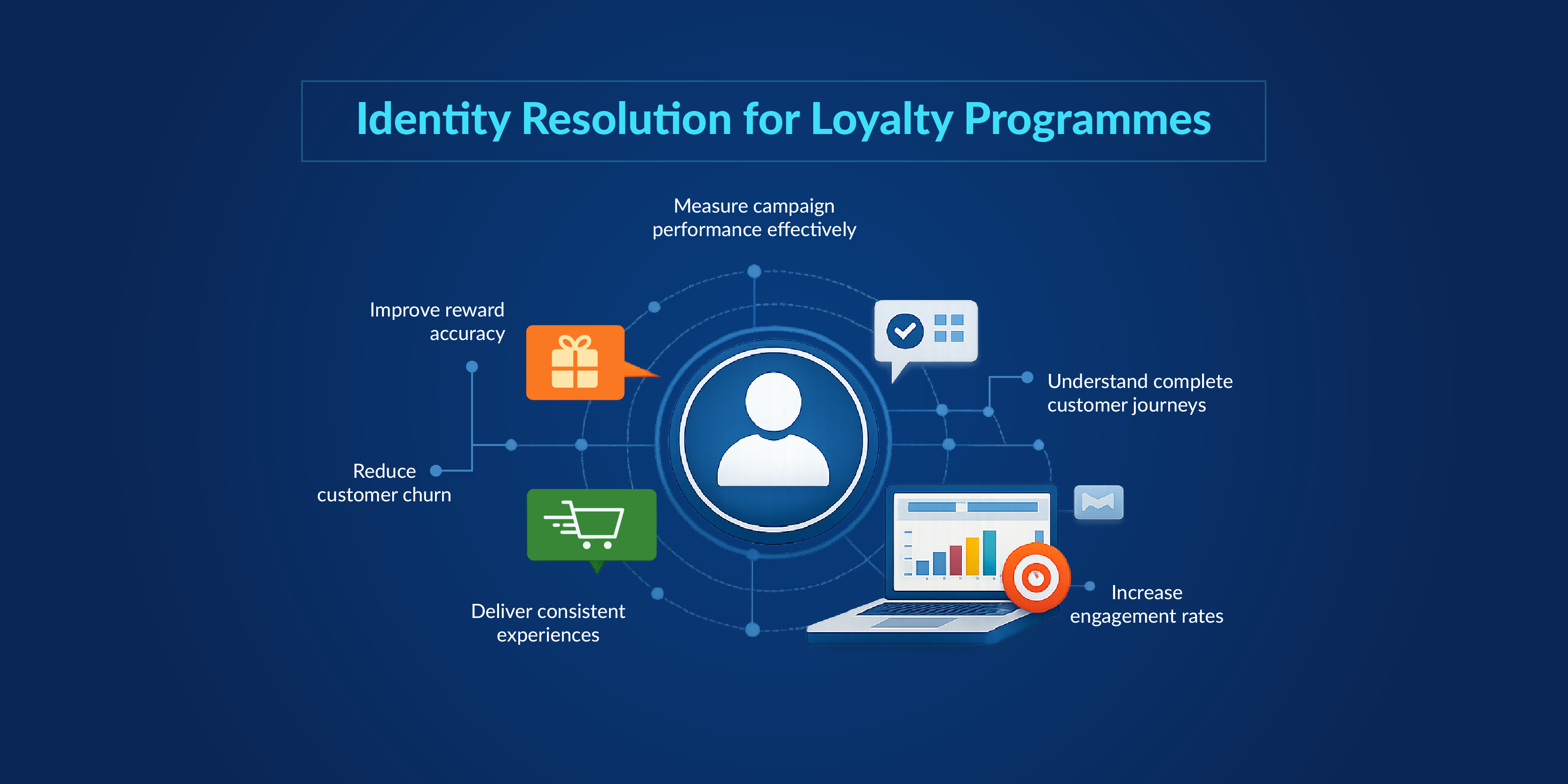
Businesses can:
- Understand complete customer journeys
- Improve reward accuracy
- Increase engagement rates
- Reduce customer churn
- Deliver consistent experiences
- Measure campaign performance effectively
Most importantly, customers experience smoother and more personalised interactions.
The Future of Identity Resolution in Loyalty Programmes
Identity resolution will become more advanced as loyalty programmes expand across digital ecosystems.
Emerging trends include:
- AI driven identity matching
- Real time customer profile updates
- Cross partner loyalty ecosystems
- Privacy focused identity frameworks
- Predictive personalisation
As customers continue using multiple devices and channels, unified identity will remain central to loyalty programme success.
Frequently Asked Questions
What is identity resolution in loyalty programmes?
Identity resolution is the process of connecting customer data from different channels and devices into one unified profile.
Why is identity resolution important for loyalty programmes?
It helps businesses track customer activity accurately, personalise rewards, improve engagement, and reduce duplicate records.
How do loyalty programmes track customers across channels?
They use identifiers such as email addresses, phone numbers, loyalty IDs, cookies, and device data to connect customer interactions.
How does identity resolution help BFSI loyalty programmes?
It allows banks and financial institutions to connect transactions, app usage, reward activity, and customer engagement across multiple platforms.
What are the benefits of unified customer identity?
Unified identity improves customer tracking, reward accuracy, personalisation, fraud prevention, and customer experience consistency.
Final Thoughts
Identity resolution has become a foundational capability for modern loyalty programmes. Customers no longer interact with brands through a single channel.
They move between apps, websites, stores, devices, and payment platforms throughout their journey.
Without unified identity, loyalty programmes cannot accurately track behaviour or deliver meaningful engagement.
By connecting customer activity across channels, businesses create more intelligent, personalised, and effective loyalty experiences.
In sectors such as BFSI and digital commerce, identity resolution is no longer optional. It is essential for building scalable and customer centric loyalty ecosystems.
Sign up for our newsletter for trending top content!


