
Corporate Gifting Is Not a Cost Centre: How to Measure the Business ROI of a Gifting Programme

Sign up for our newsletter for trending top content!
Introduction
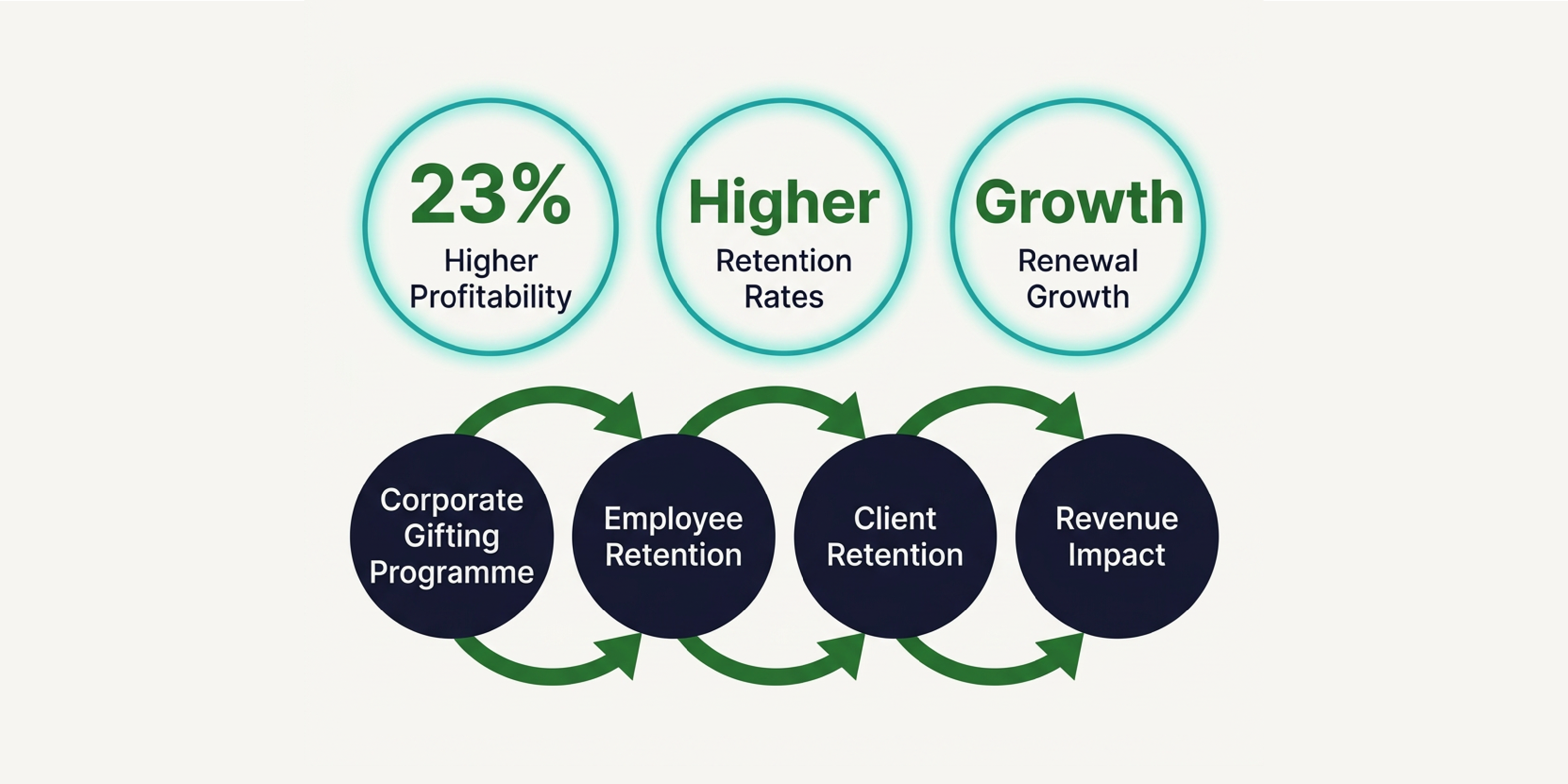
Employee recognition does not only affect morale. It affects financial performance. Research from Gallup found that organisations with highly engaged teams report 23 percent higher profitability and 18 percent higher productivity than those with low engagement levels. Recognition remains one of the strongest drivers of engagement, retention and discretionary effort.
Yet many organisations still treat corporate gifting as an untracked expense line. Budgets move into onboarding packs, festive hampers, client gifts and milestone rewards without clear measurement frameworks. As a result, CXOs struggle to defend spend during budget reviews because gifting rarely connects to retention, revenue or customer outcomes.
This creates a strategic gap. Poorly structured gifting programmes become cost centres. Well designed programmes become measurable investments that improve employee retention, strengthen client relationships and increase lifetime value. This article explains how CXOs can build that business case and measure the commercial return from corporate gifting programmes.
Why Most Businesses Cannot Justify Their Gifting Spend and Why That Is a Problem
Many organisations allocate corporate gifting budgets across employee rewards, festive programmes and client appreciation without assigning ownership metrics. Finance teams then view gifting as discretionary spending because nobody links expenditure to measurable outcomes.
This becomes expensive when turnover rises. According to SHRM, replacing an employee often costs between six and nine months of their salary when recruitment, onboarding and lost productivity enter the equation. If gifting supports retention but organisations fail to measure it, they miss the financial value entirely.
The same issue appears in customer relationships. Research from Gartner consistently shows that retaining customers costs significantly less than acquiring new ones. Yet many client gifting programmes remain disconnected from renewal, account growth or advocacy metrics.
The hidden cost of unmeasured gifting
Organisations that continue measuring gifting only by spend create risk. Leadership teams increasingly expect every investment category to show impact. Corporate gifting cannot remain exempt.
This is where structured services such as The Reward Store’s Physical Gifting programme become relevant. Custom branded hampers, premium tech accessories, wellness hampers and eco-friendly stationery programmes work best when mapped against measurable business events rather than isolated occasions.
The Three Business Outcomes That Corporate Gifting Directly Influences
Corporate gifting creates measurable value when organisations align it with three outcomes: employee retention, customer retention and brand equity.
1. Employee retention and engagement
Research from O.C. Tanner found that employees who receive meaningful recognition are significantly less likely to leave their organisation. Recognition also improves belonging and performance.
Physical gifting supports this by turning milestone moments into memorable experiences. Employee onboarding kits, work anniversary gifts and recognition hampers create emotional reinforcement beyond transactional rewards.
2. Customer retention and expansion
According to Aberdeen Group, customer retention improvements directly influence profitability because repeat relationships drive higher lifetime value and lower acquisition costs.
Client gifting programmes strengthen this dynamic during onboarding, renewal discussions and strategic milestones. Premium lifestyle products, branded gift boxes and personalised messaging create relationship depth that digital communication alone cannot achieve.
3. Brand advocacy and employer reputation
Research from Edelman repeatedly shows trust strongly influences purchasing and employer decisions. Recognition experiences influence how employees and clients perceive organisational culture.
The Reward Store’s Physical Gifting service supports this through fully customised gifting experiences including branded packaging, personalised greeting cards, QR linked video messages and sustainable gifting formats. The result is not merely gift delivery. It is controlled brand experience design.
For CXOs, these outcomes convert gifting from activity metrics into strategic business indicators.
How to Assign Measurable Value to Employee Retention Gifting
Employee gifting often fails because organisations stop at participation rates. The better approach measures impact against retention economics.
According to Deloitte, employee experience strongly affects retention and productivity outcomes. Recognition programmes form part of that experience.
Step framework for employee gifting ROI
Step 1: Define critical employee moments
Track gifting against:
• Onboarding
• Work anniversaries
• Promotions
• Performance recognition
• Retirement milestones
Step 2: Calculate replacement cost
Formula:
Retention value = avoided attrition × replacement cost estimate
Example:
50 retained employees × £ equivalent salary replacement factor = measurable savings.
Step 3: Compare recognised versus non recognised cohorts
Measure:
• Retention rate
• Time to productivity
• Engagement score
• Absenteeism
• Internal mobility
Research from Gallup shows recognition significantly affects engagement outcomes, which influence retention.
Programmes become stronger when gifting feels personal. The Reward Store’s Physical Gifting capability supports this through customised onboarding hampers, wellness products, branded lifestyle items, handwritten notes and themed inserts.
CXOs should not ask, “How much did gifting cost?”
They should ask, “How much attrition did gifting help prevent?”
Client Gifting ROI: How to Connect a Gift to Revenue Retention and Renewal Rate
Client gifting often sits inside sales or marketing budgets without revenue attribution. That creates reporting gaps.
According to Gartner, customer experience and relationship quality influence retention and long term account value. Corporate gifting can support both when tied to account milestones.
Client gifting attribution model
Example framework
Account segment: Strategic clients
Programme: Branded lifestyle products plus personalised message inserts
Measure after six months:
• Renewal rate movement
• Contract expansion value
• Meeting frequency
• Net promoter score
• Referral activity
Research from Nielsen shows trust and relationship strength influence decision behaviour. Personalised experiences contribute to that trust.
The Reward Store supports client programmes through premium branded gifting, luxury finish promotional gifts, sustainable packaging and physical gift cards redeemable across 500 plus Indian brands.
For finance leaders, the calculation becomes straightforward:
Retention uplift + account growth value − gifting investment = programme ROI.
Building a Gifting ROI Dashboard: The Metrics Finance and Leadership Will Accept
Finance teams rarely approve initiatives without measurable indicators. Corporate gifting requires the same discipline.
The Incentive Research Foundation recommends linking recognition programmes directly to organisational performance metrics rather than activity outputs.
Recommended CXO gifting dashboard
Dashboard checklist
✔ Define programme objective before spend approval
✔ Assign owner and reporting cadence
✔ Link gifts to employee or client lifecycle stage
✔ Track pre and post intervention outcomes
✔ Review quarterly with finance
Example:
Employee onboarding gifting investment: £20,000 equivalent.
Retention improvement: 4 percent.
Avoided replacement costs: £95,000 equivalent.
Measured return: positive.
Leadership accepts gifting when it enters the same reporting framework as any business investment. Without dashboards, gifting remains subjective.
With dashboards, it becomes defendable.
A Framework for Presenting Corporate Gifting as a Strategic Investment, Not a Line Item
CXOs often need internal approval before scaling gifting programmes. Presentation matters.
Use this four layer framework.

Layer 1: Business objective
Define one outcome:
- Retention.
- Renewal.
- Advocacy.
- Employer brand.
Avoid combining objectives initially.
Layer 2: Programme design
Map gifting to lifecycle events:
- Employee onboarding.
- Recognition milestones.
- Client onboarding.
- Renewal moments.
- Festive engagement.
Gift categories may include premium tech accessories, wellness hampers, eco-friendly stationery and branded lifestyle products.
Layer 3: Measurement model
Attach metrics before launch:
- Retention percentage.
- Renewal percentage.
- Employee engagement.
- Revenue retained.
Layer 4: Reporting cadence
Review:
- Monthly operational metrics.
- Quarterly business outcomes.
- Annual ROI.
Research from O.C. Tanner and Gallup consistently links recognition with performance and engagement improvements.
The strongest gifting programmes therefore behave like strategic investments. They have objectives, governance and measurable outcomes.
Frequently Asked Questions
What business outcomes should CXOs track for corporate gifting ROI?
CXOs should track employee retention, customer renewal rates, revenue retained, engagement scores and employer advocacy. These metrics create a direct connection between gifting investment and organisational outcomes. Activity measures such as number of gifts distributed provide limited value without business KPIs.
How do organisations calculate employee gifting ROI?
Organisations compare programme cost against avoided replacement expenses and engagement improvements. Retention changes after recognition programmes provide the clearest indicator. HR and finance teams should measure recognised and non recognised groups separately.
Can client gifting influence renewal rates?
Yes. Client gifting strengthens relationship quality and engagement at critical lifecycle moments such as onboarding, renewals and strategic milestones. When organisations track renewal movement and account expansion, they can attribute commercial impact more accurately.
Does The Reward Store support measurable gifting programmes?
Yes. The Reward Store’s Physical Gifting service supports customised corporate gifting programmes across onboarding, employee milestones, festive campaigns, client appreciation and recognition initiatives. Organisations can align branded gifting experiences with measurable business outcomes and reporting frameworks.
Why do finance teams reject gifting budgets?
Finance teams usually reject budgets when organisations cannot demonstrate impact. Gifting programmes that lack metrics appear discretionary. Programmes linked to retention, renewal and revenue protection gain stronger internal support.
Conclusion
Corporate gifting only becomes a cost centre when organisations fail to measure outcomes. When leaders connect gifting to employee retention, customer renewal and brand value, it becomes a strategic investment with measurable returns.
The next phase of corporate gifting will move beyond seasonal distribution towards data backed experience design. Organisations that build measurement frameworks now will gain stronger retention and relationship advantages.

Build a gifting programme with measurable ROI. Speak to The Reward Store's gifting specialists.
Sign up for our newsletter for trending top content!


